
 en
en TR
TR  SK
SK  ITA
ITA  FR
FR  DE
DE  ES
ES  BG
BG  RO
RO Hair Transplant Surgeon and Medical Team at Hair of Istanbul
The doctors
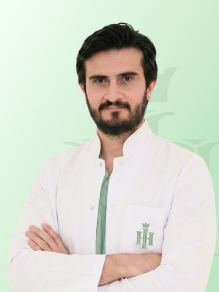
Dr Ahmet Dilber
Consultant Plastic, Reconstructive and Aesthetic Surgeon
Qualified in medicine at Istanbul University–Cerrahpaşa in 2011 and completed his specialty training in Plastic, Reconstructive and Aesthetic Surgery at Okmeydanı Training and Research Hospital in 2017. Specialist register no. 128474. At Hair of Istanbul his work covers medical suitability, donor area capacity and long-term surgical planning, including complex and revision cases.

Dr Hayriye Dilber
Consultant Cardiologist
Qualified in medicine at Uludağ University in 2004 and completed her cardiology training at the Institute of Cardiology, Istanbul University, in 2011. Specialist register no. 96372. Holds a second-level University Master’s degree in Aesthetic Medicine awarded jointly by the Universities of Camerino and Turin. She carries out pre-operative cardiac assessment and decides fitness for the procedure together with the anaesthetist.
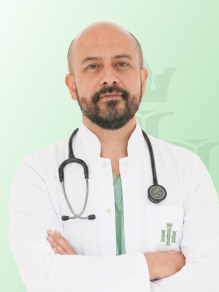
Specialist Dr Barış Adaklı
Anaesthesiologist
Qualified in medicine at Atatürk University in 2007 and completed his residency in Anaesthesiology and Reanimation at Ankara University Faculty of Medicine in July 2013. Specialist register no. 105895. More than fifteen years in operating theatre anaesthesia and intensive care. He joined Hair of Istanbul in February 2023 and is responsible for anaesthetic risk assessment, local anaesthesia and sedation, and monitoring throughout the procedure.
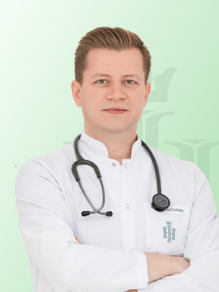
Dr Mahmut Satekin
Medical Aesthetics Physician
Qualified in medicine at Istanbul University–Cerrahpaşa on 26 December 2021 and holds the Turkish Ministry of Health Certificate in Aesthetic and Cosmetic Applications, registration no. 220778. His clinical practice covers recipient-site planning and creation, medical supervision through the procedure, and post-operative follow-up including PRP and Regenera Activa.
Qualifications and register numbers
In Turkey, every doctor is entered on a national register held by the Ministry of Health, and a doctor who has completed an accredited residency programme holds a separate specialist certificate with its own register number. Those numbers are printed on the certificates and are reproduced here.
| Doctor | Medical degree | Specialty | Specialist register no. |
|---|---|---|---|
| Dr Ahmet Dilber | Istanbul University–Cerrahpaşa, 2011 | Plastic, Reconstructive and Aesthetic Surgery, 2017 | 128474 |
| Dr Hayriye Dilber | Uludağ University, 2004 | Cardiology, 2011 | 96372 |
| Specialist Dr Barış Adaklı | Atatürk University, 2007 | Anaesthesiology and Reanimation, 2013 | 105895 |
| Dr Mahmut Satekin | Istanbul University–Cerrahpaşa, 2021 | Medical aesthetics (Ministry of Health certificate) | Certificate register no. 220778 |
The original diplomas and Ministry of Health certificates are held at the clinic and may be inspected on request during a consultation.
Medical disciplines in hair restoration
Hair restoration is often described as a single procedure. Medically it draws on four distinct fields, and the reason a clinic needs all four is that the failure modes are different in each. A poorly designed hairline is a surgical planning failure. An adverse event on the day is an anaesthetic or cardiac one. Poor graft survival is a tissue-handling and protocol failure. Each has its own discipline.
| Discipline | What it governs | What goes wrong without it |
|---|---|---|
| Plastic, reconstructive and aesthetic surgery | Medical suitability, donor capacity, hairline design and staged planning across a patient’s lifetime. | A hairline placed too low or too full for the donor reserve, leaving nothing available for later loss. |
| Cardiology | Cardiovascular risk assessment before an elective procedure and management of anticoagulant medication. | An avoidable cardiac event during a six-hour procedure, or uncontrolled bleeding. |
| Anaesthesiology and reanimation | Anaesthetic risk assessment, local anaesthesia and sedation protocol, monitoring of vital signs and emergency response. | Local anaesthetic toxicity, inadequate pain control, or a delayed response to a complication. |
| Medical aesthetics | Recipient-site planning, medical supervision during the procedure, and post-operative treatment and follow-up. | Incorrect angle, direction or density, and unmanaged healing in the weeks after surgery. |
Regulatory context: under Turkish law, hair transplantation may only be carried out in a licensed health institution, and the medical acts involved may only be performed by physicians.
How a case is assessed
The sequence below applies to every case at Hair of Istanbul, regardless of whether the patient is travelling from abroad or lives in Istanbul.
- Step 1Medical history and photographsGeneral health, medication, family history of hair loss, and photographs of the donor and recipient areas.
- Step 2Blood tests, ECG and, where indicated, cardiac assessmentRoutine pre-operative blood tests and an electrocardiogram (ECG) are carried out for every patient. Where the history, age, medication or the ECG indicates it, a cardiology assessment is arranged before a date is confirmed.
- Step 3Donor evaluation and surgical planMeasurement of donor density, calculation of available grafts, hairline design and a decision on whether one session or two will be needed.
- Step 4Anaesthetic assessmentReview of anaesthetic risk and agreement of the local anaesthesia or sedation protocol for the day.
- Step 5The procedureCarried out under continuous monitoring of heart rate, blood pressure and oxygen saturation.
- Step 6Follow-upFirst wash and dressing check, then scheduled reviews through the shedding and regrowth phases at three, six and twelve months.
An operating date is confirmed only after the medical assessment is complete. Where the assessment shows that a procedure is not appropriate — because of donor capacity, an unstable medical condition, or a pattern of loss that has not yet settled — that is the answer given.
How to check a clinic’s medical credentials
Patients travelling abroad for a procedure rarely have a way to verify what they are told. These are the checks that can be made from a distance, and they apply to any clinic in any country.
- Ask for the doctor’s full name as it appears on the diploma. A first name alone, or a title without a name, cannot be checked against any register.
- Ask for the specialty register number. In Turkey a specialist certificate carries a unique number issued by the Ministry of Health. A clinic that publishes it has nothing to reconcile.
- Check where the specialty training was completed. A specialty is a multi-year hospital programme with a named training institution and a completion date.
- Ask which licensed health institution the procedure takes place in, and whether its licence names a hair transplant unit. Turkish regulation permits hair transplantation only in licensed medical facilities, not in hotels or offices, and the unit must appear on the licence by name.
- Ask what happens if you are found unsuitable. A clinic that has never declined a case is not applying a threshold.
- Ask who assesses your cardiac risk if you have a heart condition, and whether that assessment happens before or after your travel is booked.
Frequently asked questions
Which doctors work at Hair of Istanbul?
Four registered doctors: Dr Ahmet Dilber, Consultant Plastic, Reconstructive and Aesthetic Surgeon; Dr Hayriye Dilber, Consultant Cardiologist; Specialist Dr Barış Adaklı, Anaesthesiologist; and Dr Mahmut Satekin, Medical Aesthetics Physician.
Is there a hair transplant surgeon at Hair of Istanbul?
Yes. Dr Ahmet Dilber is a specialist in Plastic, Reconstructive and Aesthetic Surgery, registered with the Turkish Ministry of Health under specialist register number 128474 since 2017.
Can I verify the doctors’ qualifications?
Yes. The register numbers are published on this page and on each doctor’s profile, and the original diplomas and Ministry of Health certificates are held at the clinic and may be inspected on request.
Is an anaesthetist present during the procedure?
Yes. Specialist Dr Barış Adaklı is an anaesthesiologist registered with the Turkish Ministry of Health under specialist register number 105895, awarded after completing his residency in Anaesthesiology and Reanimation at Ankara University Faculty of Medicine in July 2013. He has more than fifteen years of theatre and intensive care experience.
Do I need a cardiac assessment before a hair transplant?
Not every patient does. It is arranged where the medical history, age, blood pressure or medication indicates it — for example a previous cardiac event, an arrhythmia, a stent, or treatment with anticoagulant medication. Where it is indicated, it takes place before an operating date is confirmed.
Is hair transplantation regulated in Turkey?
Yes. Turkish health regulation permits hair transplantation only in licensed health institutions, and the licence must name a hair transplant unit specifically.
What happens if I am not suitable for a hair transplant?
You are told so, and told why. The most common reasons are insufficient donor density for the coverage requested, a pattern of loss that has not yet stabilised, and an unstable medical condition. In some cases the appropriate answer is medical treatment first and a reassessment later.
How many languages are spoken at the clinic?
Patient communication is available in 13 languages: English, Turkish, German, French, Russian, Romanian, Arabic, Spanish, Italian, Bulgarian, Slovak, Dutch and Portuguese. The website itself is published in nine of these — English, Turkish, German, French, Spanish, Italian, Bulgarian, Slovak and Romanian.
Where is Hair of Istanbul located?
In Ataköy, Bakırköy, on the European side of Istanbul, approximately fifteen kilometres from Istanbul Airport.
Can I speak to a doctor before travelling?
Medical assessment before travel is carried out on the basis of your photographs, medical history and, where relevant, blood test and cardiology results. Send these to the clinic and the assessment will be completed before any date is offered.
Related pages
- FUE technique — how follicular unit excision works and what determines graft survival.
- DHI technique — direct implantation and how it differs from standard placement.
- PRP hair treatment — what the trials show.
- After care — the recovery period week by week.
Start with a medical assessment
Send photographs of the donor and recipient areas together with your medical history and current medication. The assessment is completed before an operating date is offered.
