 en
en TR
TR  SK
SK  ITA
ITA  FR
FR  DE
DE  ES
ES  BG
BG  RO
RO 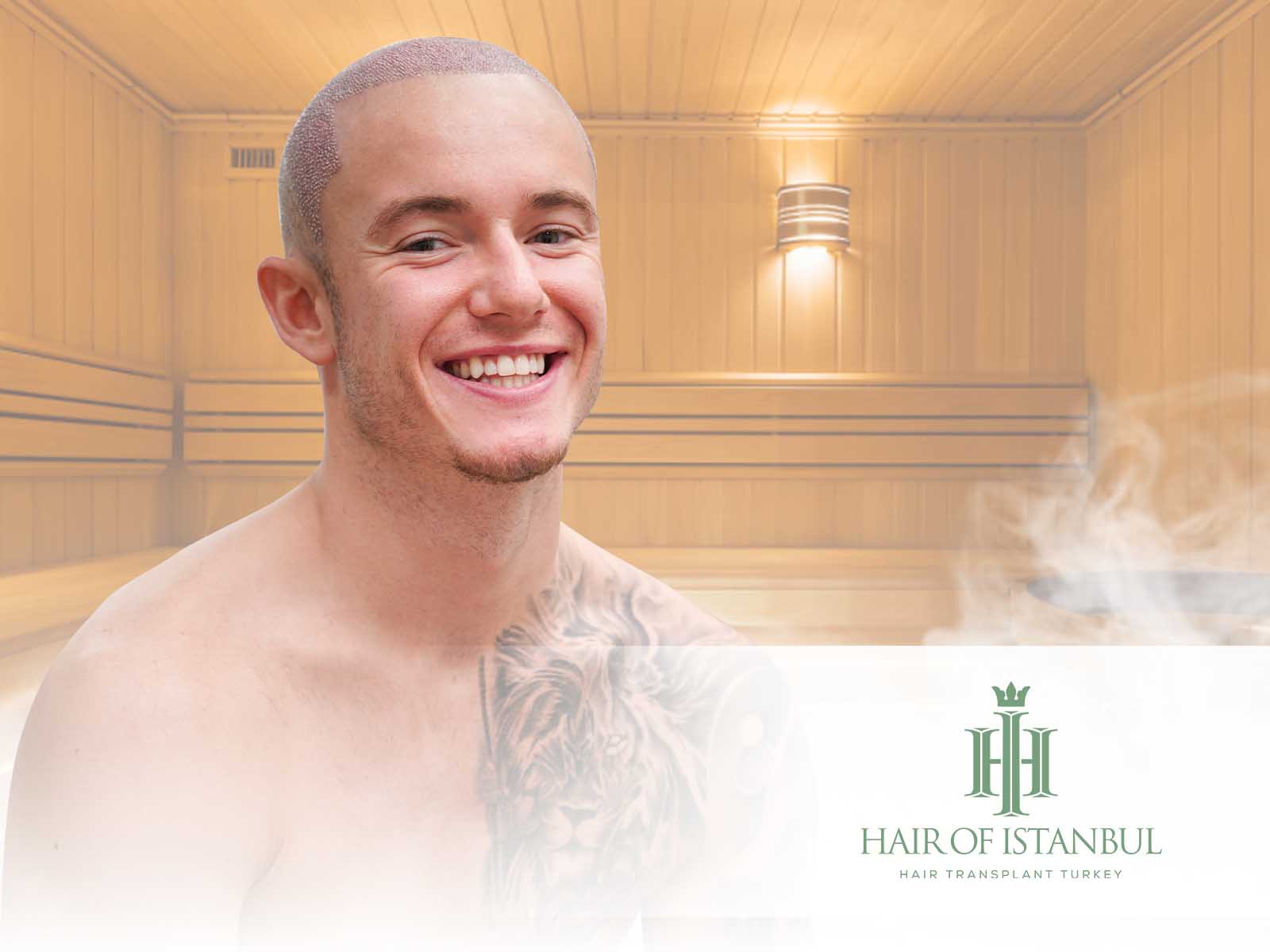
Sauna After Hair Transplant: Five Months, and Why
Sauna after hair transplant surgery is the longest of our ordinary restrictions apart from hair dye: five months. That is longer than most clinics say and longer than most patients expect, so it is worth setting out what the rule is and how firm the reasoning behind each part of it actually is.
Sauna after hair transplant: the rule
| Activity | Wait |
|---|---|
| Sauna, steam room, hamam | 5 months |
| Swimming pool and sea | 1 month |
| Gym and heavy exertion | 1 month |
| Hot showers on the recipient area | Lukewarm only during the washing period |
| Solarium and sunbeds | Not while healing; direct sun avoided in the early weeks |
These are the timings in our own written instructions and on the aftercare page. If you have been told something different by another source, the instruction from the clinic that operated on you is the one that applies.
The first weeks: this part is well founded
In the first weeks the objections to a sauna are concrete and have nothing to do with follicles.
- Sweat and hygiene. Recipient sites are open wounds for the first days. Heavy sweating in a shared humid environment is the wrong exposure at the wrong time, and infection is among the complications recorded in the surgical literature.
- Vasodilation and swelling. Sauna bathing causes acute cardiovascular changes, including dilation of skin vessels. In the days when swelling peaks — two to five — that works against you.
- Itching and the urge to touch. Heat makes a healing scalp itch, and scratching is the commonest self-inflicted injury after this operation. That is covered on rubbing your head after a hair transplant.
- Softened crusts. Steam loosens crusts unevenly and outside the washing schedule, which is not the same as removing them properly.
None of this is controversial. It is the same reasoning that keeps you out of the gym and the pool for a month, set out on exercise after hair transplant.
Why five months, and how firm that is
Here we should be straight with you.
The five-month rule is a precautionary clinic protocol, not a figure derived from a trial. Nobody has run a study putting transplanted patients in saunas at different intervals and counting surviving grafts. The reasoning is that transplanted follicles spend the first months re-establishing a blood supply and cycling into growth, and that repeated extreme heat is an avoidable stress during a period you only get once.
What can be said about sauna itself is reassuring rather than alarming. A review of the benefits and risks of sauna bathing concluded that it causes acute, transient cardiovascular and hormonal changes but is well tolerated by most healthy adults and children, and noted that sauna bathing does not cause drying of the skin. The contraindications it lists are cardiac — unstable angina, recent myocardial infarction, severe aortic stenosis — not dermatological.
The honest summary: the first weeks have real reasons; months two to five are caution. We would rather ask for five quiet months than explain a poor result afterwards, and if that matters a great deal to you it is a conversation to have with us rather than a rule to guess at.
You will also see claims that heat damages hair follicles. The experimental work behind that is in animals under sustained heat stress, and it does not transfer to a person sitting in a sauna for fifteen minutes. We are not going to present it as if it did.
Steam room, hamam and jacuzzi
Same five months, and for hamam there is an additional reason: the traditional scrub and massage is direct mechanical force on the scalp, which is a separate problem from the heat. A hamam visit that skips the scrub is still a steam exposure.
Hot tubs and jacuzzis combine heat with shared water, so they sit with the pool restriction at minimum and with the sauna restriction if they are genuinely hot. Alcohol deserves a separate mention here: it is out for the first week anyway, and combining it with sauna heat is discouraged even in healthy people.
Hot showers and hair dryers
Ordinary washing is different from immersion in heat, and the restriction is much shorter.
During the prescribed washing period the water on the recipient area should be lukewarm, poured rather than blasted, following the schedule on shampoo after hair transplant. Hair dryers on hot settings are avoided in the early weeks; cool air held well away is fine. After the first month, showers are normal.
Solarium and sunbeds
Not during healing. This is about ultraviolet exposure on skin that has just been wounded rather than about heat, and the recipient area cannot be covered with a hat for the first month either — explained on hats after hair transplant. Shade and timing are the practical protection; the seasonal version of this question is on best season for hair transplant.
If you already went
A single sauna visit is not a known cause of graft loss, and panicking about it is not useful. What matters is what you can see: fresh bleeding, a graft missing from its site, spreading redness, or swelling that is increasing rather than settling.
If any of that is present, photograph it and send it to us the same day. If none of it is, resume the protocol and leave the sauna alone until the five months are up.
Frequently asked questions
When can I use a sauna after a hair transplant?
Five months in our protocol. The first weeks have concrete reasons — sweat, hygiene, vasodilation, itching — and the remainder is precautionary rather than trial-based.
Why is sauna bad after a hair transplant?
In the early weeks: sweating on open recipient sites, vasodilation while swelling is peaking, softened crusts and heat-driven itching. Later, it is caution during the months when follicles are re-establishing and cycling into growth.
When can I use a steam room or hamam?
The same five months. A hamam also involves scrubbing and massage, which is direct mechanical force on the scalp and a separate reason to wait.
Can I have hot showers after a hair transplant?
Lukewarm water on the recipient area during the washing period, poured rather than blasted. Normal showers after the first month.
Is a solarium safe after a hair transplant?
No, not while healing. That is about ultraviolet exposure on newly wounded skin rather than heat.
Does heat damage transplanted hair follicles?
There is no human evidence that it does. The experimental heat-stress work is in animals under sustained conditions and does not describe a sauna visit. The five-month rule is caution, not a demonstrated mechanism.
What if I went to a sauna by mistake?
One visit is not a known cause of graft loss. Look for bleeding, a missing graft, spreading redness or worsening swelling, and send us a photograph if you see any of them.
References
- Hannuksela ML, Ellahham S. Benefits and risks of sauna bathing. Am J Med. 2001;110(2):118–126. PMID 11165553. pubmed.ncbi.nlm.nih.gov
- Khatib M, Skorochod R, Wolf Y. Complications Following Hair Transplantation: A Systematic Literature Review and Meta-Analysis. Aesthetic Plast Surg. 2025;49(23):6393–6405. PMID 40913181. pubmed.ncbi.nlm.nih.gov
- Arencibia Pérez N, Guerrero Roldán MJ. Donor site healing in follicular unit extraction hair transplantation: current evidence, cellular mechanisms, and future research directions. 2025;71(8):93–98. PMID 40920315. pubmed.ncbi.nlm.nih.gov
In short
Sauna after hair transplant surgery waits five months in our protocol, alongside steam rooms and hamam; swimming and the gym wait one month. The early part of that is well founded — sweating on open recipient sites, vasodilation while swelling peaks, softened crusts and heat-driven itching that invites scratching. The later part is precaution rather than proof: no study has compared sauna schedules against graft survival, and the heat-damage experiments people cite were done in animals under sustained heat stress. Sauna bathing itself is well tolerated by healthy adults and does not dry the skin. We ask for five months because the months after surgery are not repeatable.
If you are a regular sauna user and five months is a problem, say so before you book rather than after — get in touch and we will tell you where the firm reasons end.