
 en
en TR
TR  SK
SK  ITA
ITA  FR
FR  DE
DE  ES
ES  BG
BG  RO
RO Scalp Micropigmentation (SMP): What It Does and What It Cannot Do
Scalp micropigmentation, usually shortened to SMP, is a non-surgical cosmetic procedure in which very small points of pigment are placed into the upper layer of the scalp so that they read as hair follicles. It does not grow hair and it does not treat hair loss. What it changes is contrast: by darkening the skin between existing hairs, it closes the gap between scalp and hair, so thinning reads as density and a shaved head reads as a close crop rather than baldness.
That distinction matters, because it decides who benefits. A patient who wants more hair needs a hair transplant. A patient who wants the scalp to stop showing through — because donor capacity is limited, because thinning is diffuse, or because a shaved look is the preferred outcome — is looking at the right page.
This page explains how the procedure is carried out, how it differs from tattooing, who it suits and who it does not, how sessions are planned, what the first ten days involve, how long the result holds, and what can go wrong. Where scalp micropigmentation overlaps with surgical treatment, the link to the relevant page is given rather than the argument repeated.
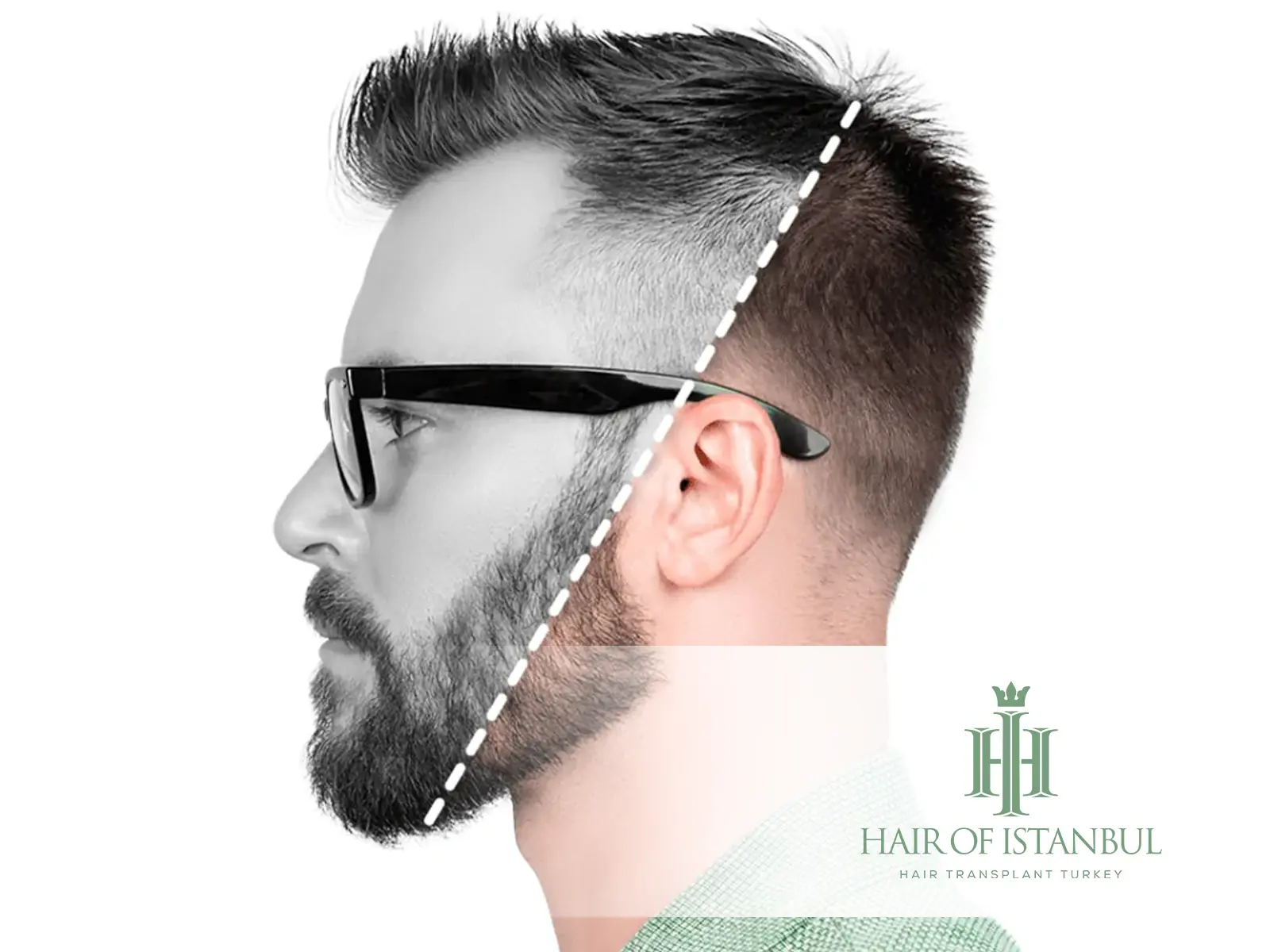
- What SMP is
- How it is applied
- Not the same as a tattoo
- Three ways it is used
- Who it suits
- What it cannot do
- Alongside a hair transplant
- Pigment and tone
- Session planning
- Preparing for the first session
- On the day
- The first ten days
- What to avoid
- How long it lasts
- Risks and side effects
- How it is priced
- Frequently asked questions
- Related pages
What Scalp Micropigmentation Is
Scalp micropigmentation is a cosmetic procedure in which pigment is placed into the scalp as thousands of individual points, each sized and spaced to resemble a hair follicle emerging from the skin. Seen from conversational distance, those points merge into what the eye reads as stubble or as shadow beneath thinning hair.
The work is done on the surface of the head, not inside it. Nothing is implanted, nothing is removed, and the hair follicles already present are unaffected. Because there is no surgical wound, there is no healing period in the surgical sense — only a short window in which the treated skin is protected while the pigment settles.
Scalp micropigmentation is used on its own by patients who are not candidates for surgery or who do not want it, and alongside surgery by patients whose donor capacity cannot supply the density they are after. Both uses are legitimate and both are planned the same way: by looking at what the scalp will realistically look like afterwards, not at what would be ideal.
How Scalp Micropigmentation Is Applied
Scalp micropigmentation is applied with a fine needle that places pigment in the upper dermis — deeper than the outermost skin layer, which would shed the pigment within weeks, and shallower than the depth used in decorative tattooing, which would allow the pigment to spread and blur. That depth window is narrow, and holding it is what separates a result that reads as follicles from one that reads as a smudge.
Each point is placed individually. Angle, depth, pressure and dwell time are varied across the scalp so that the points are not uniform: real follicles differ in size, tone and spacing, and a pattern that is too regular is what makes poor work obvious. Density is built up gradually across sessions rather than completed in one pass, which allows the settled result to be assessed before more pigment is added.
| Element | How it is handled | Why |
|---|---|---|
| Depth | Upper dermis, held consistently | Too shallow fades within weeks; too deep spreads and blurs |
| Needle | Fine, single-point | Produces a discrete dot rather than a line or a filled area |
| Pigment | Carbon-based, diluted to the required tone | Fades neutrally rather than shifting towards blue or red |
| Spacing | Irregular, varied in size | Uniform dots read as artificial at close range |
| Build-up | Across 2–4 sessions | Settled colour can be judged before more is added |
Scalp Micropigmentation Is Not a Tattoo
The comparison with tattooing is understandable but misleading, and the differences are the reason results diverge so sharply between the two. A decorative tattoo is designed to hold a defined shape indefinitely at a fixed depth, using pigments formulated for colour stability. Scalp micropigmentation is designed to imitate a natural, irregular texture that must fade gradually and evenly so that it can be adjusted as the surrounding hair changes.
| Criterion | Scalp micropigmentation | Decorative tattoo |
|---|---|---|
| Depth | Upper dermis, shallower | Deeper dermal placement |
| Pigment | Carbon-based, diluted for tone | Coloured inks formulated to persist |
| Intended lifespan | 3–6 years, refreshed | Permanent |
| How it fades | Lightens evenly, tone held | Can shift in hue as it ages |
| Design goal | Irregular, imitates follicles | Defined shape and edge |
Three Ways Scalp Micropigmentation Is Used
Scalp micropigmentation produces three distinct outcomes with the same technique, and they are not interchangeable. Confusing them is the most common reason a patient is disappointed by an otherwise well-executed result, so the intended outcome is agreed before the first session rather than discovered afterwards.
| Use | Who it is for | What the result looks like |
|---|---|---|
| Shaved-head look | Advanced loss, or a preference for very short hair | A defined hairline and even stubble across the scalp; hair is kept clipped |
| Density shading | Diffuse thinning where hair is still present | Scalp no longer shows through; existing hair appears thicker without being longer |
| Scar camouflage | Visible donor scarring, strip scars, uneven growth | Scar tissue is brought closer to the surrounding tone and stops catching the eye |
Who Scalp Micropigmentation Suits
Scalp micropigmentation suits patients whose concern is visible scalp rather than absent hair. Skin condition matters more than age: the scalp must be intact, settled and free of active inflammation for pigment to be placed evenly and held.
Generally suitable
- Diffuse thinning where the scalp shows through under bright light
- Advanced pattern loss where a clipped, defined look is the preferred outcome
- Donor area scarring after FUE or strip surgery
- Uneven density remaining after an earlier procedure
- Limited donor capacity that cannot supply full surgical coverage
- Patients who are not candidates for surgery, or who do not want it
Requires assessment first
- Active scalp conditions such as psoriasis, eczema or folliculitis in the treatment area
- Keloid or hypertrophic scarring tendency, which affects how pigment settles in scar tissue
- Recent surgery on the scalp — the area must be fully settled before pigment is placed
- Known sensitivity to pigments or to topical anaesthetic agents, which is tested in advance
What Scalp Micropigmentation Cannot Do
Scalp micropigmentation is a visual solution to a visual problem, and it is honest to state the boundary plainly. It does not stimulate follicles, slow hair loss or improve the condition of the hair already present. If hair loss is ongoing, the surrounding hair will continue to thin and the pigmented area will need to be extended or re-blended as the pattern changes.
It also cannot restore length or movement. Pigment sits at skin level, so the illusion holds when hair is kept short and weakens as hair grows longer — longer hair casts shadows and separates, revealing that the density beneath it is drawn rather than grown. Patients who want hair they can style are looking for a hair transplant, not scalp micropigmentation.
No promise of a fixed outcome
How pigment settles depends on skin type, scarring, the depth held during application and how the scalp is cared for afterwards. Two patients treated identically can settle differently, and no result is committed to in advance. What is offered is an assessment of what is realistically achievable on your scalp, and the option to stop after any session.
Scalp Micropigmentation Alongside a Hair Transplant
The two procedures answer different questions and are frequently combined for that reason. A transplant relocates living follicles and is limited by how many the donor area can safely supply; scalp micropigmentation adds no hair but reduces the contrast that makes a limited graft count look sparse. Used together, the same number of grafts can read as denser coverage.
When both are planned, surgery comes first and pigment follows once the transplanted area has fully settled — not before, because the final distribution of grown hair determines where shading is needed. Pigment placed too early can end up in the wrong density, or on skin that is still remodelling.
- Donor scarring after FUE extraction, brought closer to the surrounding scalp tone
- Crown coverage where graft numbers were prioritised towards the frontal area
- Diffuse thinning behind a transplanted hairline, shaded so the transition is not visible
- Cases where a second procedure is not possible because donor capacity is already used
Pigment Selection and Skin Tone
Scalp micropigmentation does not use a single pigment shade across the whole scalp. Tone is matched to the natural hair colour and to skin tone, then diluted differently across regions — lighter at the hairline and temples where follicles are naturally finer, denser through the mid-scalp and crown. A hairline placed at full strength is the single most recognisable sign of poorly judged work.
Carbon-based pigment is used because it fades neutrally. Coloured tattoo inks contain compounds that can shift in hue as they break down, which is why an old tattoo can read blue or green; on a scalp that shift would be permanent and obvious. Fading in a well-planned result means lightening, not changing colour.
| Region | Tone approach | Reason |
|---|---|---|
| Hairline and temples | Lightest dilution, softest edge | Natural hairlines are irregular and fine, never a hard line |
| Mid-scalp | Mid dilution, varied point size | Matches the density the eye expects between front and crown |
| Crown | Denser placement, radial pattern | Follows the natural whorl rather than a uniform fill |
| Scar tissue | Tested first, adjusted after settling | Scarred skin takes pigment differently from healthy scalp |
Session Planning and Spacing
Two to four scalp micropigmentation sessions are planned, each lasting two to four hours depending on the area covered. The first establishes the base layer and the intended shape; the second adds density once the first has settled; the third and any fourth are used for refinement, symmetry and correcting anything that faded unevenly.
Sessions are deliberately separated rather than stacked. Pigment lightens as it settles — typically by a noticeable margin over the days following a session — so judging density immediately after application would lead to overworking the scalp. The gap between sessions is what makes the process correctable.
| Session | What is done | Typical duration |
|---|---|---|
| Assessment | Scalp condition, skin tone, hairline design, tone test | Before the first session |
| Session 1 | Base layer, shape and boundaries established | 2–4 hours |
| Session 2 | Density built up once session 1 has settled | 2–4 hours |
| Sessions 3–4 | Refinement, symmetry, evening out any patchy settling | 2–4 hours |
Preparing for the First Session
Preparation for scalp micropigmentation is short and mostly concerns the condition of the skin on the day. The scalp should be calm, hydrated and free of irritation, because inflamed skin bleeds more, holds pigment unevenly and makes the settled tone harder to predict.
- Do not shave the scalp on the day; a short clipped length is preferred to a close razor shave
- Avoid sun exposure and sunburn in the week before — burnt or peeling skin cannot be treated
- Avoid alcohol for 24 hours beforehand, as it increases bleeding at the point of application
- Report any scalp condition, recent treatment or skin sensitivity in advance
- Do not stop prescribed medication on your own — blood-thinning medicines are reviewed together with the prescribing doctor and the Hair of Istanbul medical team
- Arrive with the scalp clean and free of styling products, oils or concealer fibres
What Happens on the Day
A scalp micropigmentation session begins with the design being drawn and agreed on the scalp before any pigment is placed. Hairline position, density gradient and boundaries are all reversible at this stage and none of them are afterwards, so the time spent here is not a formality.
Sensation is usually described as a light scratching or tapping, more noticeable over bony areas and over scar tissue. A topical numbing agent can be applied where sensitivity is higher. The session is worked in stages with breaks; there is no sedation and no recovery period afterwards, and normal activity resumes the same day within the restrictions listed below.
The First Ten Days
Immediately after a scalp micropigmentation session the treated area looks darker and slightly raised, with mild redness that resembles light sunburn. This is expected. Over the following days the pigment lightens as the skin settles, and the result seen at day ten is a far better guide to the outcome than the result seen at hour one.
| When | What is normal | What to do |
|---|---|---|
| Day 0 | Redness, darker tone, mild tenderness | Leave the scalp dry and untouched |
| Days 1–3 | Redness settles; small dry flakes may appear | No washing, no sweating; do not pick at flaking skin |
| Day 4 | Flaking largely finished | Gentle rinsing with water only, no products, no rubbing |
| Days 5–10 | Tone lightens noticeably | Mild shampoo may be resumed; moisturise if the scalp feels tight |
| Day 10 onwards | Settled tone visible | The next session is planned from what is now visible |
What to Avoid, and for How Long
The restrictions after scalp micropigmentation exist because heat, moisture and friction all pull pigment out of skin that has not finished settling. They are short, and following them precisely for the first days matters more than following them loosely for a month.
| Avoid | For how long | Reason |
|---|---|---|
| Washing the scalp | 72 hours | Water lifts pigment before the skin has closed over it |
| Sweating and exercise | 7 days | Sweat carries pigment out and irritates the treated skin |
| Sauna, steam and hot showers | 14 days | Heat opens the skin and accelerates fading |
| Swimming pools and the sea | 14 days | Chlorine and salt water both draw pigment out |
| Direct sun on the scalp | 28 days | Ultraviolet light breaks pigment down and shifts the settled tone |
| Sunbeds | 28 days | The same effect, concentrated |
| Shaving with a razor | 10 days | Friction on settling skin; clippers may be used after day 4 |
| Scalp scrubs and exfoliants | 28 days | Mechanical removal of the outer skin layer takes pigment with it |
How Long Scalp Micropigmentation Lasts
Pigment placed in the upper dermis is broken down gradually by the body and by ultraviolet light, which is why scalp micropigmentation is described as long-lasting rather than permanent. In practice the result holds for three to six years before it has faded enough to warrant refreshing, and the range is wide because the main variables are outside the clinic: sun exposure, skin type and how consistently the scalp is protected.
Fading is a design feature rather than a fault. It allows the result to be adjusted as hair loss progresses and hair colour greys, and it means a decision made at forty is not binding at sixty. A refresh session is shorter than the original series and restores tone rather than rebuilding the pattern.
| Factor | Effect on longevity |
|---|---|
| Sun exposure | The single largest factor; unprotected scalps fade fastest |
| Skin type | Oilier skin tends to disperse pigment sooner |
| Depth achieved | Pigment held too shallow fades within months rather than years |
| Scar tissue | Takes and holds pigment less predictably than healthy scalp |
Risks and Side Effects
Scalp micropigmentation carries far less risk than surgery, but it is not without risk, and the honest failure modes are aesthetic rather than medical. Most complications are avoidable through assessment and depth control; the ones that are not are managed by fading and correction rather than removal.
Pigment cannot simply be erased. Correcting overworked or misplaced pigment involves laser removal over several sessions, which is slower, more uncomfortable and more expensive than the original work. This is the reason density is built gradually and the reason the design is agreed before anything is placed.
- Redness, tenderness and light flaking in the first days — expected, and settles without treatment
- Uneven settling, particularly across scar tissue, corrected at the following session
- Fading faster than expected where sun protection has been inconsistent
- Tone appearing too dark before it settles — judged at day ten, not on the day
- Pigment spread or blurring where depth was not held, which requires correction
- Infection or an inflammatory reaction, which is uncommon and treated medically
If something does not look right
Contact the clinic rather than waiting for the next session or attempting to treat the scalp yourself. Most concerns raised in the first two weeks — tone, evenness, an area that flaked more than the rest — are resolved at the following session, which is part of the planned course. Problems become harder to correct the longer pigment is left to settle.
How Scalp Micropigmentation Is Priced
Scalp micropigmentation is priced by the area treated and the number of sessions that area requires, not by a fixed figure per head. A crown that needs shading and a full scalp taken to a shaved-head finish are different pieces of work, and quoting them at the same price would mean one of the two patients is being quoted wrongly.
Scar camouflage is assessed separately again, because scarred skin takes pigment unpredictably and often needs an additional session that a healthy scalp does not. The number of sessions is estimated at the assessment and confirmed as the first sessions settle.
For that reason a figure is not published here. The plan and the price are set together after the scalp has been assessed, and both are given in full before the first session. If scalp micropigmentation is being considered alongside surgery, the hair transplant pricing page sets out how the surgical side is costed, and the two are quoted together rather than separately.
Frequently Asked Questions
Is scalp micropigmentation permanent?
No. Pigment placed in the upper dermis is broken down gradually by the body and by sunlight, and the result typically holds for three to six years before it needs refreshing. This is intentional: it allows the design to be adjusted as hair loss progresses and hair colour changes. A refresh session is shorter than the original series.
Does it hurt?
Sensation is usually described as light scratching or tapping. It is more noticeable over bony areas such as the temples and over scar tissue, and less so across the mid-scalp. A topical numbing agent can be applied where sensitivity is higher, and sessions are worked in stages with breaks.
Will it look like a tattoo?
Not when depth and spacing are handled correctly. The difference lies in placement depth, needle size and the deliberate irregularity of the points. A result that reads as a tattoo is usually one placed too deep, too uniformly, or at a single flat tone across the whole scalp.
Can it be combined with a hair transplant?
Yes, and combining scalp micropigmentation with surgery is common where donor capacity cannot supply the density a patient is after. Surgery is carried out first and pigment follows once the transplanted area has fully settled, because the final distribution of grown hair determines where shading is needed.
Do I have to shave my head afterwards?
Only if the shaved-head look is the outcome you have chosen. Used as density shading beneath existing hair, scalp micropigmentation is worn with the hair you have — though the effect is strongest at shorter lengths, because longer hair separates and casts shadows that reveal the scalp beneath.
What happens as my hair loss progresses?
The pigmented area is extended or re-blended as the pattern changes. This is one of the practical advantages of a result that fades: the design is not fixed at the pattern you had on the day it was placed.
Can it be removed if I change my mind?
Pigment can be lightened or removed with laser treatment over several sessions, but the process is slower and more uncomfortable than the original application. It is far better to build scalp micropigmentation density gradually across sessions than to place too much and correct afterwards, which is why the first session is deliberately light.
Does scalp micropigmentation work on scars?
Usually, though scarred skin takes pigment less predictably than healthy scalp and often needs an additional session. A small test area is treated first and assessed once settled, before the full scar is worked on.
When can I go back to the gym?
After seven days. Sweat carries pigment out of skin that has not finished settling and irritates the treated area. Swimming, sauna and steam wait fourteen days, and direct sun on the scalp is avoided for twenty-eight.
Is scalp micropigmentation suitable for women?
Yes, most often as density shading through a widening parting or across diffusely thinning areas rather than as a shaved-head finish. The approach differs because the surrounding hair is usually longer, so tone is kept lighter and edges softer. Female hair loss is assessed separately, as the underlying pattern is different.
Related Pages
Where scalp micropigmentation is being weighed against surgical or medical treatment, the pages below set out the alternatives in full.
| Page | What it covers |
|---|---|
| Hair transplant | The surgical route: how follicles are relocated, candidacy, planning and the result timeline |
| FUE technique | Extraction method, donor management and the scarring that SMP is often used to camouflage |
| DHI technique | Direct implantation, how it differs from FUE and where each is chosen |
| Female hair transplant | How diffuse female pattern loss is assessed and treated |
| Revision hair transplant | Correcting an earlier procedure where density or hairline design fell short |
| PRP therapy | Medical support for existing hair, used to slow thinning rather than mask it |
| Regenera Activa | A regenerative option for early-stage thinning |
| Before and after | Documented results across procedures |
| Aftercare | The full post-procedure protocol for surgical treatment |
| Contact | Assessment, scalp review and planning |
