
 en
en TR
TR  SK
SK  ITA
ITA  FR
FR  DE
DE  ES
ES  BG
BG  RO
RO Regenera Activa: What It Does, What It Does Not, and What the Evidence Shows
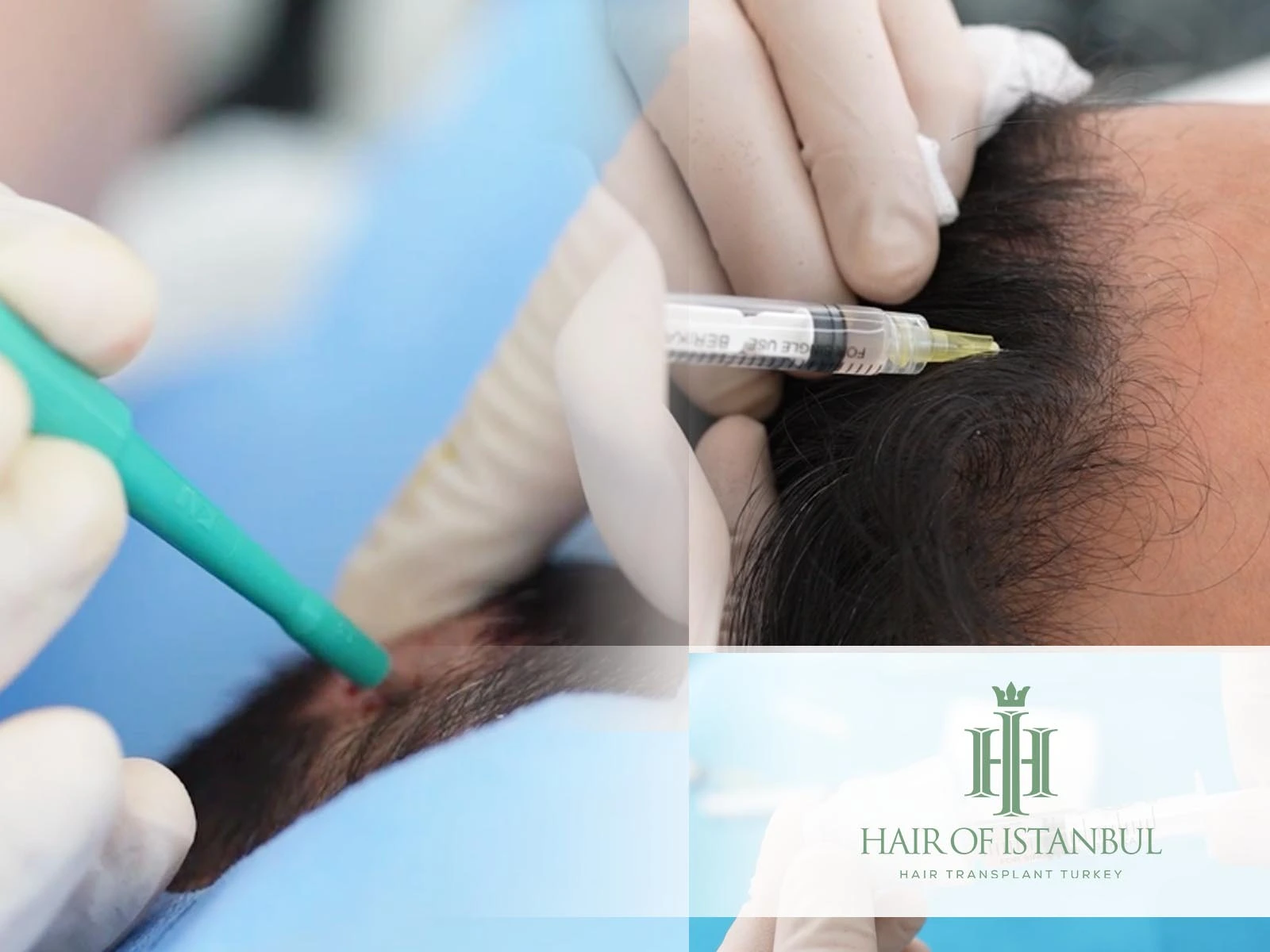
This page is longer and more specific than most pages about this treatment, deliberately. Regenera Activa is heavily marketed, often with claims the published data does not support. What follows is the actual protocol, the actual numbers from peer-reviewed studies, an honest account of who responds and who does not, and our price.
- What is Regenera Activa?
- How it works
- The procedure, step by step
- Who it helps
- When we advise against it
- What the evidence shows
- What to realistically expect
- Timeline of results
- Compared with PRP, medication and transplant
- Before or after a hair transplant
- Safety and side effects
- How many sessions and how long it lasts
- Cost
- Frequently asked questions
- References
What is Regenera Activa?
Regenera Activa is the commercial name for an autologous micrografting treatment: a small amount of your own scalp tissue is taken, broken down mechanically into a suspension of cells and growth factors, and injected back into the thinning area of the same scalp.
The same system is also marketed as Regenera Activa AMT, where AMT stands for autologous micro-grafting technology — the technical name for the tissue-processing step described below. Some clinics list the treatment under mesotherapy, because the suspension is injected into the scalp in the same way. The device, the protocol and the evidence are the same whichever name is used.
“Autologous” means everything injected comes from you. Nothing is cultured, nothing is added from a donor, and no drug is introduced. The tissue is processed in a single-use device called Rigeneracons, a Class IIa CE-marked medical device, driven by a small motorised unit. The entire process — sampling, processing and injection — happens in one appointment, and the suspension is injected within minutes of being prepared.
It is worth being precise about the category. This is not stem cell therapy in the sense the phrase is usually marketed. The suspension contains progenitor cells, growth factors and fragments of extracellular matrix taken from tissue that already contains healthy follicles. There is no cell culture, no laboratory expansion and no separation step.
How it works
Hair loss in androgenetic alopecia does not happen all at once. Follicles miniaturise: each growth cycle produces a slightly finer, shorter, less pigmented hair until eventually the follicle produces nothing visible at all. Between a healthy follicle and a lost one there is a long window — often years — in which the follicle is still present but underperforming.
Regenera Activa targets that window. The tissue taken from behind the ear comes from an area where follicles are genetically resistant to the hormonal process driving the loss. Mechanically disaggregating it releases progenitor cells and signalling molecules from the perifollicular tissue. Injected into the thinning zone, these are intended to improve the local environment around miniaturising follicles.
The single most important sentence on this page. This treatment supports follicles that are still alive. Where a follicle has been lost entirely and the scalp is smooth and shiny, there is nothing left to support, and no injection will bring it back. That is what a hair transplant is for. Any clinic telling you otherwise is selling rather than assessing.
The procedure, step by step
| Stage | What happens | Duration |
|---|---|---|
| 1 · Assessment | Trichoscopy of the thinning area, miniaturisation mapped, photographs taken at standard angles | 10–15 min |
| 2 · Local anaesthesia | The sampling site behind the ear is anaesthetised with lidocaine 2% | 5 min |
| 3 · Sampling | Three skin samples taken with a 2.5 mm dermal punch from the retro-auricular area | 5 min |
| 4 · Processing | Samples placed in the Rigeneracons device with 1.8 ml of saline and mechanically disaggregated at controlled low speed for about 2 minutes | 2–3 min |
| 5 · Injection | The resulting suspension, roughly 3 ml, is injected into the thinning area with fine needles across a grid pattern | 10–15 min |
| 6 · Discharge | Aftercare explained. No dressing. Normal activity the same day | 5 min |
The suspension is injected immediately after processing — it is not stored, frozen or sent to a laboratory. The three sampling points are closed without stitches and are hidden by the hair above them; they heal to marks similar to those left by FUE harvesting.
What you will feel
The anaesthetic injections behind the ear are felt. After that, the sampling itself is not painful. The injections into the thinning area feel like a series of brief pinpricks; most patients describe this as uncomfortable rather than painful. There is no sedation and you can drive afterwards.
Who it helps
The treatment suits people whose hair is thinning rather than gone. The clearest indications:
- Early to moderate androgenetic alopecia — men at Norwood II–IV, women at Ludwig I–II, where trichoscopy shows miniaturisation rather than empty scalp
- Female pattern hair loss with diffuse thinning and a preserved frontal hairline — the group most studied and, in the published cohorts, the most represented
- Patients who want to delay surgery and support what they still have
- Before a hair transplant, to stabilise the surrounding native hair
- After a hair transplant, to support the native hair around the grafted area
- Patients who cannot or prefer not to take finasteride, as one part of a wider plan
Age is not itself a criterion. What matters is what the trichoscope shows: the density of surviving follicles, the proportion of miniaturised hairs, and whether the loss has been stable or is progressing quickly.
When we advise against it
Roughly one patient in three does not respond, and some people should not be offered the treatment at all. These are the situations in which we say so:
- Advanced hair loss with smooth, shiny scalp — Norwood V–VII, or any area where the follicles have gone. There is nothing left to stimulate. A transplant is the honest answer.
- Expectation of transplant-level results. The published effect is a gain of roughly 4.5–7 hairs per cm² and a few per cent of shaft diameter. That is a visible improvement in texture and coverage; it is not the difference a transplant makes.
- Active scalp disease — dermatitis, folliculitis, psoriasis or infection must be treated first.
- Cicatricial (scarring) alopecia, where the follicle has been replaced by fibrous tissue.
- Untreated underlying causes — thyroid disease, iron deficiency, or a medication driving the shedding. These are investigated and corrected first; otherwise the treatment is working against an active cause.
- Bleeding disorders or anticoagulant therapy that has not been reviewed.
- Pregnancy and breastfeeding — postponed, as a precaution.
If trichoscopy shows that the area you are worried about has too few surviving follicles to respond, we will tell you before you pay for a session.
What the evidence shows
Most pages about this treatment reach for superlatives and stop there. Here are the actual published figures.
| Measure | Reported result | Source |
|---|---|---|
| Patients showing clinical improvement | 65–69% | Vincenzi et al., 2025 |
| Favourable response, frontal region | 66.4% of 140 patients | Zari, 2021 |
| Hair density increase | +4.5 to +7.12 hairs/cm², by region | Zari, 2021 |
| Hair shaft diameter increase | +7.35% at 3 months, +5.23% at 6 months | Vincenzi et al., 2025 |
| Hair thickness increase | +0.96 to +1.88 μm | Zari, 2021 |
| Proportion of thick hairs | +1.74 to +3.26% | Zari, 2021 |
| Follicular units per measured field | +1.30 to +2.77 | Zari, 2021 |
Study populations: Zari 2021, 140 consecutive patients (81% female, mean age 32), median follow-up 94 days. Vincenzi et al. 2025, two protocols — a single session followed for 6 months, and two sessions six months apart followed for 12 months.
How to read these numbers
Three things are worth saying plainly.
The response rate is about two in three. That is a real and useful figure, and it also means roughly one patient in three sees little or no measurable change. Nobody can tell you in advance which group you will fall into, and any clinic that claims otherwise is guessing.
The effect size is modest but real. An increase of five to seven hairs per cm² is a change you can measure on trichoscopy and usually see in photographs taken under the same conditions. It is not a change that turns a Norwood V into a full head of hair, and it was never going to be.
The evidence base is growing but not yet definitive. The available studies are mostly retrospective cohorts and small prospective series rather than large randomised controlled trials against placebo. The direction of the findings is consistent, and the safety profile is good. That is where the science currently stands, and we would rather tell you that than overstate it.
What to realistically expect
In order of how reliably patients notice them:
- Reduced shedding first. Usually the earliest change, from around four to eight weeks. Fewer hairs in the shower and on the pillow.
- Improved texture and body. Existing hairs thicken slightly. Hair feels denser to the touch and holds a style better before it looks visibly denser in the mirror.
- Measurable density gain. Visible on trichoscopy and in standardised photographs from around three months, more clearly at six.
- Visible cosmetic change. The least certain outcome, and the most dependent on how much you had left to work with.
The treatment does not create new follicles. It improves the performance of follicles that are still there. This is why the same session produces a striking result in a patient with widespread miniaturisation and very little in a patient whose thinning is already advanced.
Timeline of results
| Timepoint | What happens |
|---|---|
| Day 0 | Session completed. Mild redness at the injection sites; normal activity the same day. |
| Days 1–3 | Any tenderness at the sampling site settles. Hair can be washed normally from the following day. |
| Weeks 4–8 | Shedding typically reduces. This is usually the first change patients notice. |
| Month 3 | Measurable increase in shaft diameter. First trichoscopy review and comparison photographs. |
| Month 6 | The point at which the result is assessed. Density gain is measurable where the treatment has worked. |
| Months 6–12 | Effect plateaus. A repeat session is considered based on the six-month measurements, not on a fixed schedule. |
Photographs are taken at standard angles on the day of treatment and repeated at months three and six under the same lighting and camera settings. Without that, an assessment of “did it work” is guesswork.
Compared with PRP, medication and transplant
| Regenera Activa | PRP | Minoxidil / finasteride | Hair transplant | |
|---|---|---|---|---|
| What it does | Supports miniaturising follicles | Supports miniaturising follicles | Slows or partly reverses miniaturisation | Moves living follicles to bald areas |
| Works on bald scalp | No | No | No | Yes |
| Sessions | 1, repeat at 6–12 months | 3–4 initially, then maintenance | Daily, indefinitely | One procedure |
| Time commitment | ~45 minutes, once | ~45 minutes × 4 per year | Every day, permanently | One full day |
| Price at Hair of Istanbul | €750 | €150 per session | Prescription cost | €4,000–5,000 |
These are not alternatives competing with each other. A common plan is medical therapy as the foundation, Regenera Activa or PRP to support the thinning zone, and a transplant for the areas where follicles have already been lost. See PRP therapy and hair transplantation.
Before or after a hair transplant
This is where the treatment fits most logically into a wider plan.
Before
A transplant relocates hair; it does not stop the native hair around it from thinning. Where trichoscopy shows active miniaturisation in the zones surrounding the planned graft area, treating that hair beforehand supports the part of the result the surgery cannot address. A result that looks correct at twelve months can look unbalanced at four years if the surrounding hair was ignored.
After
Once transplanted grafts have settled — generally from around three months — the surrounding native hair can be supported in the same way. This does not change the survival of transplanted grafts, which is determined during the procedure itself and covered on our FUE technique page.
Included in your package. Patients having a hair transplant at Hair of Istanbul receive one PRP session as part of the all-inclusive price. Regenera Activa is a separate treatment at €750 and is recommended only where trichoscopy shows it is likely to help — not as a routine addition to every package.
Safety and side effects
The safety profile is one of the treatment’s genuine strengths, and it can be described accurately without overstating it.
Because everything injected comes from your own body, there is no risk of immune rejection and no risk of an allergic reaction to a foreign substance. That is a real advantage over any injected product containing donor or synthetic material.
That does not make the procedure free of risk. Any procedure that breaks the skin carries a small risk of infection, and the local anaesthetic itself can rarely cause a reaction. Presenting this treatment as entirely without risk would be inaccurate. Below is what can actually happen.
| Effect | Frequency | Course |
|---|---|---|
| Redness at injection sites | Common | Settles within hours |
| Mild swelling or tenderness | Common | 24–48 hours |
| Small bruise at the sampling site | Occasional | Days |
| Temporary numbness behind the ear | Occasional | Weeks |
| Infection at a sampling or injection site | Uncommon | Requires review and treatment |
| Reaction to the local anaesthetic | Rare | Assessed before the procedure |
Published series consistently report minimal adverse effects. Your medical history, medication and any bleeding tendency are reviewed before the session.
Aftercare
- Leave the scalp dry for the rest of the treatment day; wash normally from the following morning
- Avoid heavy exercise, sauna and swimming pools for 48 hours
- Avoid alcohol for 24 hours
- Do not apply minoxidil or other topicals to the treated area for 48 hours
- Contact the clinic if redness increases after day two rather than settling
How many sessions and how long it lasts
One session is the standard protocol. This is the treatment’s main practical advantage over PRP, which typically requires three or four sessions before maintenance.
Whether to repeat is decided at the six-month review, on the trichoscopy measurements and comparison photographs rather than on a calendar. In the published protocols, repeat sessions have been given at six and at twelve months. In practice:
- Clear measurable gain at six months — repeat at twelve months to maintain it
- Partial gain — a second session at six months is reasonable, as in the published two-session protocol
- No measurable change at six months — repeating is unlikely to help. We would revisit the diagnosis and the plan instead of selling you another session
The result is not permanent. Androgenetic alopecia is progressive, and any treatment that supports existing follicles works against a process that continues. Without maintenance — whether medical therapy, repeat sessions, or both — the underlying loss resumes its course.
Cost
Regenera Activa costs €750 per session at Hair of Istanbul. That is the full price of the treatment: assessment, trichoscopy, local anaesthesia, the single-use processing device, the procedure and the follow-up reviews at months three and six.
| Treatment | Price | Sessions | Notes |
|---|---|---|---|
| Regenera Activa | €750 | 1, repeat considered at 6–12 months | Includes trichoscopy and follow-up reviews |
| PRP therapy | €150 | Per session | One session included in every transplant package |
| Hair transplant | €4,000–5,000 | One procedure | All-inclusive package |
Prices you will see quoted elsewhere for this treatment vary widely between countries; a single figure taken from another market tells you little about what is appropriate here. See the full 2026 price list.
“The value of this treatment is entirely determined by patient selection. In a scalp with widespread miniaturisation it does measurable work. In a scalp that is already bald it does nothing at all, and offering it there would be dishonest. The trichoscope decides, not the enquiry.”
— Dr Mahmut Satekin, Medical Aesthetics Physician, Hair of Istanbul
Frequently asked questions
What is Regenera Activa?
An autologous micrografting treatment for hair loss. Three small skin samples are taken from behind your ear, mechanically processed into a suspension of progenitor cells and growth factors, and injected into the thinning area of your scalp during the same appointment. Everything injected comes from your own body.
Does Regenera Activa really work?
In published studies, around 65–69% of patients show a clinical improvement. Reported gains are approximately 4.5–7 hairs per cm² in density and 5–7% in hair shaft diameter. That means roughly one patient in three sees little measurable change, and the effect is a genuine improvement rather than a transformation.
How long does the procedure take?
The appointment takes 40–50 minutes in total. Sampling takes about five minutes, processing two to three minutes, and the injections ten to fifteen minutes. You leave the same day with no dressing and can resume normal activity immediately.
Is Regenera Activa painful?
The local anaesthetic injections behind the ear are felt. After that the sampling is not painful. The injections into the thinning area feel like brief pinpricks — uncomfortable rather than painful. No sedation is used and you can drive afterwards.
How much does Regenera Activa cost?
€750 per session at Hair of Istanbul, including assessment, trichoscopy, the single-use processing device, the procedure and follow-up reviews at months three and six.
How many sessions do I need?
One is the standard protocol, which is its main advantage over PRP. Whether to repeat is decided at the six-month review based on trichoscopy measurements. Published protocols have used single sessions and two sessions six months apart.
When will I see results?
Reduced shedding is usually the first change, at around four to eight weeks. Increased shaft diameter is measurable by month three. The result is assessed at month six, with comparison photographs taken under the same conditions as at baseline.
Is Regenera Activa permanent?
No. Androgenetic alopecia is progressive, and no treatment that supports existing follicles stops that process. The effect plateaus between six and twelve months, after which maintenance — a repeat session, medical therapy, or both — determines whether the gain is held.
Can Regenera Activa regrow hair on a bald area?
No. It supports follicles that are still alive but underperforming. Where the scalp is smooth and shiny and the follicles have gone, there is nothing to stimulate. A hair transplant is the appropriate treatment for those areas.
Is Regenera Activa better than PRP?
They work on the same group of patients and target the same problem. The practical difference is the schedule: Regenera Activa is a single session repeated at six to twelve months, while PRP typically requires three to four initial sessions plus maintenance. Head-to-head comparative trials are limited, so the choice is usually made on schedule, cost and how your scalp responds.
Is it safe? Are there side effects?
Because everything injected comes from your own body, there is no risk of rejection or of an allergic reaction to a foreign substance. It is not without risk: any procedure that breaks the skin carries a small infection risk. Common effects are redness, mild swelling and tenderness for 24–48 hours. Published series report minimal adverse effects.
Can I have Regenera Activa with a hair transplant?
Yes, and it is a logical combination. Before surgery it supports the native hair around the planned graft area; after surgery, generally from around three months, it supports the surrounding hair as it continues to thin. It does not affect the survival of transplanted grafts, which is determined during the procedure itself.
Does Regenera Activa work for women?
Yes. Women made up 81% of the largest published cohort. Diffuse female pattern thinning with a preserved hairline is among the clearest indications, because that pattern typically involves widespread miniaturisation rather than complete follicle loss.
Is Regenera Activa stem cell therapy?
Not in the way that phrase is usually marketed. The suspension contains progenitor cells, growth factors and extracellular matrix fragments obtained by mechanically breaking down your own tissue. There is no cell culture, no laboratory expansion and no isolation step.
Will the sampling area behind my ear be visible?
Three 2.5 mm punch sites are taken from the retro-auricular area, closed without stitches and covered by the hair above them. They heal to marks comparable to those left by FUE harvesting and are not visible in normal wear.
Can I have it if I am taking finasteride or using minoxidil?
Yes. They work through different mechanisms and are frequently combined. Avoid applying minoxidil to the treated area for 48 hours after the session. Tell us about all medication at your assessment, including anticoagulants.
How do I know whether it worked?
Trichoscopy measurements and photographs taken at standard angles on the day of treatment, repeated at months three and six under identical lighting and camera settings. Without a baseline measurement, “it looks a bit better” is not an assessment.
References
- Vincenzi C, Cameli N, Pessei V, Tosti A. Role of Autologous Micrografting Technology through Rigenera® System in the Treatment of Androgenetic Alopecia. Skin Appendage Disorders, 2025;11(2):119–127.
- Zari S. Short-Term Efficacy of Autologous Cellular Micrografts in Male and Female Androgenetic Alopecia: A Retrospective Cohort Study. Clinical, Cosmetic and Investigational Dermatology, 2021;14:1725–1736.
- Gentile P, Scioli MG, Bielli A, Orlandi A, Cervelli V. Autologous Micrografts from Scalp Tissue: Trichoscopic and Long-Term Clinical Evaluation in Male and Female Androgenetic Alopecia. BioMed Research International, 2020;2020:7397162.
- Norwood OT. Male pattern baldness: classification and incidence. Southern Medical Journal, 1975.
- Ludwig E. Classification of the types of androgenetic alopecia occurring in the female sex. British Journal of Dermatology, 1977.
Find out whether your scalp will respond
The honest answer depends on what the trichoscope shows. Send photographs of the thinning area and we will tell you whether there is enough surviving follicular activity for this treatment to be worth your money — including if the answer is that a transplant would serve you better.
Medically reviewed by Dr Mahmut Satekin, Medical Aesthetics Physician at Hair of Istanbul. Last reviewed August 2026. This page is general information about a medical treatment and does not replace individual assessment. Suitability and expected outcome are determined after examination and trichoscopy.
