
 en
en TR
TR  SK
SK  ITA
ITA  FR
FR  DE
DE  ES
ES  BG
BG 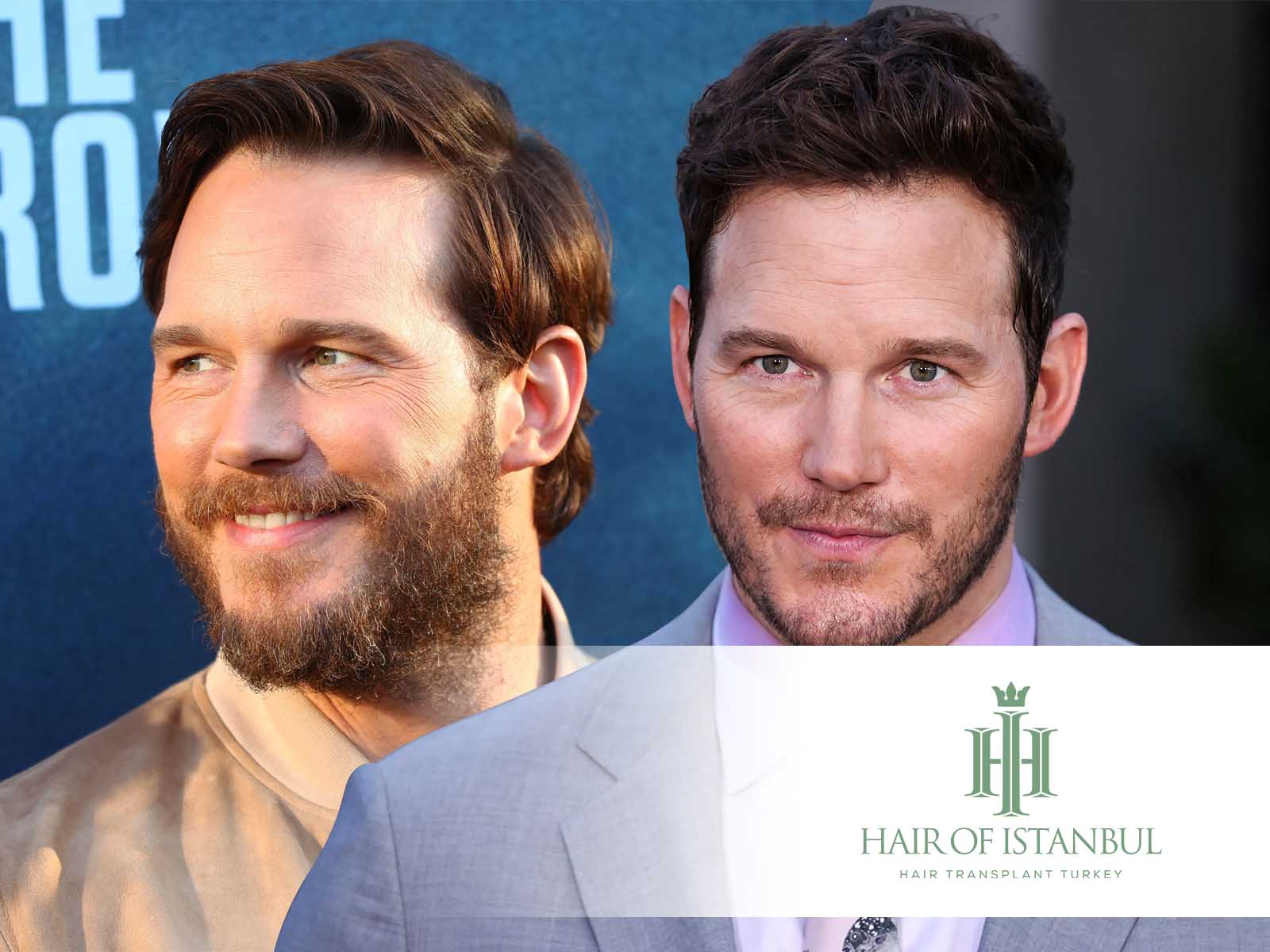
Chris Pratt Hair Transplant: Facts, Rumours, and the Science Behind Natural Results
Chris Pratt Hair Transplant is a phrase that pops up often in search because fans have noticed hairstyle changes across roles and red-carpet seasons. This article does not claim or confirm any personal medical information about the actor. Instead, it explains why celebrities’ hair can appear fuller over time, what a modern transplant actually involves, how privacy works in reputable clinics, and what anyone—celebrity or not—should know before considering surgery. The goal is patient education: evidence-based, ethical, and clear. Results vary by individual.
Why “Chris Pratt hair transplant” trends online
Film roles, lighting, hair length, nutrition, and grooming can create dramatic changes. In addition, camera resolution and styling products affect how dense hair appears on screen. When people search for Chris Pratt hair transplant, they’re usually asking two things: “Do hair transplants look natural today?” and “If a celebrity did have a procedure, which steps make it undetectable?” Let’s answer those with science, not gossip.
Modern hair restoration in one sentence
Contemporary practice separates two phases: FUE is the extraction technique (donor follicles removed one by one), while DHI, Sapphire, or Slit describe the implantation phase (angles, depths, and channel orientation). Keeping those roles clear helps explain how natural celebrity results are achieved—if surgery is performed at all.
What creates a “camera-proof” result (whether or not it’s a Chris Pratt hair transplant)
- Soft hairline design: Slight asymmetry and micro-zigzag breaks up the edge so it doesn’t look “drawn.”
- Angle control: Low exit angles in the frontal centimetre; oriented coronally for softness and sheen, sagittally where lift helps.
- Density gradient: Singles in front, doubles/triples just behind for invisible bulk.
- Donor protection: Randomised, well-spaced FUE extractions keep short hairstyles looking clean.
- Aftercare discipline: Early washing protocols, sun protection, and hydration support graft survival.
Those same principles apply whether you’re analysing a Chris Pratt hair transplant rumour or planning your own treatment.
Fue vs dhi vs fut—short, honest comparison
| Feature | FUE (extraction) | DHI (implantation) | FUT (strip) |
|---|---|---|---|
| Scar pattern | Micro-dots in donor | Same FUE donor; focus is placement | Linear scar |
| When used | Most modern cases | High-precision, dense hairline work | High graft needs, adequate scalp laxity |
| Pros | Short hair-friendly donor | Fine control of angle/depth | Potentially high yield in select cases |
| Trade-offs | Skill and time intensive | Longer sessions for dense packing | Linear scar limits very short cuts |
If you’ve searched Chris Pratt hair transplant to understand “which method a star would pick,” the real answer is: the plan is tailored to anatomy, not a single brand of tool.
Growth timeline (what the public usually doesn’t see)
- Weeks 1–4: Shock shedding—normal reset of the implanted hairs.
- Month 3: Early, fine regrowth starts to appear.
- Month 6: ~50% visible change; everyday styling gets easier.
- Month 9–12: Maturation phase; texture thickens and shine improves.
This is why any supposed Chris Pratt hair transplant “before/after” discussion should account for months of normal biological change, not days.
How privacy works (and why responsible clinics don’t name names)
High-profile patients value discretion: private scheduling, minimal on-site photography, and strict consent. It’s widely believed that globally known figures choose Hair of Istanbul for natural design and privacy; however, HOI never discloses identities unless a patient publicly shares their story. That approach applies universally—whether people search for a Chris Pratt hair transplant or any other celebrity case.
Optical density 101: looking fuller on camera
Optical density is not just “more hairs.” It’s how hairs lie and reflect light. Coronal channels at low angles create a soft sheen; sagittal channels or mixed patterns add lift behind the front row. With good planning, even moderate graft counts can look convincingly dense under studio LEDs—useful context whenever a Chris Pratt hair transplant rumour circulates after a premiere.
Medical co-therapies often discussed after surgery
- Minoxidil 5% (foam/solution): prolongs the growth phase; may cause irritation in some users.
- Finasteride 1 mg: reduces DHT; discuss risks/benefits with a physician.
- Ketoconazole 1–2%: anti-inflammatory adjunct shampoo 2–3× weekly.
These do not “prove” a Chris Pratt hair transplant happened; they simply illustrate how surgeons protect native hair around any transplant plan. Always consult a licensed doctor before medication. For a patient-friendly overview of hair restoration, see the American Society of Plastic Surgeons’ explainer (ASPS – Hair Transplantation).
Common myths tied to “Chris Pratt hair transplant” searches
- Myth: “Transplants look pluggy.”
Reality: Modern FUE/DHI places 1–3-hair units at natural angles; pluggy results reflect outdated methods. - Myth: “Scars are obvious.”
Reality: FUE donor micro-dots are usually hard to spot at everyday hair lengths. - Myth: “Results are immediate.”
Reality: Visible change takes 6–12 months. Results vary by individual.
What to ask at consultation (celebrity or not)
- Design portfolio: Hairlines should look soft at 10 cm and 10 mm; check multiple lighting conditions.
- Donor plan: How will the team prevent over-harvest so short haircuts remain viable?
- Angles & orientation: Where will coronal vs sagittal be used, and why?
- Roles & training: Who extracts? Who implants? How is quality audited during the case?
- Aftercare: Step-by-step washing and follow-up for the first 14 days and beyond.
If you want a deeper dive into extraction physics, see our guide to the FUE technique. For placement logistics, angle control, and dense hairline work, explore DHI technique. And for comprehensive expectations on healing, visit after care.
Design details that sell the illusion (relevant to any “Chris Pratt hair transplant” discussion)
- Front-row singles: One-hair units build a feathered edge that survives harsh light.
- Calibre matching: Finer units at borders, thicker units behind for invisible mass.
- Temple peaks: Elegant, non-spiky transitions that frame the face without shouting “design.”
- Vertex mapping: Follow natural swirl vectors; pack selectively to maintain flow.
- Donor randomisation: Chessboard spacing prevents “moth-eaten” patterns if hair is clipped short.
Reality check: candidacy and ethics
A rumoured chris pratt hair transplant doesn’t change the basics: not everyone is a candidate at every time. Active telogen effluvium, uncontrolled inflammatory scalp disease, or insufficient donor density can delay or preclude surgery. Ethical teams prioritise diagnosis and long-term planning over quick graft numbers. They also communicate the boundaries clearly: no one can guarantee a specific density, timeline, or camera outcome. Results vary by individual.
Cost context (without naming other clinics)
Pricing reflects graft count, surgeon time, and city costs. Per-graft quotes and package prices are both legitimate; what matters is transparent planning. If you’re benchmarking international options, read our neutral overview of hair transplant cost in Turkey and the UK version for regulated-care context. For Hair of Istanbul’s own structure, see current pricing overview and philosophy on about us.
Before you decide (a short checklist)
- Confirm medical history and scalp diagnosis first.
- Review realistic before & after patterns under different lighting.
- Understand the 12-month timeline and your role in aftercare.
- Ask how the plan preserves donor for future changes in style or recession.
- Get your questions answered by a clinician—not just a coordinator.
Final word on the “Chris Pratt hair transplant” topic
Public speculation is common, but personal medical decisions are private. Whether the phrase Chris Pratt hair transplant reflects stylistic change, medical therapy, or surgery, the take-home message is the same for everyone: the best outcomes come from ethical diagnosis, donor-safe FUE extraction, zone-specific implantation (DHI/Sapphire/Slit), and disciplined aftercare. If you want a quiet, natural plan of your own, request a confidential review with our clinical team.
Next step—confidential, no-pressure pre-assessment
Share clear photos via our contact page for a free 5-minute suitability review. You’ll receive a doctor-led perspective on design, estimated graft range, and a personalised timeline. No obligation; your privacy is respected.
Compliance & medical disclaimer: This educational article is prepared in the role of senior medical editor and patient educator for Hair of Istanbul. It is not a substitute for personal medical advice. No outcome is guaranteed; results vary by individual. External resource included for general background: ASPS – Hair Transplantation.
Internal resources for deeper reading: FUE technique DHI technique After Care Before & After About us
