
3
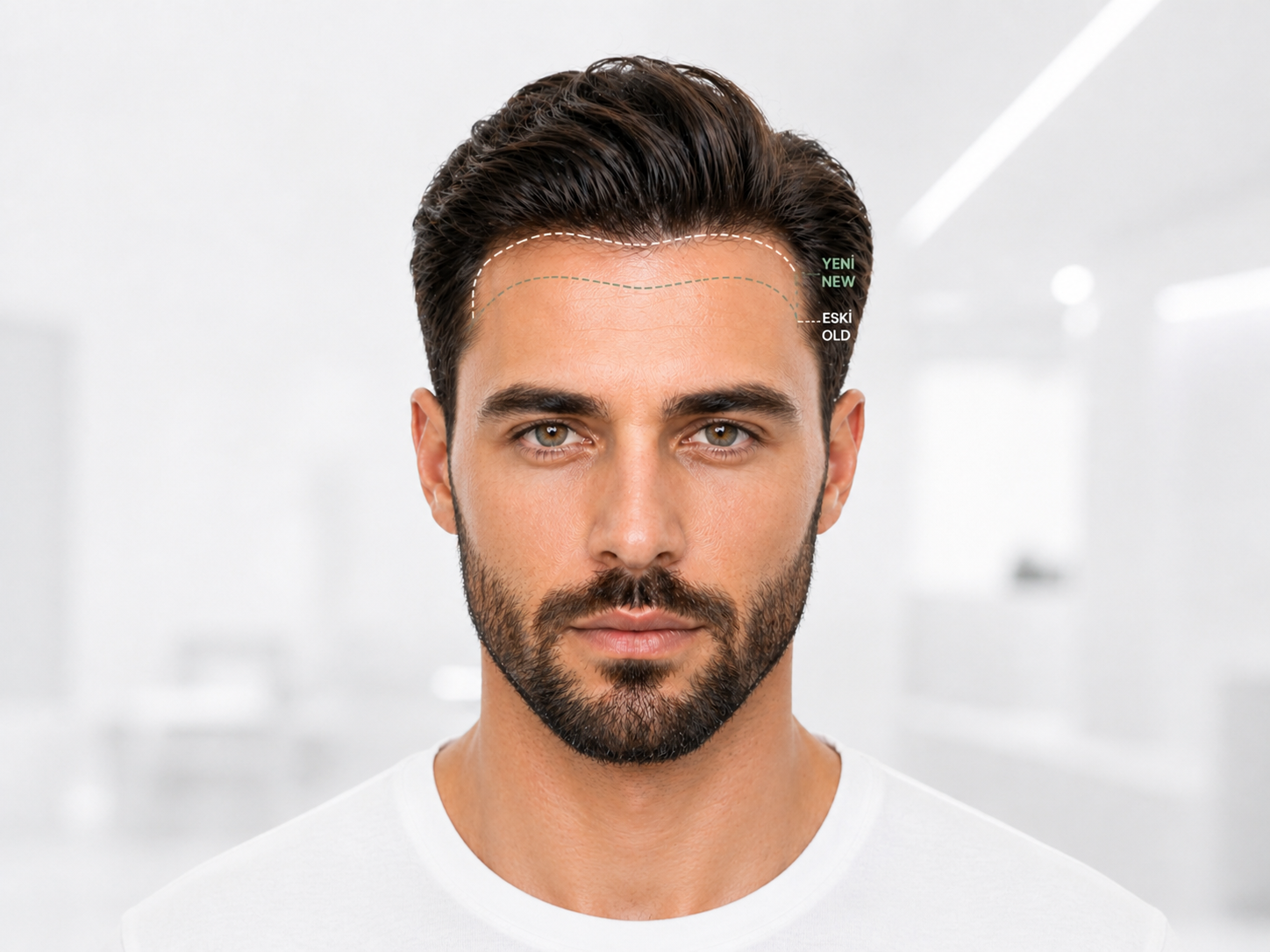
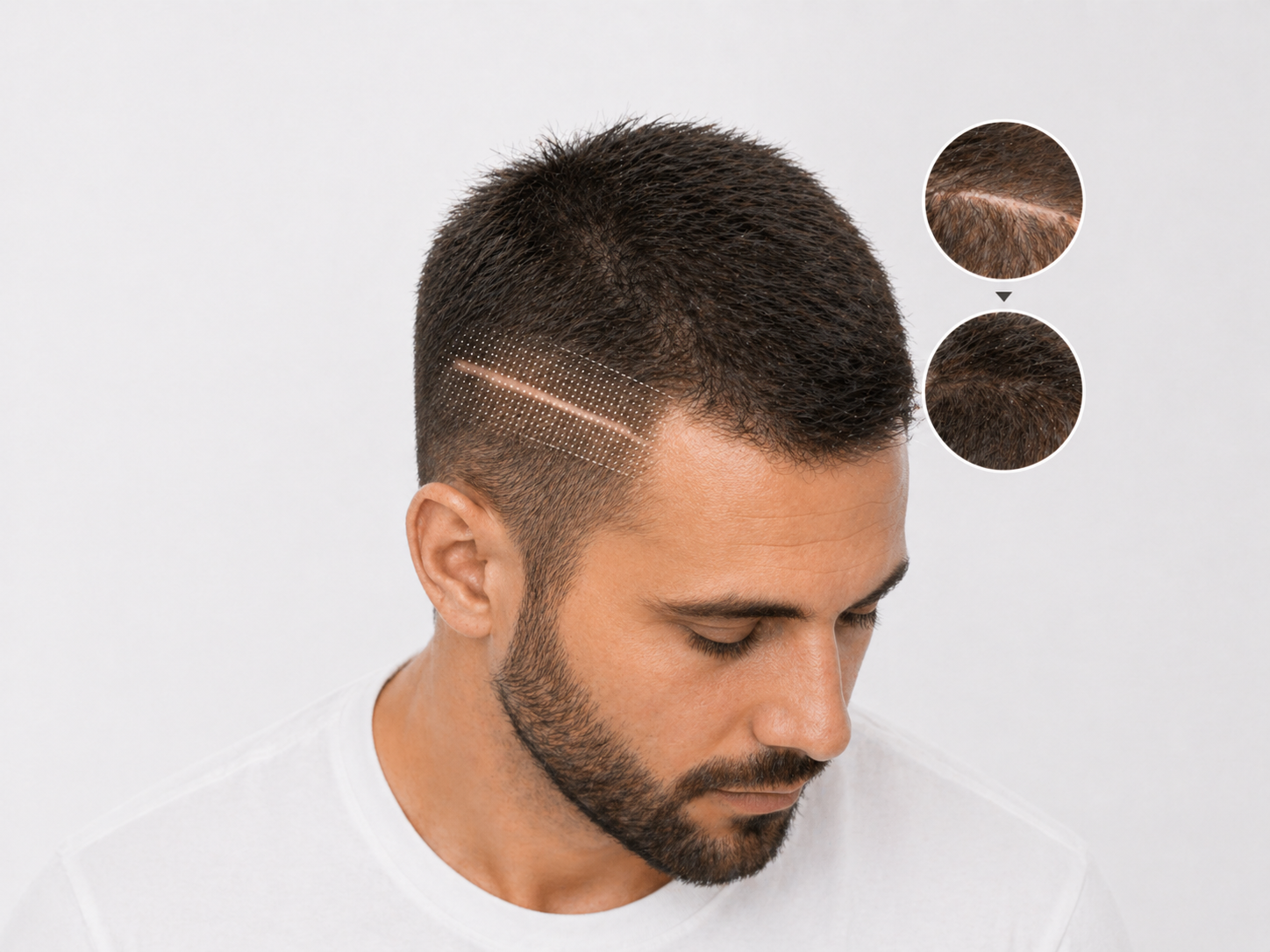
3D Hairline Simulation
Techniques & Technologies3D hairline simulation is the use of three-dimensional imaging software to show a patient a rendered preview of a proposed hairline before surgery. It is...
See More >





Comprehensive guide to hair restoration terminology and concepts
Showing 72 entries
3D hairline simulation is the use of three-dimensional imaging software to show a patient a rendered preview of a proposed hairline before surgery. It is...
See More >Age is not the criterion; predictability is. There is no number that makes surgery appropriate. What matters is whether the pattern has declared itself clearly...
See More >It measures what is there; it does not decide what to do. Software reads scalp photographs and returns counts — hairs per square centimetre, follicular...
See More >Anagen effluvium hits the hair while it is still growing. An insult severe enough to stop cell division in the bulb interrupts the shaft mid-production....
See More >Androgenetic alopecia is inherited sensitivity, expressed over time. It is not a disease the scalp catches. Certain follicles are genetically programmed to respond to androgens...
See More >This term describes hair moving out of the beard, not into it. Beard follicles are harvested and placed on the scalp to extend a donor...
See More >Most bleeding in a hair transplant happens during the operation, not after it. Once the procedure is over, bleeding is uncommon and usually self-limited. What...
See More >The limit is length, not survival. Body hair keeps the growth cycle it was born with. Its anagen phase is far shorter than scalp hair’s,...
See More >Depth is set against the graft, not against a number. There is no universal millimetre figure. The channel has to match the length of the...
See More >The two regions return different things for the same graft. This is a question about where a finite donor is spent, and the answer is...
See More >The crown is a direction problem before it is a density problem. Hair there leaves a single centre and spirals outward, changing bearing degree by...
See More >A cyst forms when skin closes over something that should have reached the surface. A graft buried below the surface, or a second graft placed...
See More >Density is what is placed; coverage is what is seen. They are not the same measurement and they do not move together. Coverage depends on...
See More >The dermal papilla is the follicle’s instruction set, not part of the hair. It is a small cluster of specialised cells sitting in a cup...
See More >DHT is not the problem; sensitivity to it is. Dihydrotestosterone is a normal androgen present in everyone. Most men losing hair have entirely ordinary levels...
See More >Diffuse thinning describes what is seen, not what is happening. It means hair density falling evenly across the scalp instead of receding along a front....
See More >DUPA is the diagnosis that removes the donor area. In ordinary pattern loss the back and sides are spared, which is what makes surgery possible....
See More >Donor dominance is the principle the whole procedure rests on: a follicle keeps the characteristics of the site it came from, not the site it...
See More >Depletion is an arithmetic problem, not an accident. The donor area holds a fixed number of follicular units, and every extraction permanently removes one. Nothing...
See More >The limit is a proportion, not a graft number. Follicular unit extraction takes units scattered across a zone, and the hairs left behind have to...
See More >Extraction is measured by one number: transection. A follicular unit sits at an angle under the skin and curves as it goes. The punch travels...
See More >FUT means follicular unit transplantation, and its defining act is the strip. A narrow horizontal band of skin is taken from the back of the...
See More >The two techniques differ at one step only. FUT removes a strip of donor skin and separates the follicular units from it on a bench....
See More >The visible hair misleads. A hair shaft leaves the skin at one angle, but the follicle beneath it does not run in a straight line...
See More >A graft outside the body faces three separate stresses. They are not variations of one problem, and a clinic can control one while losing another....
See More >Angle and direction are two separate decisions. Angle is how steeply the hair leaves the skin; direction is where it points once it is out....
See More >A graft is a follicular unit, not a hair. Follicles grow in natural clusters of one to four hairs, and a graft is one of...
See More >A follicle is an organ, not a hole. It is a tube of specialised skin extending down into the dermis, with its own blood supply,...
See More >Every follicle runs its own clock. Hairs do not cycle together, which is why humans shed continuously instead of moulting. At any moment a scalp...
See More >Miniaturization is a follicle shrinking, not a hair thinning. The same follicle keeps cycling, but each new growth run is shorter than the last, so...
See More >Shedding is hair leaving; loss is hair not coming back. They look identical in a shower drain and mean completely different things. A shed hair...
See More >The operation is done under local anaesthesia, and that is not a compromise. General anaesthesia is not standard for hair restoration: the patient needs to...
See More >Three different situations get called failure, and only two of them are. Separating them is the whole diagnosis, because each has a different answer and...
See More >At Norwood 6 and 7 the arithmetic inverts. In early loss the question is how to fill an area; here the bald surface is larger...
See More >Scar tissue is a different recipient bed, not just a marked one. It carries fewer vessels than normal scalp, and grafts placed into it depend...
See More >Each instrument governs one variable, and only one. A procedure is a sequence of separate decisions — how the follicle is freed, how it is...
See More >Every technique scars; they differ in shape, not in whether. Skin removed by a punch or a blade is replaced by scar tissue in both...
See More >A whorl is the point hair spirals out from. It forms before birth, when follicles set their angle in the developing skin, and it fixes...
See More >A hairline is built from named parameters, not from taste. The published framework fixes where the line starts, where it turns, and how it is...
See More >The ceiling is set by the recipient area, not by the donor. Grafts arrive with no blood supply and must be reached by vessels growing...
See More >The clock starts at extraction and does not stop at placement. Ischemia time is the interval during which a graft has no blood supply of...
See More >A keloid is not simply a thick scar. The distinction is where it stops. A hypertrophic scar stays inside the boundary of the original wound...
See More >The Ludwig Scale has three grades, and progression is read from the widening of the central part rather than from a moving hairline. Grade Appearance...
See More >The difference is how the punch is turned, not what it does. In manual FUE the operator rotates the punch by hand and feels the...
See More >A mega session is defined by graft number in a single day, not by technique. The label is applied loosely, generally to sessions well above...
See More >Irregularity is built at two scales, and both are needed. Macro-irregularity is the shape of the whole line: shallow peaks and setbacks across the forehead,...
See More >The term comes from strip surgery, where dissection is the whole job. A removed strip is first cut into thin slivers, then separated under a...
See More >People detect an artificial hairline before they can explain it. The eye is trained on thousands of real hairlines and reads the pattern, not the...
See More >Pitting and cobblestoning are opposite errors and are constantly confused. Both come from a graft sitting at the wrong level, but they sit at the...
See More >Poor growth is a yield problem, not a healing problem. The grafts were placed; a share of them never produced hair. Nothing about the scalp...
See More >The swelling appears on the forehead and around the eyes rather than on the scalp, which is what surprises most patients. Fluid used during surgery,...
See More >Punch diameter in follicular unit excision typically runs from 0.7 mm to 1.1 mm. The working rule is to use the smallest punch that still...
See More >Retrograde alopecia thins the donor area from below. Pattern loss is usually described as advancing from the front and crown downward. Retrograde alopecia moves the...
See More >The boundary is drawn against the worst case, not the current one. The safe donor area is mapped as though the person will one day...
See More >Sapphire blades create the recipient sites. They are not a way of extracting hair. This is the most common misunderstanding behind the term: “sapphire FUE”...
See More >In scarring alopecia the follicle is destroyed, not shrunk. Inflammation damages the stem cell region and the follicle is replaced by fibrous tissue. This is...
See More >Duration is an output, not a setting. Nobody decides how long a procedure will take; it falls out of the graft number, how difficult the...
See More >Shock loss after hair transplant is the temporary shedding of existing, non-transplanted hair in the weeks following surgery. It is a recognized and usually reversible...
See More >A second session is usually planning, not repair. Three quite different situations lead to one, and only the third is a correction. Reason What it...
See More >The slit technique separates two jobs that can otherwise collide. All recipient sites are cut first, then grafts are placed into them. Because the design...
See More >Smoking attacks the exact process a graft depends on. A transplanted follicle survives its first days on oxygen diffusing from surrounding tissue, until new vessels...
See More >Telogen effluvium is shedding, not balding. A physiological shock pushes a large share of growing follicles into the resting phase at once. They all release...
See More >Temporal points are classified before they are rebuilt. The published scheme grades them from normal, through thinning, to recession that runs parallel to the sideburn...
See More >Trichoscopy is dermoscopy applied to the scalp. A magnifying lens with controlled lighting is held against the skin so hair shafts, follicular openings and the...
See More >Unshaven is a spectrum, not a single technique. The term covers everything from leaving the recipient area untouched while the donor is clipped, to taking...
See More >These two words describe every hair on the body, and they are defined against each other. Terminal hair is thick, pigmented and long — scalp,...
See More >A hair transplant moves hair; it does not create any. The total number of follicles on a head is the same before and after. Surgery...
See More >DHI is the hair transplant technique that uses the Choi implanter pen for direct graft placement without pre-made incisions. Learn how it works, when it's...
See More >DHT (dihydrotestosterone) is the proven hormonal cause of pattern hair loss in 50% of men and most women. Learn how it shrinks hair follicles, which...
See More >Finasteride is the FDA-approved 1mg oral medication that halts hair loss in up to 83% of men by blocking DHT. Learn how it works, the...
See More >Minoxidil is the FDA-approved over-the-counter topical that increases hair count by 45% in clinical trials. Learn how it works, the clinical evidence, its safety profile,...
See More >Hairline errors are not one problem but four, and they are not equally fixable. Knowing which one is present decides whether the answer is more...
See More >Get in touch for a free consultation. Our multilingual team is ready to answer your questions and guide you through the process.
Fill out the form and our team will contact you within 24 hours.