
 en
en TR
TR  SK
SK  ITA
ITA  FR
FR  DE
DE  ES
ES  BG
BG 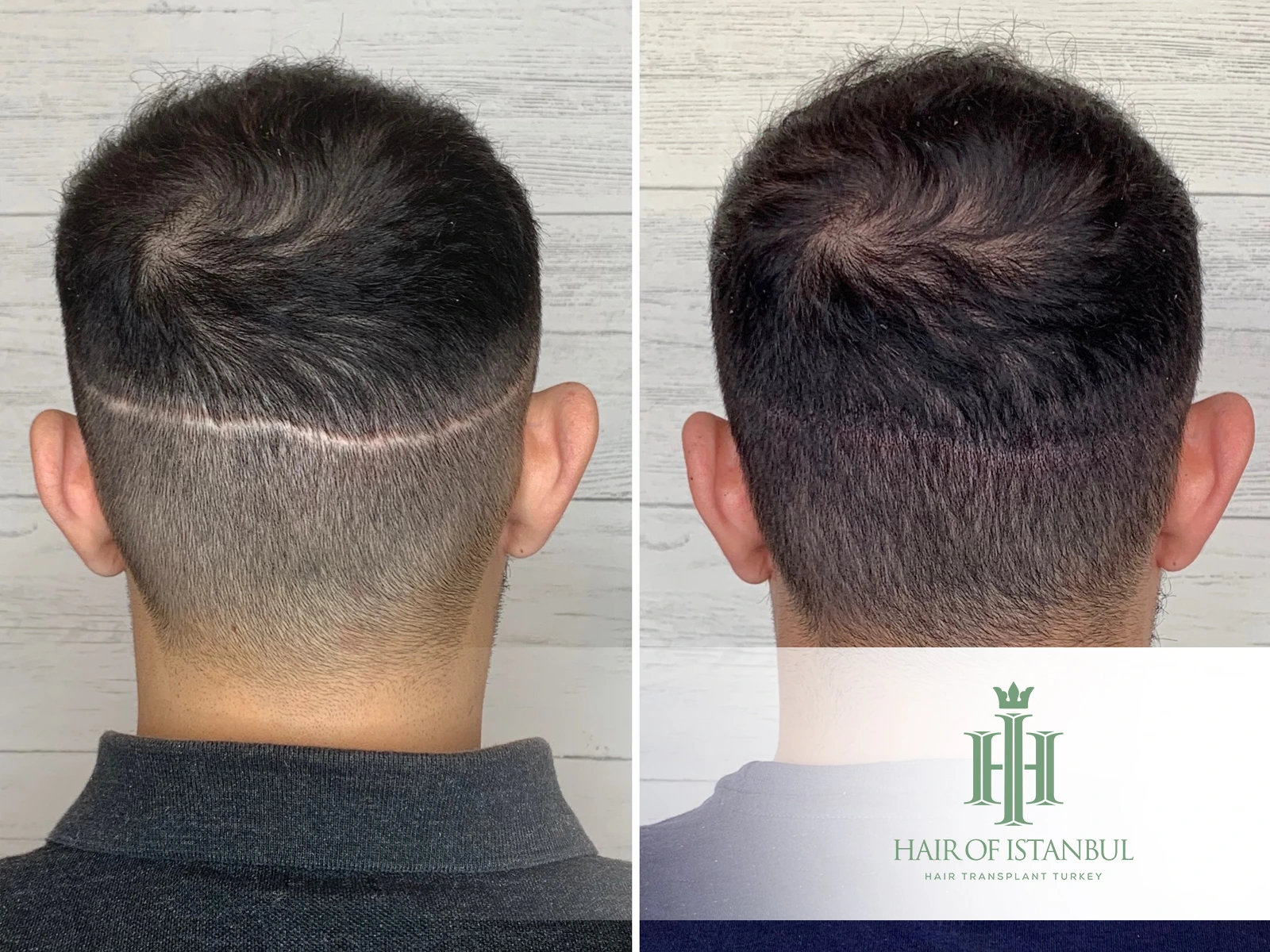
Hair Transplant Scar: Complete 2025 Guide to Scarring, Healing, and Minimizing Visibility
A hair transplant scar is one of the most common concerns for patients considering surgical hair restoration. While modern FUE extraction and advanced implantation techniques such as DHI, Sapphire, and Slit have significantly reduced the risk of visible scarring compared to older strip-based methods, every surgical procedure—no matter how refined—involves some degree of tissue healing. Understanding how scars form, why some become more visible than others, and how long-term after-care impacts scar appearance is essential for anyone planning a hair transplant.
This comprehensive guide explains the different types of hair transplant scars, how FUE compares with FUT, what influences scar visibility, and what you can realistically expect during healing and long-term maturation.
Why Scars Form After a Hair Transplant
Scars are part of the body’s natural wound-healing response. Any time the skin is incised, punctured, or surgically manipulated, collagen fibers reorganize to close and repair the tissue. A hair transplant scar forms when this process takes place in either the donor or recipient areas.
Healing occurs in three stages:
- Inflammatory phase: Redness and early tissue response
- Proliferative phase: Collagen deposition and early scar formation
- Remodeling phase: Scar matures, flattens, and becomes less visible over months
According to dermatology literature, scars vary based on incision size, tension, skin type, vascularity, and individual healing characteristics such as keloid or hypertrophic scarring tendencies.
Types of Hair Transplant Scars
1. FUE Scars (Dot Scars)
FUE extraction uses micro-punches sized 0.7–0.9 mm to remove individual follicular units. Each extraction leaves a tiny dot-like wound that heals into a small, round scar. Under proper technique:
- Dot scars are typically barely visible to the naked eye
- Hair can be trimmed short without exposing large marks
- Even distribution prevents patchy donor appearance
These micro-scars flatten and lighten over time, becoming more difficult to detect as surrounding hair grows.
2. FUT Scar (Linear Strip Scar)
Before the dominance of FUE, many clinics used FUT (Follicular Unit Transplantation), also known as the strip method. FUT involves removing a long strip of scalp from the donor area, leaving a linear scar after suturing.
Key characteristics of FUT scars:
- Permanent linear scar across the back of the scalp
- More visible with short hairstyles
- Risk of stretching over time due to tissue tension
- Higher risk of hypertrophic or keloid formation in predisposed individuals
Today, FUT is less commonly performed in high-standard clinics due to aesthetic concerns and longer healing time. See the full comparison in FUT hair transplant.
Why FUE Leaves Minimal Visible Scarring
Modern FUE is designed to reduce the size, depth, and visibility of donor scars. Several factors explain why FUE-based procedures remain the preferred method globally:
- Smaller incisions: Micro-punches leave minimal tissue trauma.
- Even extraction pattern: Prevents density gaps and patchiness.
- No sutures: Faster healing and fewer complications.
- Short haircut compatibility: Patients can keep hair short without large scars showing.
The key variable is donor management. Poorly executed FUE with excessive harvesting can result in visible thinning or clustered dot scars, which is why surgical expertise and planning are critical.
Recipient Area Scars: Are They Visible?
In the recipient zone, tiny micro-incisions are created using DHI pens, Sapphire blades, or Slit tools. These incisions generally leave no visible scars once the scalp has fully healed. Instead, short-term redness and crusts are expected, followed by a gradual return to normal skin texture.
A well-performed implantation technique results in:
- Minimal surface disruption
- No long-term textural irregularities
- Natural skin appearance after healing
Healing stages in the recipient area—such as scab formation and shedding—are explained in detail in the hair transplant scabs guide.
Factors That Influence Hair Transplant Scar Visibility
Not all scars heal the same. Several variables influence how noticeable a hair transplant scar becomes:
1. Surgeon Experience
Extraction depth, punch angle, spacing, and donor distribution all determine scar quality. Experienced surgeons minimize tissue trauma and avoid overharvesting.
2. Punch Size and Technique
Smaller tools generally lead to smaller scars, but only when used correctly. Oversized punches and aggressive torque can enlarge wounds.
3. Skin Type and Genetics
Patients with darker, thicker, or more reactive skin may form more noticeable scars. People with keloid tendencies require cautious planning. Dermatology resources note that keloids form when scar tissue grows excessively beyond the original wound.
4. Post-Operative Care
Poor wound care, scratching, infection, or early sun exposure can worsen scarring.
5. Donor Overharvesting
Removing too many grafts from the same area can lead to visible depletion or patchiness, even if individual scars are small. Proper donor safety is explained in the donor area guide.
How to Minimize the Appearance of Hair Transplant Scars
While scars cannot be completely avoided, several strategies can make them nearly undetectable:
- Choose an experienced surgical team with a proven donor management protocol.
- Avoid sun exposure in the early months to prevent scar darkening.
- Follow washing and healing protocols strictly.
- Do not scratch or pick scabs.
- If you have darker or reactive skin, discuss scar-prevention options with your physician.
For guidance on managing early discomfort or inflammation, refer to hair transplant side effects.
When Do Hair Transplant Scars Fully Mature?
Scar maturation is a slow biological process. General expectations:
- 1–2 weeks: Scabs fall, early redness improves.
- 1–3 months: Pinkness reduces, texture becomes smoother.
- 6–12 months: Scar lightens and blends with surrounding skin.
- 12–18 months: Full maturation of deeper collagen layers.
The scar continues to improve visually as the surrounding hair grows and thickens, especially during Months 6–12, detailed in the 8-month results guide.
Can Hair Transplant Scars Be Treated or Improved?
Yes. Several medical and cosmetic options are available:
- Micropigmentation (SMP): Creates the illusion of uniform follicle density.
- Laser treatments: Improve texture and reduce redness.
- Platelet-rich plasma (PRP): May support healing in selected cases.
- Scar revision surgery: Rarely needed, but possible for large FUT scars.
Your eligibility depends on scar size, type, and your long-term hair goals.
Are Scars Visible After a Hair Transplant?
With modern techniques, the vast majority of patients experience minimal or no visible scarring, especially when the hair is kept at a normal length. Ultra-short buzz cuts may show faint dot patterns in the donor zone, depending on skin type and extraction density.
The key is choosing a clinic with strong experience in donor planning, natural hairline design, and implantation precision — illustrated in the before & after results gallery.
Independent Medical Reference
For additional dermatologic insight into scar formation, keloids, hypertrophic scars, and wound-healing patterns, review the authoritative DermNet NZ scar formation resource. This reference explains why certain individuals are more prone to prominent scars and how collagen behaves during the healing process.
Conclusion
A hair transplant scar is a normal part of surgical healing, but with today’s advanced FUE techniques and careful donor management, scarring is minimal for most patients. Understanding the difference between FUE and FUT scars, knowing what factors influence scar visibility, and following proper after-care helps set realistic expectations and ensures the best possible aesthetic outcome.
Yes, all surgical scars are permanent, but modern FUE scars are tiny, dot-like, and often barely visible once healed.
Yes. FUT creates a linear strip scar, while FUE leaves multiple micro-dot scars that are far less visible.
Scar maturation typically takes 12–18 months, during which it lightens and becomes less noticeable.
Options include laser therapy, scar revision, SMP (micropigmentation), and PRP in selected cases.
Yes. Overharvesting or incorrect punch technique can lead to patchiness or conspicuous dot patterns, which is why surgeon expertise is essential.
