










What Is Finasteride?
Finasteride is the most prescribed pharmacological treatment for male pattern hair loss — the only FDA-approved oral medication with five-year Phase III evidence for halting androgenetic alopecia. This article explains how finasteride blocks DHT, what the clinical evidence shows, its dosage and side effects, and how it integrates with hair transplant surgery.
Finasteride is the most widely prescribed pharmacological treatment for male pattern hair loss caused by androgenetic alopecia. As the only FDA-approved oral medication for finasteride hair loss therapy with long-term Phase III clinical evidence, it has remained the gold standard since its FDA approval in 1997 under the brand name Propecia. The medication blocks the conversion of testosterone into DHT (dihydrotestosterone) — the hormone primarily responsible for follicular miniaturisation. Understanding how finasteride works is essential for any patient evaluating treatment options, including those considering hair transplant surgery.
How Finasteride Works
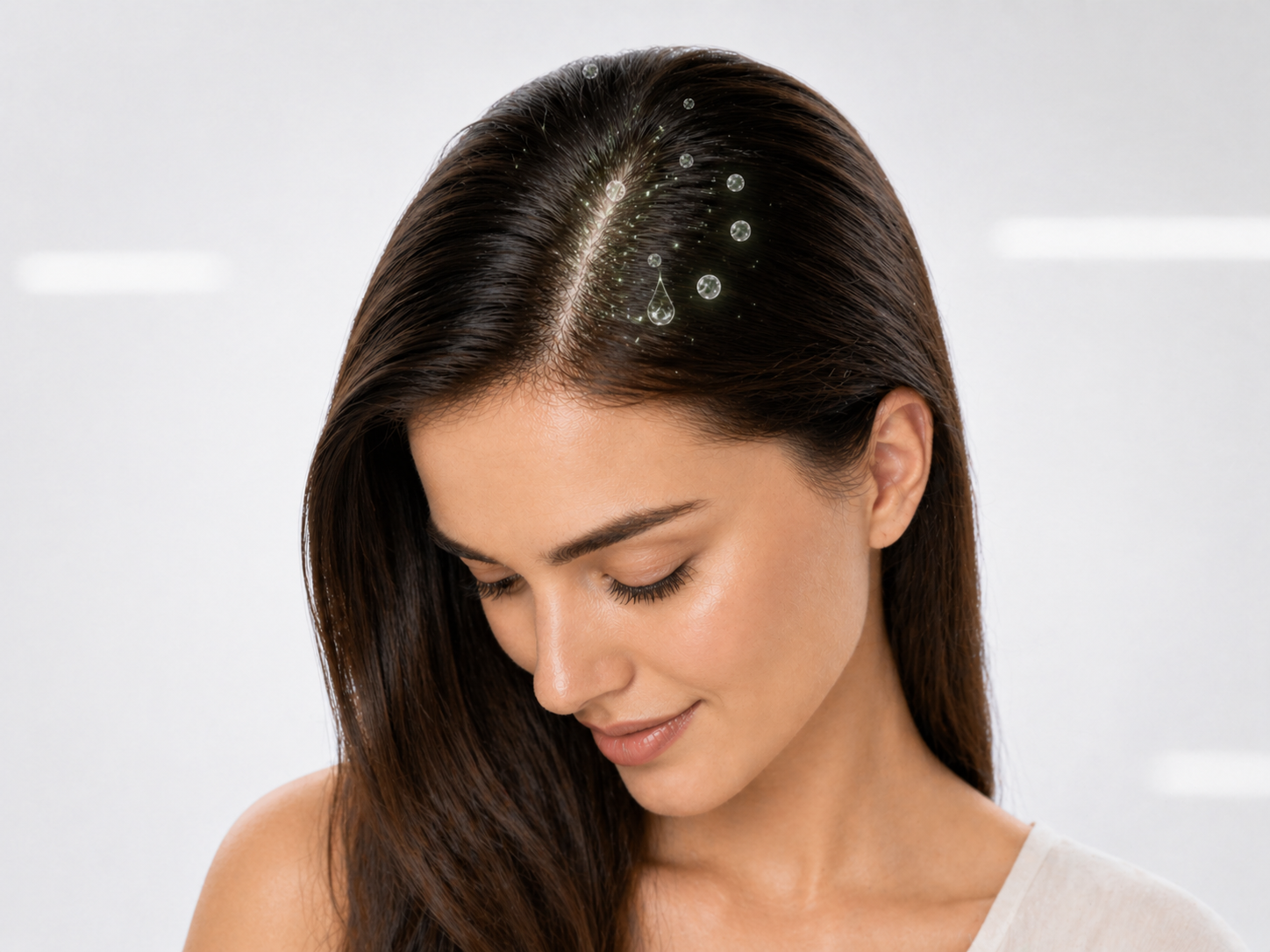
Finasteride is a selective Type II 5-alpha reductase inhibitor. It binds to and inhibits the enzyme responsible for converting testosterone into DHT — the primary androgen driver of hair loss in genetically susceptible follicles.
At the standard 1mg daily oral dose, the medication reduces scalp DHT by approximately 64–68% and produces similar reductions in serum DHT. This level of suppression is sufficient to halt the progression of pattern hair loss in the majority of male patients and, in many cases, to produce visible regrowth of miniaturised follicles that have not yet entered permanent dormancy.
Critically, finasteride does not eliminate DHT entirely — it suppresses it. This is why continuous use is required: discontinuation results in DHT levels returning to baseline within 2–4 weeks, with hair loss resuming on its previous trajectory.
Finasteride Hair Loss Treatment — Clinical Evidence
The pivotal evidence base for the medication is the 5-year Phase III clinical trial published by Kaufman et al. (1998). Across 1,553 men with androgenetic alopecia followed for five years:
- 83% maintained or increased hair count
- 66% experienced visible regrowth at the vertex (crown)
- 90% halted further hair loss progression
These results were sustained over the entire 5-year window, with no plateau in efficacy. Subsequent real-world studies and meta-analyses have confirmed similar outcomes across diverse patient populations.
Finasteride produces the most visible regrowth at the crown and mid-scalp. Frontal hairline response tends to be more modest, since follicles in this zone are typically more advanced in miniaturisation by the time treatment begins. Early intervention — at the first signs of recession or thinning — produces consistently better outcomes than treatment started after extensive hair loss.
Finasteride Dosage and Long-Term Use
The medication was originally developed in the 1980s for benign prostatic hyperplasia (BPH) at a 5mg daily dose, marketed as Proscar. Subsequent research identified its hair preservation effects, and in 1997 the FDA approved a 1mg formulation — Propecia — specifically for the treatment of androgenetic alopecia in men.
The standard protocol is 1mg taken orally once daily, with or without food. Time of day does not affect efficacy. Dose escalation beyond 1mg has not been shown to provide additional hair-related benefit, though it does increase systemic DHT suppression and the associated side effect profile.
Finasteride is a maintenance therapy. Its benefits depend on continuous use — typically for years or indefinitely. Patients should be prepared for long-term commitment before starting treatment, as discontinuation reverses the gains within 6–12 months.
Finasteride Side Effects and Safety Profile
The most frequently reported adverse effects are sexual: decreased libido (1.8%), erectile dysfunction (1.3%), and ejaculation disorders (1.2%) according to American Academy of Dermatology guidance. These rates were established in clinical trials and are typically reversible — either resolving spontaneously with continued use or fully reversing on discontinuation.
A small subset of patients report persistent symptoms after stopping the medication, sometimes referred to as Post-Finasteride Syndrome (PFS). The clinical reality and incidence of PFS is debated within the dermatology community, with some studies finding no causal link beyond placebo and others identifying a small but real signal. Informed consent and patient education remain important parts of every prescription.
The medication is contraindicated in women of childbearing potential due to teratogenic risk: it can cause feminisation of male fetuses if absorbed during pregnancy. Even handling broken or crushed tablets is not recommended for pregnant women.
Patients seeking the DHT-blocking effect without systemic exposure may consider localised delivery via mesotherapy injection, which administers anti-androgen agents directly into the scalp at follicle-level concentrations — significantly reducing systemic absorption and the associated risk of sexual side effects.
Finasteride and Hair Transplant Surgery
At Hair of Istanbul, finasteride is integrated into long-term treatment planning for the majority of male hair transplant patients. The rationale is biological: while transplanted follicles from the occipital donor zone are permanently resistant to DHT, the surrounding native hair in the recipient area is not. Without DHT suppression, native hair will continue to miniaturise, creating a “thinning around the transplant” effect over years.
For women’s hair transplant patients, finasteride is generally not used due to teratogenic and limited-efficacy concerns. Alternative approaches — including topical minoxidil, anti-androgen mesotherapy, and PRP treatment — are typically prescribed based on the pattern and severity of hair loss.
Surgical consultation at Hair of Istanbul includes a long-term medical management plan tailored to each patient — confirming whether the medication is suitable, the recommended dose, and how to monitor response over time.
Finasteride begins suppressing DHT within hours of the first dose, but visible hair changes take longer. Most patients see stabilisation of hair loss within 3–6 months and visible regrowth between 6–12 months, with maximum benefit typically observed at 12–24 months. The first weeks may include a temporary shedding phase as miniaturised hairs cycle out and are replaced — this is a positive sign of follicle response, not a treatment failure.
Discontinuation results in scalp DHT returning to baseline within 2–4 weeks. Any hair loss the medication was preventing will resume on its normal trajectory, and any hair gained from treatment will typically be lost within 6–12 months of stopping. Finasteride is a maintenance therapy — its benefits depend on continuous use, which is why long-term commitment is an important part of the treatment decision at Hair of Istanbul.
The medication is contraindicated in women of childbearing potential due to teratogenic effects on male fetuses. Postmenopausal women have been studied with mixed results — some show benefit at higher doses (5mg), but finasteride is not FDA-approved for female pattern hair loss. Female patients at Hair of Istanbul are typically managed with topical minoxidil, mesotherapy with localised anti-androgens, PRP treatment, or surgical hair restoration depending on the pattern and severity of hair loss.
In the vast majority of patients, side effects are mild and reversible upon discontinuation. A small subset reports persistent symptoms — sometimes referred to as Post-Finasteride Syndrome — but the clinical reality and incidence of permanent effects is debated within the medical community. Patients with concerns can discuss alternative DHT-blocking strategies including topical formulations or localised mesotherapy delivery, which reduces systemic absorption and the associated risk profile.
Hair of Istanbul typically recommends starting finasteride at least 3 months before surgery when possible — this stabilises native hair loss and provides a clearer picture of donor and recipient density at the time of planning. Post-surgery, continuous use protects native hair around the transplanted grafts from ongoing miniaturisation, preserving the long-term density and aesthetic outcome of the procedure. The exact protocol is confirmed during each patient’s consultation.