
 en
en TR
TR  SK
SK  ITA
ITA  FR
FR  DE
DE  ES
ES  BG
BG 
First Wash After Hair Transplant: Full 2025 Guide for Safe and Effective Care
The first wash after hair transplant is one of the most crucial steps in the entire recovery process. While the surgical procedure itself lays the medical foundation, proper washing ensures healthy scab removal, prevents irritation, protects the grafts, and accelerates healing. This comprehensive 2025 guide explains exactly when and how the first wash should be performed after FUE-based hair transplantation, what products to use, common mistakes to avoid, and why professional supervision during the early phase is essential.
Why the First Wash After Hair Transplant Is Important
During the first few days after surgery, tiny scabs form around the implanted grafts. These scabs protect the healing skin but must be removed gradually and safely. The first wash after hair transplant helps to:
- Soften and lift scabs without damaging grafts
- Reduce itching and irritation
- Lower the risk of infection
- Promote better oxygen circulation
- Improve aesthetic appearance during early recovery
High-quality clinics follow structured washing protocols similar to those described in the after-care guidelines. The goal is to protect the grafts while supporting natural skin regeneration.
When Should the First Wash After Hair Transplant Be Done?
Most clinics perform the first wash on Day 2 or Day 3, depending on the patient’s skin type, graft density, and surgical approach. The wash is often done at the clinic to ensure correct technique and to evaluate early healing.
However, if you are traveling or performing the wash at home, follow your clinic’s exact timings. The grafts are fragile during the first 72 hours, so washing must be gentle, controlled, and performed with proper products.
Products Recommended for the First Wash
Only medical-grade, non-irritating products should be used for the first wash after hair transplant. This includes:
- A moisturizing lotion or foam that softens scabs
- A pH-balanced medical shampoo
- Saline spray if recommended
Avoid any product containing harsh chemicals, fragrances, or alcohol. Patients should follow the same caution in selecting hair care products used after the procedure, similar to the guidance outlined in the hair transplant overview.
How to Apply Lotion Before the First Wash
Before shampooing, patients are instructed to apply a medical lotion to both donor and recipient areas. This step:
- Softens scabs
- Loosens dried plasma
- Prevents crust buildup
- Ensures easier washing
How to Apply
- Gently tap lotion using fingertips—never rub
- Cover the recipient area completely
- Let the lotion sit for 20–30 minutes
The goal is hydration, not friction. The grafts should never be pressed or massaged.
How to Perform the First Wash After Hair Transplant
The correct method is gentle and involves three major steps: rinsing, shampooing, and drying.
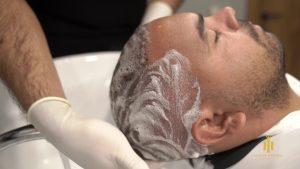
how to wash your hair after hair transplant
Step 1: Gentle Rinsing
- Use lukewarm water
- Pour water from a cup—no direct shower pressure
- Avoid any strong stream that may disturb grafts
Step 2: Applying Medical Shampoo
Medical shampoo should be used with a foam technique:
- Foam the shampoo in your hands
- Gently tap the foam onto the grafts
- Avoid rubbing, scratching, or sweeping movements
This prevents graft displacement while cleansing the skin surface.
Step 3: Final Rinse
Rinse slowly using a cup. Continue until all foam is removed.
Step 4: Safe Drying
Never use a towel to rub the scalp.
- Use a soft linen or paper towel to pat gently
- Air-drying is ideal
Common Mistakes to Avoid During the First Wash
To protect grafts, avoid:
- Direct shower pressure
- Rubbing or scratching
- Hot water
- Hair dryers on high heat
- Using cosmetic shampoos or oils
These mistakes may irritate the skin or even dislodge grafts if done too early.
Why Scab Removal Must Be Gradual and Controlled
Scabs naturally fall off between 7–10 days. Removing them prematurely may lead to:
- Graft loss
- Uneven texture
- Folliculitis
- Prolonged redness
A controlled approach is always safer. If scabs persist beyond 10 days, clinics may instruct gentle circular motions during later washes. Patients can also review the clinic’s guide on the donor area for hair transplant to understand healing patterns after extraction.
How Donor Area Should Be Washed
The donor area heals faster than the recipient area. It can be washed with slightly more movement but still must follow careful, non-friction guidelines.
- Use foam shampoo—not direct rubbing
- Allow scabs to soften naturally
- Do not scratch or peel
The first wash after hair transplant is essential for keeping the donor region clean and preventing ingrown hairs or irritation.
How Long Should You Continue the Washing Protocol?
Patients should continue the medical washing routine for 10–14 days or until all scabs have completely fallen off. After two weeks, patients can gradually transition to more normal washing techniques depending on clinic instructions.
Those who exercise or sweat frequently should pay extra attention to hygiene. For details on returning to physical activity, patients can review the guide on exercise after hair transplant.
Does the First Wash Affect Hair Growth?
When performed correctly, washing supports healthy growth by:
- Cleansing dried plasma
- Reducing bacterial load
- Improving oxygen delivery
- Promoting skin renewal
An improper wash, however, may irritate grafts or prolong redness.
Signs the First Wash Was Done Correctly
- Reduced tightness
- Softer scabs
- Minimal dripping redness
- Comfortable skin sensation
Mild pinkness after washing is normal and resolves within days.
When Should You Contact the Clinic?
Seek professional help if you notice:
- Persistent bleeding
- Unusual pain
- Pus, odor, or signs of infection
- Sudden swelling unrelated to normal postoperative patterns
For additional general medical information on hair and scalp conditions, refer to the NHS hair loss resource.
Conclusion
The first wash after hair transplant sets the foundation for safe healing and long-term success. Following correct lotion application, gentle foam shampooing, controlled rinsing, and protective drying ensures grafts remain secure and the skin regenerates naturally. When the first wash is performed with proper technique and timing, the overall recovery process becomes smoother, safer, and more predictable.
Usually on Day 2 or Day 3, depending on clinic protocol and skin type.
No. Only medical, pH-balanced shampoos should be used for the first 10–14 days.
Yes. Avoid direct shower pressure during the first washes; use cup rinsing instead.
Most scabs fall off naturally between Days 7–10 with proper washing.
Yes. Mild pinkness is normal and typically fades within a few days.
