
 en
en TR
TR  SK
SK  ITA
ITA  FR
FR  DE
DE  ES
ES  BG
BG 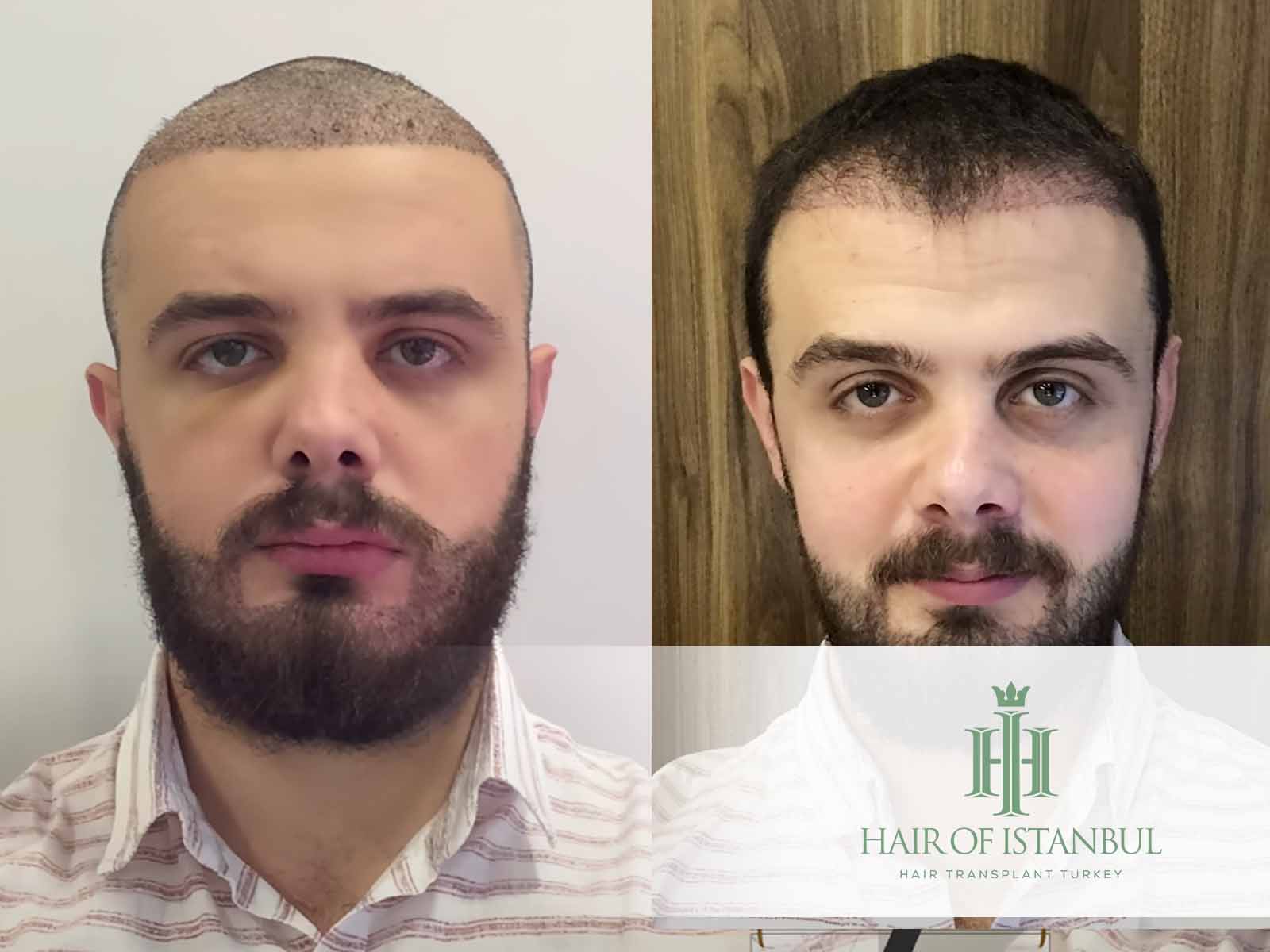
Hair Transplant After 3 Months: What to Expect in the Early Growth Phase
The period hair transplant after 3 months is one of the most anticipated stages of the entire recovery timeline. Although the procedure itself is completed in a single day, the transformation unfolds slowly in phases—and the 3-month milestone marks the beginning of the most exciting period: early visible growth. This guide explains what happens at Month 3, what is normal, what is not, how your hair should look, and how this stage fits into the full 12–18 month hair growth cycle.
All explanations are based on modern FUE extraction and implantation methods such as DHI, Sapphire, or Slit, which follow predictable biological healing patterns.
Why the 3-Month Stage Is So Important
Month 3 is when the transplanted follicles transition from the resting (telogen) phase into the early growth (anagen) phase. Many patients feel anxious between Weeks 2–8 due to shock loss and temporary thinning. The hair transplant after 3 months stage is the turning point where the first new hairs emerge—thin, soft, and often lighter in color, but undeniably a sign that the follicle cycle has started.
Understanding this stage reduces anxiety and aligns expectations with the natural biology of transplanted follicles.
How the Hair Looks at 3 Months
At the 3-month mark, it is completely normal for the hair to look:
- Thin or wispy
- Slightly curled or zigzag-shaped
- Irregular in texture
- Uneven across different areas
- Lighter in color (vellus-like)
These features are temporary. Newly grown hairs need additional months to thicken, gain pigment, and align direction. The “baby hair” appearance is expected at this stage.
Shock Loss Before Month 3: A Normal Process
Shock loss is the temporary shedding of transplanted and sometimes native hairs between Weeks 2–6. Many patients still see sparse areas at Month 3 because they are just exiting the shock loss phase.
Shedding does not mean follicles are lost. The roots remain intact under the skin. For a full breakdown of the shedding cycle, refer to the detailed hair transplant recovery timeline.
Hair Growth Cycle and Why Month 3 Is Still Early
Hair grows in biological phases. After a transplant, grafts follow this cycle:
- Weeks 1–2: Healing and crusting
- Weeks 2–6: Shedding (shock loss)
- Months 1–3: Resting phase (no visible growth)
- Months 3–4: First new hairs appear
- Months 4–6: Noticeable improvements
- Months 6–9: Density building
- Months 12–18: Full maturation
This explains why the period hair transplant after 3 months represents the very beginning—not the peak—of visible transformation.
What Results Should You Expect at 3 Months?
At Month 3, typical results include:
- 5–15% of early visible growth
- Fine, soft hairs emerging unevenly
- Slight thickening in donor and recipient areas
- A gradual return of scalp sensitivity to normal
Many patients see more growth around Month 4–5 than in Month 3. Growth patterns vary by genetics, graft survival, donor characteristics, and overall healing rate.
Redness, Tingling, and Sensitivity at 3 Months
Although most redness fades by Weeks 2–4, some individuals—especially fair-skinned patients—may still experience mild pinkness at Month 3. This is not unusual and depends on collagen remodeling and local vascular activity.
Occasional tingling or brief sensitivity is also normal as nerve endings continue to regenerate. More insight into these sensations is available in the article on hair transplant side effects.
Recipient Area Look at Month 3
The implanted area may appear:
- Slightly patchy
- Uneven in direction
- With tiny new hairs visible on close inspection
This uneven look is temporary. Hairs grow at different speeds depending on their position, genetics, and local circulation.
Donor Area After 3 Months
By Month 3, the donor area has fully healed. Dot scars from FUE extraction (0.7–0.9 mm) fade significantly and blend with surrounding hair. Any initial redness or dryness should be gone.
For donor details, visit the guide on the donor area for hair transplant.
Is It Safe to Resume Exercise at 3 Months?
Yes. At the stage hair transplant after 3 months, all exercise types—including weightlifting, running, HIIT, and swimming—are considered safe.
Earlier phases require restrictions, which are explained in detail in the full guide to exercise after hair transplant.
When Styling and Haircuts Become Safe
At Month 3:
- Electric clippers are safe for most patients
- Mild styling products can be used
- Haircuts are allowed but avoid heavy scalp pressure
At Month 4–6, razor shaving also becomes fully safe. For a complete grooming timeline, see the guide on hair cut after hair transplant.
Does Hair Grow Unevenly at 3 Months?
Yes. At Month 3, uneven growth is the norm. Some follicles activate earlier while others require more time. Density and direction typically stabilize between Months 6–9.
What If There Is No Growth at 3 Months?
Lack of visible growth at Month 3 is still considered normal. Some patients begin noticeable growth only around Month 4–5.
Factors influencing growth include:
- Genetics
- Skin thickness
- Smoking and lifestyle
- Donor quality
- Healing rate
This early stage should not be used to evaluate success. Final evaluation belongs to Months 12–18.
How to Support Growth After 3 Months
To support follicle activation during the hair transplant after 3 months phase, consider:
- Avoiding smoking and alcohol
- Maintaining scalp hygiene
- Gentle massaging (ONLY if approved by your clinic)
- Balanced nutrition and hydration
- Medical therapies for weak native hairs (case-by-case)
Sun protection is extremely important during this stage. UV damage may prolong redness or irritate healing tissue.
Independent Medical Reference
For general information about hair and scalp health, refer to the authoritative NHS hair loss resource.
Conclusion
The milestone hair transplant after 3 months marks the beginning of visible transformation. Although growth is still early, this stage represents the shift from the resting phase to the activation phase. Thin, soft new hairs appear, the donor area stabilizes, the shock loss period ends, and the foundation for Months 4–12 is established.
Patience is essential. The most significant improvements happen between Months 4–9, and full maturation is seen at 12–18 months. With proper after-care and realistic expectations, Month 3 is the start of an exciting and rewarding journey toward natural, permanent results.
Yes. Early thin hairs typically appear between Months 3–4, but growth varies.
Usually yes. Most shedding happens between Weeks 2–6 and stabilizes by Month 3.
Uneven early growth is normal. Density and direction improve significantly from Months 4–9.
Yes. All workouts—including weights and HIIT—are safe at Month 3.
No. Full results require 12–18 months. Month 3 is only the beginning of visible growth.
