
 en
en TR
TR  SK
SK  ITA
ITA  FR
FR  DE
DE  ES
ES  BG
BG 
Hair Transplant Methods: Modern Techniques Compared in 2025
With demand for surgical hair restoration at an all-time high, patients increasingly search for the best hair transplant methods available today. Terms like FUE, FUT, DHI, Sapphire, and “robot-assisted” can be confusing at first glance. Yet behind the marketing language, there is a clear medical structure: how grafts are harvested (extraction) and how they are placed (implantation). Understanding this structure is the key to choosing a safe, modern, and future-proof solution.
This 2025 guide explains the main hair transplant methods in use today, how they differ, which principles they share, and how clinics plan techniques based on donor characteristics, hair type, and long-term goals.
The Two Core Dimensions of Hair Transplant Methods
Every surgical approach can be broken down into two main components:
- Extraction method – how follicles are removed from the donor area
- Implantation method – how follicles are placed into the recipient area
Once you understand this framework, the most common hair transplant methods become easier to compare and evaluate.
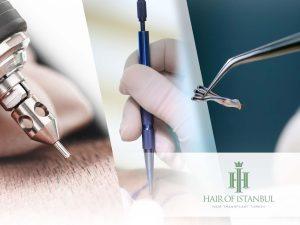
Hair Transplant Technique
1. Extraction Methods: FUE vs. FUT
FUE (Follicular Unit Extraction)
FUE is the modern gold standard of donor harvesting. Using micro-punches (typically 0.7–0.9 mm), follicles are removed one by one from the back and sides of the scalp. This method:
- Does not require a long linear incision
- Leaves tiny dot-like scars rather than a single strip scar
- Allows flexible and strategic donor management
- Enables short hairstyles after healing
FUE is the foundation of most high-standard clinics worldwide. For a deeper technical overview, patients can review the dedicated FUE technique guide.
FUT (Strip Method)
FUT (Follicular Unit Transplantation) is an older method in which a strip of scalp is surgically removed from the donor area and dissected into grafts under a microscope. While effective in its time, FUT typically leaves a permanent linear scar and requires sutures and longer recovery.
For these reasons, many modern clinics have transitioned almost entirely to FUE-based donor harvesting, reserving FUT only for highly specific cases. At Hair of Istanbul, the focus is exclusively on FUE extraction; FUT is not performed.
2. Implantation Methods: DHI, Sapphire, and Slit
After extraction, grafts must be placed into the recipient area. Several implantation methods exist, each with its own advantages depending on hairline design, density goals, and existing hair.
DHI (Direct Hair Implantation)
DHI uses implanter pens that allow grafts to be loaded and placed directly into the scalp in a single step. This provides:
- High control over angles and direction
- Dense packing in the hairline or between existing hairs
- Minimal handling of grafts
This technique is often preferred in delicate zones such as the frontal hairline, facial hair, or when working in areas with partially preserved native hair. More details are available in the DHI technique overview.
Sapphire-Blade Implantation
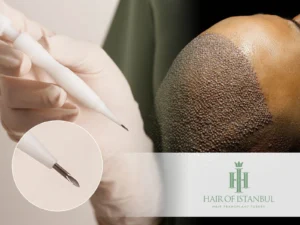
Sapphire implantation uses micro-channels opened with fine sapphire blades. These incisions are smooth, precise, and can support high-density implantation. Sapphire blades are especially useful for:
- Creating uniform channels with consistent depth
- Designing natural-looking hairline transitions
- Improving healing comfort in many patients
Slit (Steel Blade) Implantation
Traditional slit techniques use steel blades or needles to open channels. When performed by experienced surgeons, this method still produces excellent results, especially in cases requiring broad coverage over the mid-scalp or crown.
In modern practice, Sapphire and Slit are not “opposites” but tools—chosen according to the hair type, skin characteristics, and density targets of each individual.
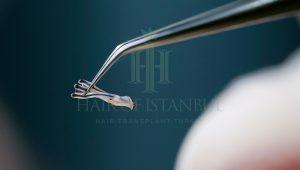
3. Supporting Methods and Variants
Manual vs. Motorized FUE
FUE punches can be driven manually or via micromotors. Manual FUE relies on pure hand control, while motorized systems provide higher speed and consistent torque. In skilled hands, both are safe; the surgeon’s technique and donor strategy matter more than the motor choice itself.
Robotic Assistance
Robotic systems assist extraction using imaging and automation. While technologically impressive, they still depend on human planning and oversight. In many leading clinics, experienced surgeons prefer refined manual or motorized FUE for greater real-time control over angles and donor preservation.
How Clinics Choose Between Hair Transplant Methods
Modern clinics do not simply choose one method for all patients. Instead, they evaluate:
- Donor density and quality
- Pattern and stage of hair loss
- Hairline shape and facial proportions
- Hair type (straight, wavy, curly, coarse, fine)
- Scalp characteristics (thickness, elasticity, sensitivity)
- Patient priorities (downtime, hairstyles, long-term planning)
On this basis, they design a personalised combination of extraction and implantation methods. A general overview of treatment planning can be found in the clinic’s main hair transplant page.
Donor Area Management Across Methods
Regardless of the chosen hair transplant methods, donor preservation is critical. Overharvesting or poor extraction distribution can permanently thin the back of the scalp and restrict future options.
Key donor principles include:
- Conservative extraction (typically 20–25% per session)
- Even distribution of punches across safe zones
- Low transection rates (minimal follicle damage)
- Planning for potential second or third sessions over a lifetime
Patients can learn more in the dedicated article on the donor area for hair transplant.
Recovery Considerations By Method
FUE-based methods typically share a similar recovery pattern. Most differences in healing are related to the size of the recipient area, skin type, and postoperative care—not the implantation tool alone.
- Early phase (Days 1–10): scabbing, redness, first wash
- Weeks 2–6: shedding of transplanted shafts (shock loss)
- Months 3–6: early regrowth
- Months 6–12+: density building and maturation
For a structured view of the healing curve, patients can refer to the hair transplant recovery timeline. Practical guidance on washing and activity is available in the first wash after hair transplant and exercise after hair transplant guides.
Side Effects Across Hair Transplant Methods
Common short-term reactions—swelling, redness, itching, scabbing, and temporary shedding—are shared by all modern methods. The risk profile depends more on:
- Overall graft count
- Patient health and healing capacity
- Postoperative hygiene and protection
- Clinic’s adherence to medical standards
These side effects are usually mild and temporary. For more detail, see the article on hair transplant side effects.
Evaluating Results Across Methods
Ultimately, patients judge hair transplant methods by one key metric: long-term naturalness. Regardless of the tools used, the following factors define success:
- Realistic, age-appropriate hairline design
- Uniform density without “pluggy” appearance
- Proper angle and direction in each zone
- Balanced donor and recipient aesthetics
Viewing multiple real-world outcomes is essential. Patients can explore the clinic’s before & after results gallery to understand how different plans translate into final appearance.
Choosing Between Hair Transplant Methods: Practical Questions to Ask
When consulting with a clinic, patients can ask:
- Which extraction method will you use, and why?
- Will my case involve DHI, Sapphire, Slit, or a combination?
- How many grafts are planned, and from which donor zones?
- What will my hairline design look like in terms of shape and height?
- How do you protect the donor area for future procedures?
They should also ask who performs each stage of surgery. For insight into the medical background of Hair of Istanbul’s team, visit the medical team page.
Independent Professional Reference
For an independent overview of surgical hair restoration from a global professional association, patients can review the International Society of Hair Restoration Surgery (ISHRS) hair transplant surgery overview.
Conclusion
Modern hair transplant methods are built on FUE-based donor harvesting combined with specialised implantation techniques such as DHI, Sapphire, and Slit. FUT remains a historical method with specific but limited indications, while FUE has become the standard for patients prioritising minimal scarring, flexible hairstyles, and long-term donor preservation.
The “best” method is not a single tool, but a personalised combination of techniques chosen according to your hair type, pattern of loss, donor capacity, and aesthetic goals. With expert planning, attentive after-care, and realistic expectations, patients can achieve natural, durable results that harmonise with their face and age.
There is no single “best” method. FUE-based extraction combined with DHI, Sapphire, or Slit implantation is considered the modern standard, and the ideal combination depends on your hair type, donor quality, and goals.
For most patients, yes. FUE avoids a linear strip scar, heals faster, and offers more flexibility for future procedures, which is why many clinics have moved away from FUT.
FUE is an extraction method (how grafts are harvested). DHI is an implantation method (how grafts are placed). They are complementary, not competing concepts.
Modern FUE-based methods generally share similar recovery times. Healing speed depends more on graft count, skin type, and after-care than on the specific implantation tool.
Yes. Women with suitable donor areas can also benefit from FUE-based methods and advanced implantation techniques, particularly for treating thinning in the frontal or part-line regions.
