
 en
en TR
TR  SK
SK  ITA
ITA  FR
FR  DE
DE  ES
ES  BG
BG 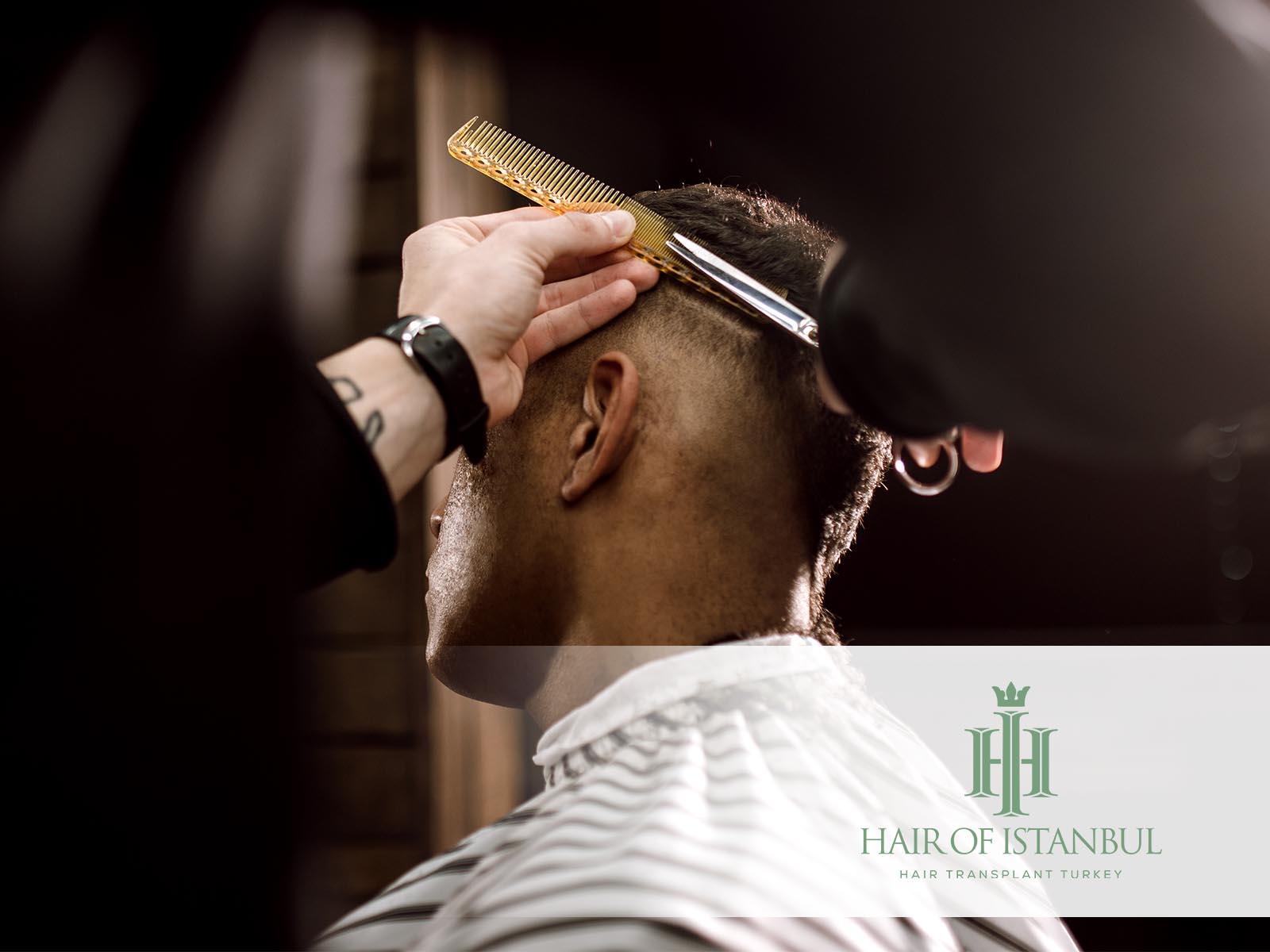
Hair Cut After Hair Transplant: Complete 2026 Guide to Safe Timing and Techniques
The question “when can I get a hair cut after hair transplant?” is one of the most common concerns for patients following FUE-based procedures. Because newly implanted grafts undergo a highly sensitive healing phase, cutting, trimming, buzzing, or shaving the hair too early can affect both safety and aesthetic outcomes. This comprehensive 2026 guide explains the correct timelines for trimming the recipient and donor areas, what tools are safe at each stage, common mistakes to avoid, and how proper hair grooming supports long-term results.
All recommendations in this guide apply to procedures performed with FUE extraction and implantation methods such as DHI, Sapphire, or Slit. Following these guidelines helps protect grafts, maintain growth consistency, and support the overall recovery process.
Why Timing Matters for Hair Cut After Hair Transplant
A hair transplant is a minimally invasive but highly structured medical procedure. While the implanted follicles are permanent, they must first anchor securely beneath the skin. Cutting hair too soon—especially with clippers or razors—can disrupt this anchoring process, leading to trauma, ingrown hairs, or inconsistent early growth.
This is why understanding the proper timing for a hair cut after hair transplant is essential for preserving the naturalness and density of the final result.
Hair Cutting Timeline: What You Can Do and When
Days 0–10: Absolutely No Hair Cutting
During the first 10 days, both the donor and recipient areas are healing. Scabs are forming and falling gradually, and grafts are securing themselves in the skin. Cutting hair during this time is unsafe.
- No scissors
- No clippers
- No razors
- No trimmers
Focus on washing and proper after-care during this phase. For detailed instructions, see the guide to the first wash after hair transplant.
Days 10–14: Scabs Removed, Still No Cutting
By Day 10, most patients complete scab removal. However, the skin is still sensitive, and the grafts—though stable—should not be exposed to friction or sharp tools. Cutting should still be avoided at this stage.
Week 3 (Day 21+): First Safe Hair Cut for the Donor Area Only
The donor area heals much faster than the recipient area. Around Day 21, it is generally safe to trim the donor zone only with scissors or an electric clipper on a higher guard (e.g., #4+). Avoid zero guard, skin fade, or friction-heavy tools.
This timing aligns with donor healing patterns described in the donor area for hair transplant guide.
Tools Allowed for Donor Area (After Day 21)
- Scissors (fully safe)
- Electric clipper (higher guards only)
- No razors
- No micro-dermal trimmers
Week 4–6: First Safe Hair Cut for the Recipient Area (Scissors Only)
At 1 month, the recipient area has stabilized enough for its first haircut—but only with scissors. Scissors avoid direct friction on the scalp and do not disturb the implanted follicles.
What You Can Do in Week 4–6
- Trim the recipient area with scissors only
- Shape long hairs to maintain appearance
- Light blending with donor zone
Avoid all buzzing, shaving, or close-contact tools.
Week 6–8: Electric Trimmer Allowed for the Donor, Scissors for the Recipient
By Week 6, the donor area is fully healed, and the recipient area is strong enough for light grooming—but not shaving.
Allowed at This Stage
- Donor area: Electric trimmer with any guard size
- Recipient area: Scissors only
If you prefer close fades or tapering, discuss this with your surgeon, as some high-friction fade styles may cause irritation.
Month 3–4: First Electric Clippers for the Recipient Area
Around Month 3, grafts have entered early growth, and the skin has fully recovered. At this stage, most patients can safely use electric clippers on both donor and recipient areas.
Electric Clippers Are Safe If:
- You do not apply pressure to the skin
- You avoid zero-guard shaving
- You clean the blades to avoid irritation
Irregularities in early growth are normal at this time; density increases significantly between Months 4–9. For further insight, review the timeline article on the hair transplant recovery timeline.
Month 4–6: Razor Shaving Is Generally Safe
By Month 4–6, the transplanted grafts have established deeper dermal anchorage. Skin sensitivity decreases, and razor shaving becomes safe for almost all patients. At this stage, shaving does not impact graft health.
Important Notes
- Always shave in the direction of hair growth
- Avoid shaving over pimples or inflammation
- Use a clean razor to prevent irritation
Month 6–12: Normal Haircuts and Styling
During this stage, patients can treat transplanted hair like natural hair—because it is. You may:
- Get any type of haircut
- Use any trimmer guard
- Shave regularly
- Style hair with wax, gel, or spray (in moderation)
The hair begins to thicken, darken, and blend with native hair. Results continue improving until Month 12–18.
Month 12–18: Full Freedom and Complete Maturation
Once the hair cut after hair transplant timeline reaches the full maturation stage, all restrictions are lifted. Transplanted follicles behave identically to natural hair—they can be cut, shaved, colored, and styled without limitation.
Common Mistakes to Avoid
Some grooming practices can accidentally damage early grafts. Avoid:
- Zero-guard clippers before Month 3–4
- Razor shaving before Month 4
- Pressing trimmer blades against the scalp
- Using barbers unfamiliar with hair transplant recovery
Always inform your barber or stylist that you recently had a transplant.
Should You Cut Hair Before Shedding Ends?
Yes—haircuts do not influence shedding. The grafts remain intact even if the shafts fall out. Shedding is part of the natural recovery cycle described in detail in the recovery timeline guide.
Independent Medical Reference
For neutral, medically verified information about hair and scalp health, refer to the NHS hair loss resource.
Conclusion
The hair cut after hair transplant timeline follows a clear structure: no cutting for 2 weeks, donor trimming after 3 weeks, scissors for the recipient area after 1 month, clippers after 3–4 months, and full shaving freedom after Month 4–6. By Month 12–18, the transplanted hair has fully matured and can be styled exactly like natural hair. Following these steps ensures safe healing, aesthetic harmony, and long-term satisfaction.
The donor area can be trimmed after 3 weeks; the recipient area after 4–6 weeks with scissors.
Clippers are safe for the donor area after Week 3 and for the recipient area after Month 3.
Razor shaving is generally safe around Month 4–6.
Yes. Early trimming with razors or clippers can disturb graft anchoring.
No. Shedding occurs naturally and is not caused by haircuts.
