 en
en TR
TR  SK
SK  ITA
ITA  FR
FR  DE
DE  ES
ES  BG
BG  RO
RO 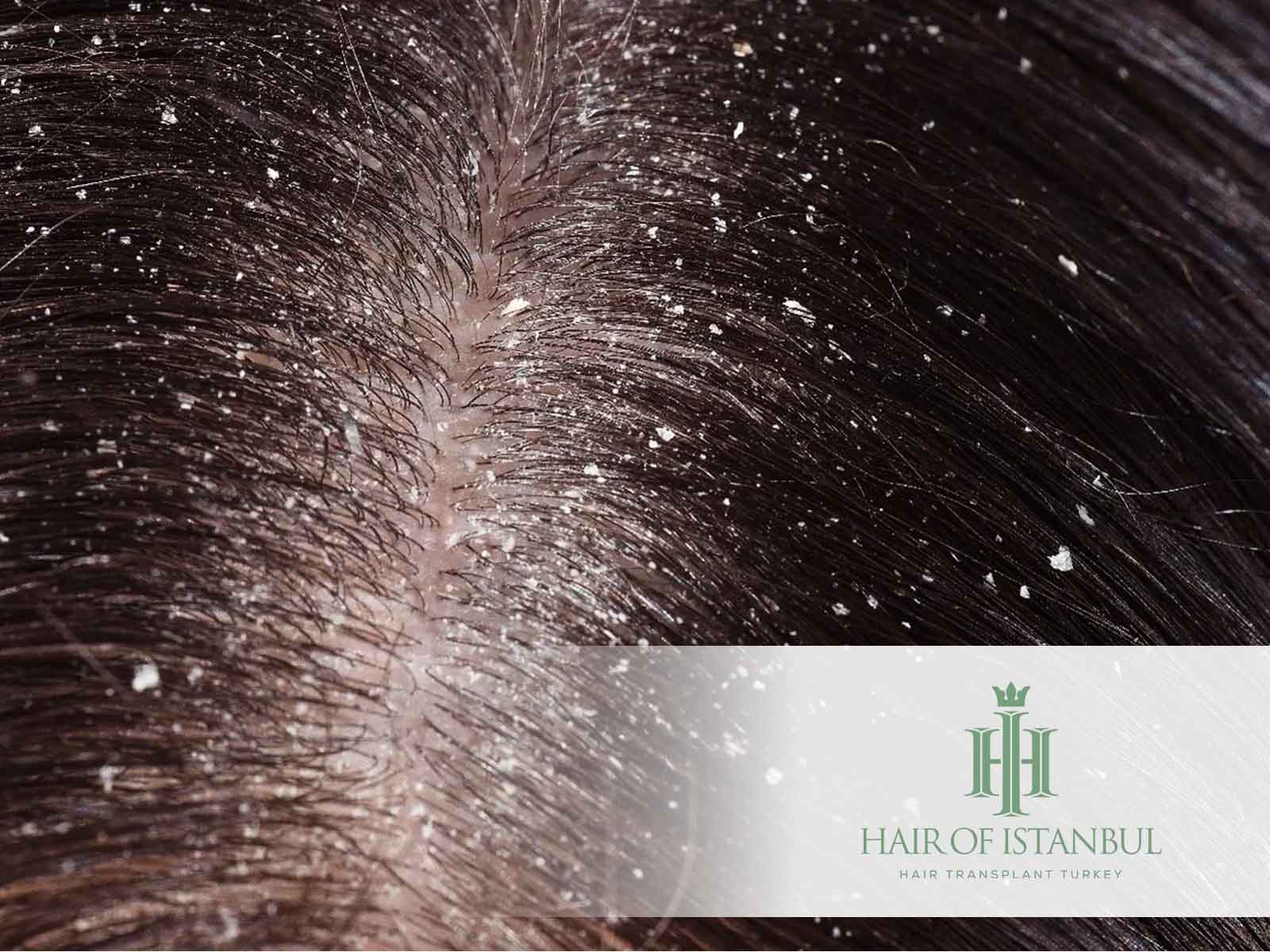
Dry Scalp and Scabs After a Hair Transplant: What Is Normal
Dry scalp after hair transplant surgery is expected, not a complication. Flaking, tightness and crusting in the first two weeks are part of normal healing — it is not dandruff, and in most cases it needs nothing done to it. The crusts come away on their own between roughly day seven and day ten, loosened by the washing foam rather than lifted by hand.
This page explains what you are looking at, when it should clear, what you must not do to it, and the small number of signs that are worth a message to the clinic rather than a wait. The full day-by-day protocol is set out separately in our hair transplant aftercare guide.
Is dry scalp after hair transplant normal?
Yes, and there are three reasons for it happening at once.
- The skin is repairing. Thousands of micro-incisions are closing at the same time, and the surface of healing skin flakes as it does so.
- The oil glands are temporarily disrupted. Sebaceous glands sit alongside the follicles that were extracted and implanted. Their output is reduced for a period afterwards, so the scalp loses the film that normally keeps it supple.
- The washing routine is deliberately gentle. The aftercare wash is designed to protect grafts, not to condition the scalp, and it does not replace the oils that are missing.
The result is a scalp that feels tight, looks dull or shiny in places, and sheds flakes. All three settle as the skin finishes healing and the glands resume normal output.
What are the crusts, and how do they differ from dandruff?
They are two different things, and the distinction matters because it changes what you are allowed to do.
| Post-operative crusts | Dandruff | |
|---|---|---|
| What it is | Dried blood and tissue fluid around each graft | Flaking of the scalp’s own skin, driven by inflammation |
| When it appears | Within about a day of surgery | Any time; usually a long-standing pattern |
| Attached to | The graft itself | Nothing — it lifts freely |
| If removed early | Takes the graft with it | No consequence |
| Clears | Day seven to day ten | Only with treatment; relapses |
The line worth remembering is this: the crust is not a covering over the follicle, it is attached to it. That single fact is why the timing below is not advisory.
When do scabs fall off after a hair transplant?
| Period | What is happening |
|---|---|
| Day 1 | Small crusts form around every graft. Normal. |
| Day 2 | Clinic check-up. The donor dressing is removed and not replaced. |
| Day 3 | Water may reach the scalp for the first time. Before this, grafts are held mechanically and lift under almost no pressure. |
| Days 3–7 | Crusting is at its most visible. Flaking and tightness are usual. |
| Days 7–10 | Crusts come away gradually, loosened by the foam. This is the expected window. |
| After the ninth wash | The scalp is usually ready for any remaining crusting to be cleared deliberately, with specific instructions from the clinic. |
| After the tenth wash | Photographs are sent to the clinic to confirm nothing has been left behind — retained crusting keeps the follicle inflamed. |
Three days is not an arbitrary figure. It is roughly how long a transplanted follicle needs to establish a blood supply from the surrounding tissue. Until that has happened, the graft is held in place mechanically and can be dislodged by water pressure, friction or a fingernail.
Can I remove the scabs myself?
Not before day seven, and not by hand at any point. A crust lifted early takes the graft with it, and a graft removed this way does not grow back — the follicle has left the scalp.
What is intended instead:
- The washing foam is left on long enough to soften the crusts, and they release on their own over days seven to ten.
- No rubbing, no fingernails, no towel friction, no combing at the crusts.
- After the ninth wash, any crusting that is still present is cleared deliberately — but only with the method the clinic gives you, and not brought forward because the scalp looks ready.
This is not caution for its own sake. In a study of 42 hair restoration patients whose grafts were deliberately tested at intervals after surgery, pulling on a hair on the first two days always dislodged the graft; by day six pulling a hair no longer dislodged it, and grafts were only out of danger at day nine. The important detail for anyone looking at a crusted scalp is that pulling on an adherent crust at day five still removed the graft every time — the crust stays dangerous for longer than the hair does.1
Picking at crusts is the most common self-inflicted cause of graft loss after the patient leaves the clinic, and it is entirely avoidable. If a patch is not shifting, that is a reason to send a photograph, not a reason to intervene.
When should I worry about crusts that have not gone?
Most crusting resolves without any intervention. The signs below are the exceptions, and each is worth a message rather than a wait-and-see:
- A patch where crusting has not shifted at all by the ninth wash
- Fever above 38 °C, or redness and heat spreading around the recipient or donor area
- Pus, or any discharge that is not the clear or lightly blood-tinged fluid of the first days
- Pain that increases after the third day instead of decreasing
- Swelling that is one-sided, or still worsening after day four
- Any graft loss you can actually see happening, particularly in the first week
Send a photograph with the message. A description of a scalp is far less useful than a picture of one: photograph the area in daylight, from directly above and from the side, without flash.
Does a dry scalp affect graft survival or growth?
Dryness itself does not damage grafts. A flaking, tight scalp in the first fortnight is a surface phenomenon, and the follicle sits below it.
What can affect grafts is what people do about the dryness. The three genuine risks are all behavioural: scratching an itchy, tight scalp; applying an oil, cream or moisturiser that was not provided; and picking at crusts to make the flaking look better. Each of those can dislodge a graft or introduce infection into skin that is still healing.
Retained crusting is the one exception worth taking seriously. A crust that stays in place well beyond the normal window keeps the follicle underneath it inflamed, which is why the tenth-wash photograph check exists.
What you can and cannot put on the scalp
The rule is simpler than most people expect: nothing that was not provided, until day ten.
That includes moisturisers, coconut and other oils, aloe vera, petroleum jelly, hair products, and any medicated or anti-dandruff shampoo. Unknown formulations irritate healing skin and are a common route to folliculitis. The aftercare set is chosen so that everything touching the scalp during that period is known.
After day ten, products are reintroduced on the clinic’s instruction rather than by preference — and if you have an underlying scalp condition, that reintroduction is planned rather than assumed.
Is this dandruff, or an underlying scalp condition?
In the first two weeks it is almost always post-operative crusting rather than dandruff. The two look similar to a worried patient and behave completely differently.
The question becomes reasonable later. If greasy yellowish scale, redness underneath and persistent itch appear weeks after surgery rather than settling, that is no longer the healing pattern and may be seborrheic dermatitis — which many patients had before surgery and which returns once the scalp is no longer being washed on a protocol. What that condition is and how it relates to shedding is covered in our guide to dandruff, seborrheic dermatitis and hair loss.
The practical rule: crusting in the first ten days is expected and is left alone. Flaking that starts or worsens after the aftercare course has finished is worth assessing, and medicated shampoos are reintroduced on instruction rather than started independently.
Dryness and shedding are different things
Patients frequently connect the two because they happen in the same months, and they are not related.
Between roughly the third and eighth week, a large proportion of the transplanted hairs fall out. This is shock shedding, and it is the expected sequence rather than a failure: the hair falls, the follicle stays. What was transplanted was the follicle, not the shaft attached to it, and the shaft is shed while the follicle resets into a growth cycle. Some of the original hair around the transplanted area may shed in the same period, and that usually returns too. The American Academy of Dermatology describes the same phenomenon and gives the window as two to eight weeks after surgery.2
Dryness in weeks one and two, and shedding in weeks three to eight, are two separate processes on overlapping calendars. Treating the first has no bearing on the second.
How long does dryness last?
Dry scalp after hair transplant surgery is at its worst in the first ten to fourteen days; for most people the flaking and tightness ease as the crusting clears. A degree of dryness can persist for several weeks longer while the oil glands return to normal output, and that is still within the expected range.
Dryness that is still marked well beyond the aftercare course, or that arrives after a period of normality, is a different question and is worth assessing rather than managing with more products.
Washing without making the dryness worse
The technique matters more than the product. Foam is created in the hands and pressed onto the scalp rather than rubbed in; water is poured rather than run directly from a shower head; the scalp is patted, never towelled. The full sequence, including the first wash, is set out in our day-by-day washing protocol.
Two mistakes are common. Washing less often to protect the grafts allows crusting to build up and prolongs exactly the problem the patient is trying to avoid — the wash course is a schedule, not a suggestion. And washing more aggressively to clear the flakes is the single most direct way to lose grafts in the first week.
When to contact the clinic
Most concerns raised in the first month are resolved with a photograph and a reply the same day. If any of the signs listed above are present — crusting that has not shifted by the ninth wash, fever, spreading redness, pus, increasing pain after day three, one-sided or worsening swelling, or visible graft loss — send a message with photographs rather than waiting for the next scheduled contact.
Hair of Istanbul patients are on a structured follow-up programme after surgery; the aftercare set, the wash schedule and the photograph checks at the ninth and tenth wash exist so that problems are found while they are still small.
References
- Bernstein RM, Rassman WR. Graft anchoring in hair transplantation. Dermatologic Surgery. 2006;32(2):198–204. doi:10.1111/j.1524-4725.2006.32033.x
- American Academy of Dermatology Association. Hair transplant: What to expect. aad.org
Crusts form around each graft within about a day of surgery and come away gradually between day seven and day ten, loosened by the washing foam rather than lifted by hand. After the ninth wash any remaining crusting is cleared deliberately using the method the clinic provides, and photographs are sent after the tenth wash to confirm nothing has been left behind.
Not before day seven, and never by hand. The crust is attached to the graft rather than sitting over it, so a crust lifted early takes the graft with it and that follicle does not grow back. The foam is left on long enough to soften the crusts and they release on their own. After the ninth wash, remaining crusting is cleared deliberately — but only with the clinic’s method, and not brought forward because the scalp looks ready.
The threshold is a patch where crusting has not shifted at all by the ninth wash. Alongside that, contact the clinic for fever above 38 °C, redness and heat spreading around the recipient or donor area, pus or any discharge that is not the clear fluid of the first days, pain that increases after day three, swelling that is one-sided or still worsening after day four, or visible graft loss. Send photographs taken in daylight, from above and from the side, without flash.
Yes. Three things happen at once: thousands of micro-incisions are closing and healing skin flakes; the sebaceous glands next to the extracted and implanted follicles are temporarily disrupted, so the scalp loses its normal oil film; and the aftercare wash is deliberately gentle rather than conditioning. All three settle as healing completes.
Nothing that was not provided, until day ten. That includes moisturisers, coconut and other oils, aloe vera, petroleum jelly, styling products and any medicated or anti-dandruff shampoo. Unknown formulations irritate healing skin and are a common route to folliculitis. After day ten, products are reintroduced on the clinic’s instruction.
Surgery does not cause dandruff, but it can reveal or unmask it. In the first two weeks what you are seeing is post-operative crusting, not dandruff. If greasy yellowish scale, redness underneath and persistent itch appear weeks later rather than settling, that may be seborrheic dermatitis — often a condition the patient already had, returning once the scalp is no longer being washed on a protocol.
No — they are separate processes on overlapping calendars. Shedding between roughly the third and eighth week is shock shedding: the hair falls, the follicle stays. What was transplanted was the follicle, not the shaft attached to it. Dryness in the first fortnight has no bearing on it, and treating the dryness will not prevent it.