











What Is Minoxidil
Minoxidil is the most widely used topical hair loss treatment worldwide — the only over-the-counter medication FDA-approved for both men and women. This article explains how minoxidil stimulates follicle activity, what the clinical evidence shows, dosage and side effects, and how it integrates with hair transplant surgery.
Minoxidil is the most widely used topical treatment for minoxidil hair loss therapy worldwide — the only over-the-counter medication FDA-approved for androgenetic alopecia in both men and women. Unlike DHT-blocking oral medications such as finasteride, minoxidil works directly at the follicle level through vasodilation and growth-phase extension rather than by suppressing DHT. Originally approved by the FDA in 1988 as Rogaine, minoxidil remains the first-line topical therapy for pattern hair loss and is frequently combined with other treatments — including hair transplant surgery — for optimal long-term results.
How Minoxidil Works
Minoxidil was originally developed in the 1970s as an oral antihypertensive medication. Researchers observed that patients taking it for blood pressure control developed hypertrichosis — increased hair growth — which led to its repurposing as a topical hair loss treatment.
The exact mechanism is multifactorial. Minoxidil functions as a vasodilator, increasing blood flow to the scalp, but its effect on hair specifically is mediated through several pathways: prolongation of the anagen (active growth) phase of the hair cycle, opening of ATP-sensitive potassium channels in follicle cells, and direct stimulation of dermal papilla activity.
Critically, the active form is not minoxidil itself but its sulfated metabolite — minoxidil sulfate — produced by the enzyme sulfotransferase in scalp tissue. Genetic variability in sulfotransferase activity explains why some patients respond strongly to topical minoxidil while others see minimal benefit. Patients with low sulfotransferase activity may benefit more from oral or alternative delivery routes.
Minoxidil Hair Loss Treatment — Clinical Evidence
The pivotal evidence base for 5% topical minoxidil in men is the 48-week comparison trial published by Olsen et al. (2002). Across 393 men with androgenetic alopecia:
- 5% minoxidil produced 45% more hair regrowth than 2% formulation
- 84% of patients showed visible hair count improvement at the vertex
- Onset of visible response: typically 16 weeks
For women, the Lucky et al. (2004) trial established that 5% minoxidil produces superior results to 2% in female pattern hair loss, though with higher rates of unwanted facial hair growth — leading to most clinicians prescribing 2% once daily as the standard for women, reserving 5% for cases where 2% is insufficient.
Minoxidil produces the most visible response at the crown and mid-scalp. Frontal hairline regrowth is more limited, similar to the response pattern seen with DHT-blocking therapies. Combination with finasteride consistently outperforms either treatment alone in clinical comparisons, which is why dual therapy is the standard approach for medical management at Hair of Istanbul.
Minoxidil Dosage and Application
The standard protocol differs by sex and formulation. For men, 5% topical solution or foam is applied twice daily — 1 mL per application, evenly distributed across the affected scalp area. For women, 2% twice daily or 5% once daily is the typical regimen.
The medication should be applied to a dry scalp and left in place for at least 4 hours before washing. Foam formulations are generally preferred over liquid solutions because they avoid propylene glycol — the alcohol vehicle in liquid minoxidil that causes scalp irritation in a significant subset of patients.
Minoxidil is a maintenance therapy. Continuous use is required to sustain results — discontinuation reverses the gains within 3–6 months as treated follicles return to their pre-treatment cycling pattern. Patients should be prepared for long-term commitment before starting therapy.
Minoxidil Side Effects and Safety Profile
The most common adverse effects of topical minoxidil are local: scalp irritation, dryness, flaking, and contact dermatitis affect approximately 5–7% of users — most often associated with the propylene glycol vehicle in liquid formulations rather than minoxidil itself. Switching to foam typically resolves these issues.
An initial shedding phase between weeks 4 and 6 is common and is not a sign of treatment failure. This shedding represents miniaturised hairs entering the telogen (resting) phase prematurely as the follicle resets to begin a new, healthier growth cycle — a positive prognostic indicator.
In women, particularly with 5% formulations, unwanted facial hair growth (hypertrichosis) occurs in approximately 3–5% of users. This is typically reversible on discontinuation. Cardiovascular effects from topical minoxidil are rare due to limited systemic absorption, but may occur with extensive scalp application or compromised skin barrier.
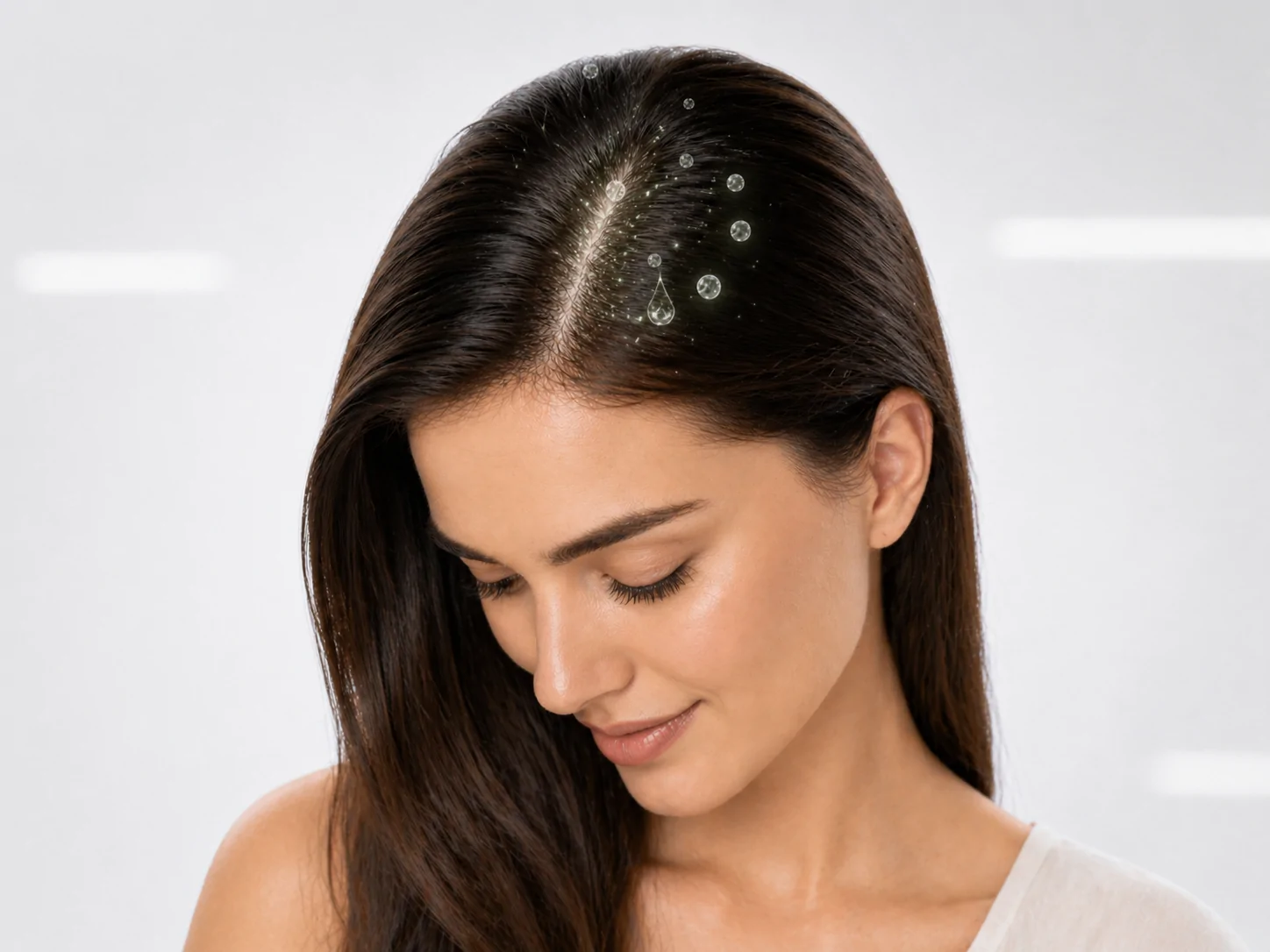
Patients seeking deeper follicle-level delivery without the irritation of standard topical formulations may consider mesotherapy injection, which administers minoxidil directly into the scalp’s mesodermal layer — bypassing the skin barrier and delivering the active compound at follicle level with greater precision.
Minoxidil and Hair Transplant Surgery
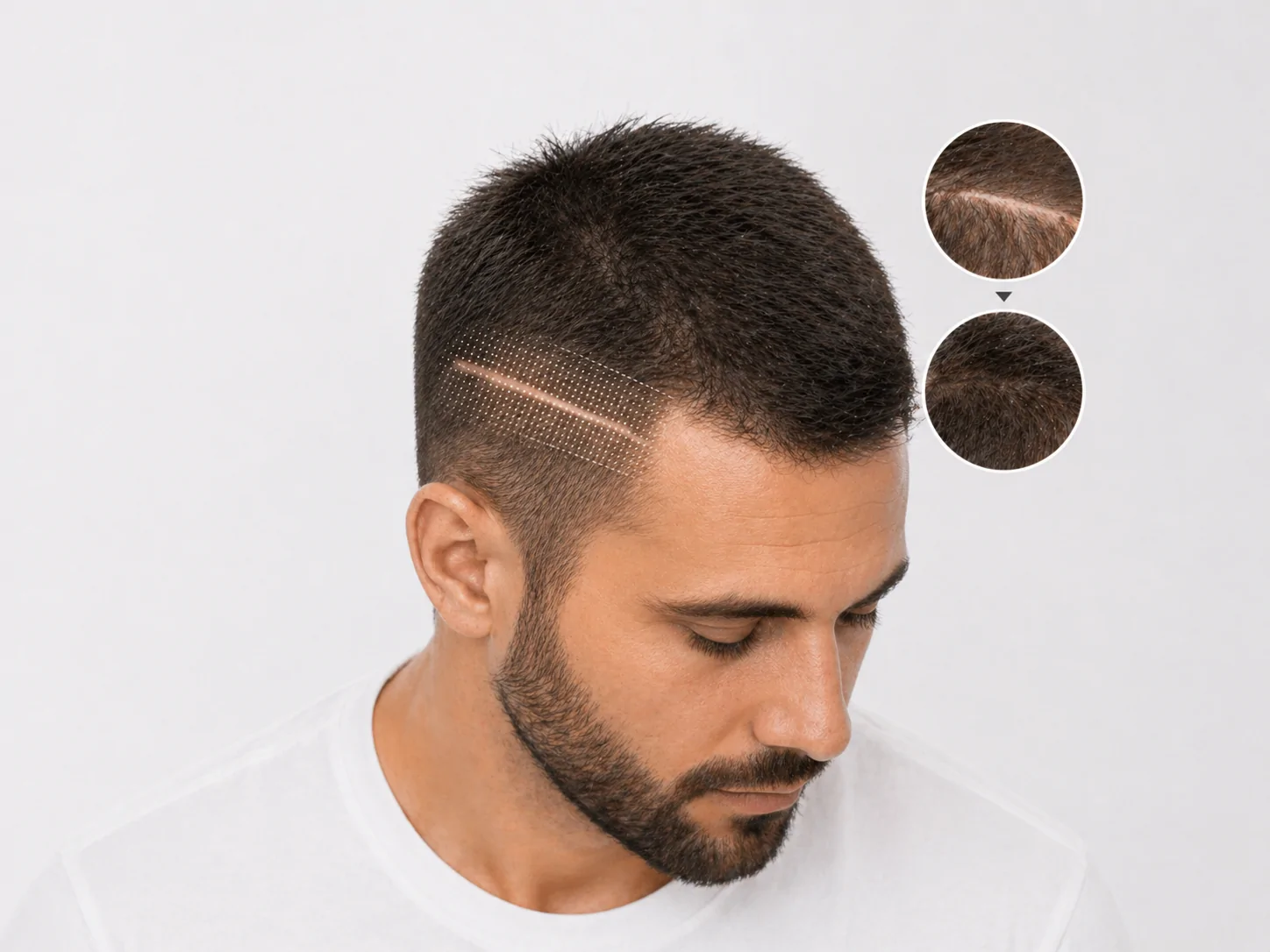
At Hair of Istanbul, minoxidil is routinely integrated into the long-term treatment plan around hair transplant surgery. Pre-operatively, the medication is often started 2–3 months before the procedure to stabilise native hair loss and optimise follicle health. Post-operatively, it supports both transplanted graft survival and the surrounding native hair that remains susceptible to ongoing miniaturisation.
For male patients, minoxidil is typically combined with finasteride for dual-mechanism therapy — minoxidil stimulating follicle activity while finasteride suppresses the DHT that drives miniaturisation. This combination consistently outperforms monotherapy in long-term outcome studies.
For women’s hair transplant patients, minoxidil is generally the first-line medical therapy due to the contraindications around finasteride in premenopausal women. It is frequently combined with regenerative protocols including PRP treatment and mesotherapy for a comprehensive non-pharmacological approach.
Surgical consultation at Hair of Istanbul includes a tailored medical management plan — confirming the appropriate strength, formulation, and combination protocol based on each patient’s pattern, severity, and treatment history.
Minoxidil’s first observable effect is typically a temporary shedding phase between weeks 4 and 6 — a positive sign that miniaturised follicles are resetting their growth cycle, not a treatment failure. Visible regrowth becomes apparent between 16 and 24 weeks, with maximum benefit typically observed at 12 months. Patients who see no response by 12 months are unlikely to benefit from continued use and should consider alternative protocols including localised mesotherapy delivery or combined therapy with finasteride.
Discontinuation reverses the treatment effect within 3–6 months. Hair gained from minoxidil therapy is lost as treated follicles return to their pre-treatment cycling pattern, and any progressive miniaturisation that minoxidil was slowing will resume on its normal trajectory. Like finasteride, minoxidil is a maintenance therapy — its benefits depend entirely on continuous use, which is why long-term commitment is an important part of the treatment decision.
Yes. Combining minoxidil with finasteride is the standard dual-therapy approach for male androgenetic alopecia and consistently outperforms either treatment alone in long-term clinical studies. The two medications work through complementary mechanisms — minoxidil stimulates follicle activity and prolongs the growth phase, while finasteride suppresses the DHT driving miniaturisation. Hair of Istanbul typically prescribes this combination for male patients seeking comprehensive medical management alongside or instead of surgical hair restoration.
Yes. Minoxidil is FDA-approved for female pattern hair loss and is the first-line medical therapy for women — particularly given that finasteride is contraindicated in women of childbearing potential. The standard protocol for women is 2% twice daily or 5% once daily. The 5% formulation produces stronger results but has a higher rate of unwanted facial hair growth (3–5% of users). At Hair of Istanbul, minoxidil is frequently combined with PRP treatment, mesotherapy, and other regenerative protocols for a multi-modal approach to female hair loss.
Yes — minoxidil is recommended both before and after hair transplant surgery at Hair of Istanbul. Pre-operative use (typically starting 2–3 months before surgery) stabilises native hair loss and optimises follicle health for the procedure. Post-operatively, the medication supports both transplanted graft survival and the surrounding native hair that remains susceptible to continued miniaturisation. The exact protocol — including timing, strength, and combination with other treatments — is confirmed during each patient’s surgical consultation.