
 en
en TR
TR  SK
SK  ITA
ITA  FR
FR  DE
DE  ES
ES  BG
BG 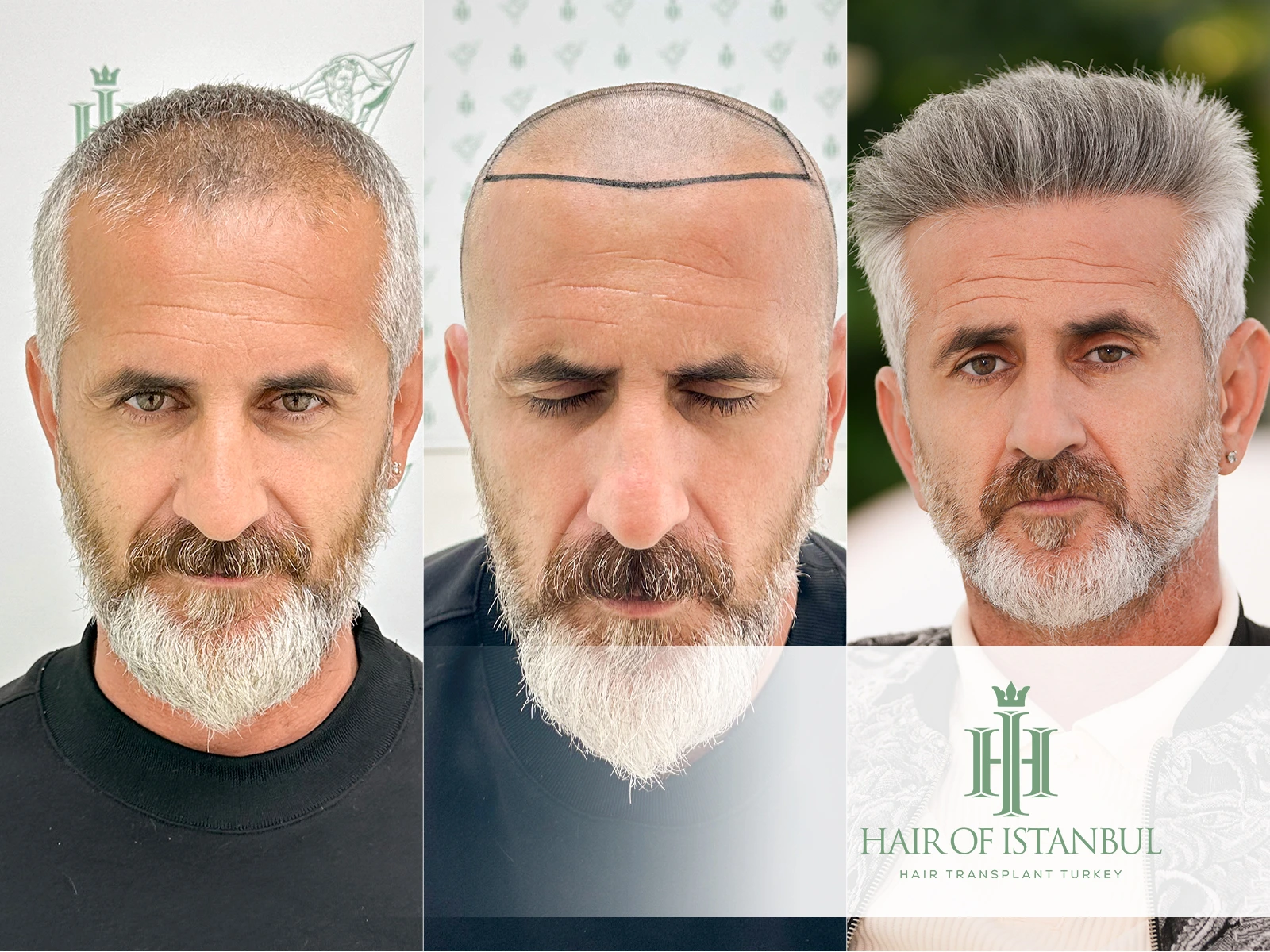
Hair Transplant After 8 Months: What Real Results Look Like in 2026
The period hair transplant after 8 months is one of the most exciting stages in the entire 12–18 month recovery cycle. While early improvements begin around Month 3 and major density builds between Months 4–7, the 8-month mark usually reveals the most convincing, natural-looking transformation. At this stage, patients finally see the transplant blend seamlessly with native hair, with significant improvements in volume, texture, and direction.
This detailed 2025 guide explains exactly what to expect at Month 8, how growth patterns behave, what counts as “normal,” what may still be developing, and how this stage fits into the long-term maturation timeline of modern FUE-based procedures.
Why Month 8 Is a Key Milestone
The point hair transplant after 8 months represents the advanced growth phase—where most follicles have already entered full anagen (active growth). Density is considerably higher, texture is stronger, and overall styling flexibility improves dramatically. Many patients describe Month 8 as the first moment they feel “fully confident” in their results, even though final maturation is still underway.
While Month 8 gives a strong preview of the final outcome, it is important to remember that complete maturation—especially in the crown—takes up to 12–18 months.
How the Hair Looks at 8 Months After Transplant
Most patients experience the following appearance characteristics at Month 8:
- 70–90% of final density
- Stronger, thicker texture
- Improved direction and flow
- Better hairline definition
- Integration with native hair
- Reduced redness or pinkness
The frontal region typically matures faster than the crown. Patients with crown work may still see slower thickening due to the region’s lower blood supply.
Why Density Is Not Fully Final at 8 Months
Although Month 8 looks impressive, it is not the biological end point. Hair continues to thicken, darken, and stabilise in direction well into the 12–18 month window. This is especially true for:
- Crown/vertex areas
- Curly or coarse hair types
- Patients with very high graft counts
- Cases requiring multi-angle reinforcement
The hair transplant after 8 months stage should therefore be considered “advanced growth,” not the final result.
Comparison: 3 Months vs 6 Months vs 8 Months
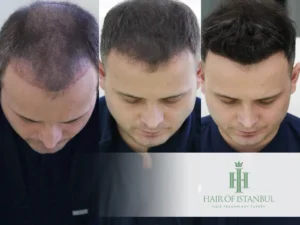
Growth progression across the first 8 months typically follows this pattern:
- Month 3: First thin hairs (“baby hairs”), patchy growth
- Month 4–6: Rapid improvement in density and texture
- Month 6–7: Strong overall thickening and better structure
- Month 8: Natural appearance emerges with mature texture
If you want to review earlier phases, see the detailed hair transplant recovery timeline.
Texture Changes at 8 Months
Newly transplanted hair goes through several texture shifts before achieving full maturity. At 8 months, patients typically notice:
- Stronger and darker hair shafts
- Less frizz and unpredictability
- More alignment with native hair characteristics
- Improved scalp coverage due to thicker strands
This refinement continues until Month 12–18, when the follicle completes its maturation cycle.
Hairline Results at 8 Months
The hairline often appears very natural at 8 months. Features that become more visible include:
- Soft, irregular micro-lines
- Proper angulation from temple to midline
- Organic feathering in single-hair graft zones
- Balanced density gradients
The artistry of implantation—whether DHI, Sapphire, or Slit—plays a major role in how natural the hairline appears at this stage.

Shock Loss Recovery by Month 8
Shock loss typically occurs between Weeks 2–6 and stabilises by Month 3. By the hair transplant after 8 months milestone, all shock loss recovery is complete. Any areas that looked sparse during Months 2–3 generally show strong regrowth and improved texture.
To understand the shock loss process in detail, refer to the article on hair transplant side effects.
Donor Area at 8 Months
By Month 8, the donor area is fully healed with:
- Minimal dot scarring from FUE extraction
- No redness or sensitivity
- Restored elasticity
- Stable density appearance
Patients curious about donor health and extraction strategy can review the complete guide on the donor area for hair transplant.
Is It Normal to Want More Density at 8 Months?
Yes. Many patients feel satisfied at Month 8 but still wish for further thickening. This is normal. Density continues to increase steadily until Month 12–18.
Additional expectations:
- Hair shaft diameter increases
- Coverage improves visually
- Hairline softens even more
- Direction becomes more consistent
Only the 12–18 month window should be used for final evaluation of the transplant.
Styling, Cutting, and Grooming at 8 Months
At the hair transplant after 8 months phase, patients can treat transplanted hair exactly like natural hair. You may:
- Get any haircut—including fades or razor cuts
- Use styling products (wax, spray, gel)
- Blow-dry on low or medium heat
- Dye or color the hair (if scalp is fully healed)
For earlier grooming stages, see the guide to hair cut after hair transplant.
Exercise and Lifestyle at 8 Months
By Month 8, all physical activities—weightlifting, HIIT, running, swimming—are fully safe. The grafts are deeply anchored, and the scalp has regained biomechanical stability.
Exercise guidelines for earlier stages can be found in the article on exercise after hair transplant.
Does Everyone Look the Same at Month 8?
No. Growth speed and density vary based on:
- Genetics
- Hair calibre (thickness)
- Curvature (straight vs curly)
- Donor density
- Crown vs frontal placement
- Age, lifestyle, and overall health
Still, Month 8 consistently represents one of the most visually rewarding phases for almost all patients.
Independent Medical Reference
For unbiased information on hair and scalp health, refer to the authoritative NHS hair loss resource.
Conclusion
The hair transplant after 8 months stage is where most patients see a major transformation: strong density, improved texture, natural hairline integration, and advanced growth. Although Month 8 brings 70–90% of the final result, complete maturation continues until Month 12–18. With proper after-care, patience, and expert surgical planning, Month 8 becomes one of the most rewarding milestones in the entire hair restoration journey.
Yes, 70–90% of the final result is visible—but full maturation takes 12–18 months.
Mild unevenness is normal, especially in the crown, which matures slower.
Yes. All haircut styles, including fades and razor shaving, are safe.
No. Shock loss ends by Month 3, and strong regrowth appears by Months 4–8.
True final results should be assessed between Months 12–18.
