 en
en TR
TR  SK
SK  ITA
ITA  FR
FR  DE
DE  ES
ES  BG
BG  RO
RO 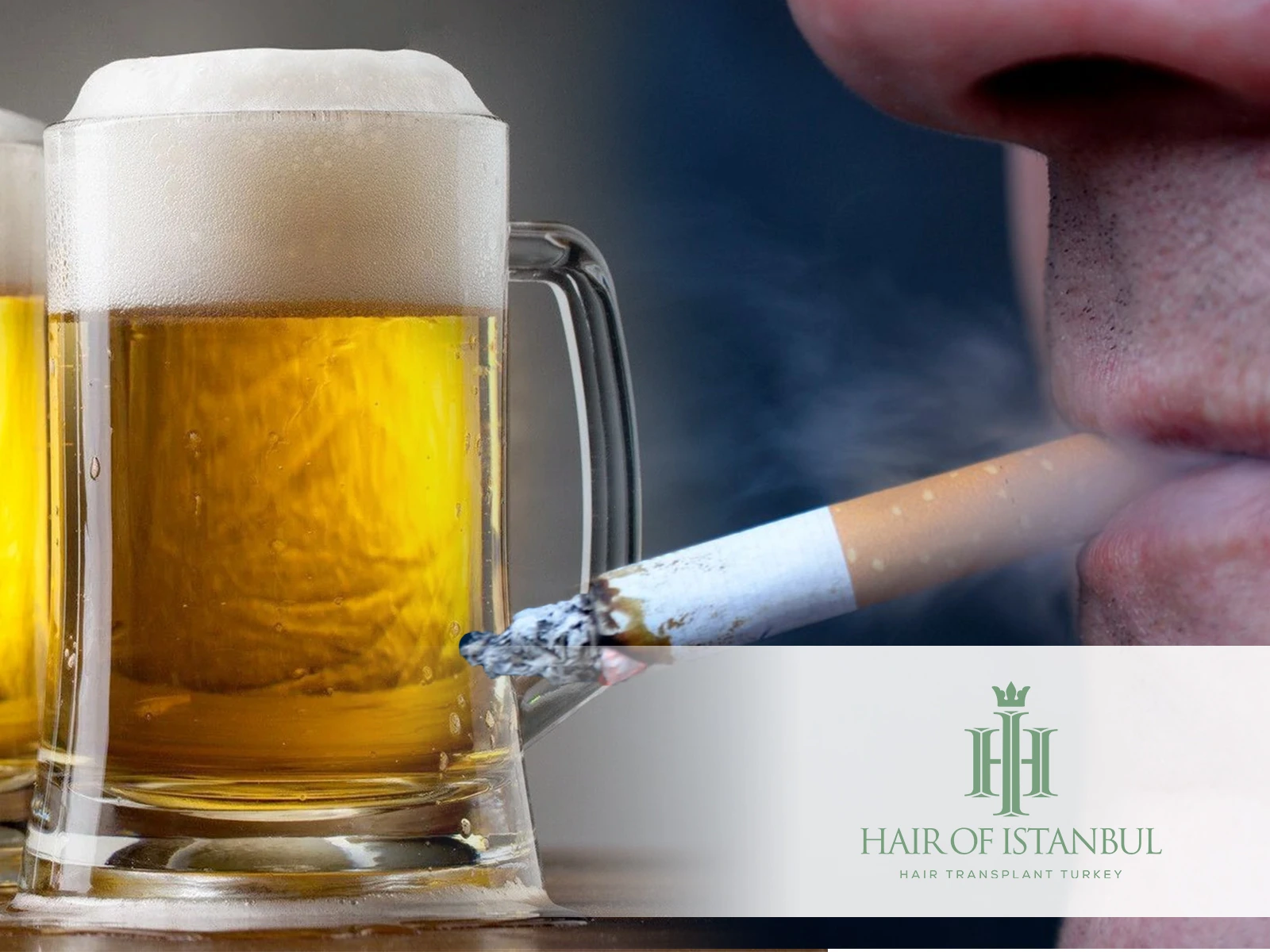
Hair Transplant Preparation: What to Do in the Month Before
Most of what decides how a hair transplant goes has already happened before you sit in the chair. This page is the hair transplant preparation we give our own patients in writing, plus the answers to the questions people ask most often in the weeks beforehand.
Do you fast before a hair transplant?
No. You eat. This is the single most common misunderstanding, and it comes from confusing a hair transplant with an operation under general anaesthesia.
A hair transplant is performed under local anaesthesia. You are awake throughout, and the procedure runs for several hours — published megasession series report operations of more than ten hours. Arriving on an empty stomach for a long procedure invites low blood sugar, light-headedness and vasovagal episodes, none of which help anyone.
Our written instruction for the morning of the procedure is exactly this: wash your hair, apply no styling product, and have a good breakfast — but no coffee or other caffeine.
The caffeine restriction is not arbitrary. Caffeine raises blood pressure and can increase intraoperative bleeding, which makes the surgical field harder to work in. The same applies on the morning of the day-2 check-up: have breakfast, skip the coffee.
If you fast for religious reasons, say so when your date is being arranged rather than on the day. A procedure of this length is not compatible with a full day of fasting, and the sensible answer is scheduling, not improvisation.
What to do before a hair transplant: one month out
- Stop shaving. We ask patients to stop shaving one month before the procedure. The hair length is what allows the donor area to be assessed and the extraction planned.
- Check your passport. It must be valid for at least six months.
- Know your graft range before you fly. Our graft calculator gives a planning range; the final number is set on the day from measured donor density.
- Deal with any scalp condition now, not later. See the section below — this is the one that most often costs people their surgery date.
The scalp condition that can cancel your operation
An itchy scalp, redness, or small pimples may be seborrhoeic dermatitis. It is common, it is treatable, and it is the most frequent reason a procedure cannot go ahead on the planned day.
If active dermatitis is found at the pre-operative check, the procedure is not performed that day. The stay usually has to be extended by at least three days, and the resulting costs — hotel, flight changes — are borne by the patient. This is not a policy we enjoy applying; it exists because operating on inflamed scalp skin risks the grafts and the result.
The prevention is straightforward and has to start at least two weeks before you travel: an antifungal shampoo containing bifonazole or ketoconazole, massaged in for four to five minutes, four to five times a week. Avoid hot water and avoid wearing a cap. If you have any doubt about whether what you have qualifies, send a photograph to your representative before you fly, not after you land.
One week before
- Stop alcohol. One full week before the procedure. A Cochrane review of three randomised trials found that perioperative alcohol cessation reduced postoperative complications requiring treatment — 20 of 61 participants versus 33 of 61, a risk ratio of 0.62. Those trials studied heavy drinkers, but the direction is consistent, and alcohol also affects clotting during the operation itself.
- Blood thinners. If you take aspirin or another anticoagulant, consult the prescribing doctor a week in advance about stopping. Do not stop prescribed medication on your own judgement — it is reviewed with your doctor and with our anaesthesiologist as part of the pre-operative assessment.
- Tell us about every medication you take, including supplements. Some affect bleeding without being thought of as blood thinners.
- Reduce nicotine. Nicotine constricts the small vessels the grafts will depend on. Reduce as far as you can and ideally stop for at least two weeks — the reasoning is in smoking and hair transplant risks.
Hair transplant preparation on our side: what is checked before your date is confirmed
Screening is a clinical requirement, not an administrative one, and it is the step most often skipped at high-volume clinics.
| Assessment | What it checks | Reviewed by |
|---|---|---|
| Blood panel | Full blood count, clotting profile, infectious screen, ferritin, thyroid function | Medical team |
| ECG | Cardiac rhythm and conduction | Cardiologist |
| Anaesthesia review | Allergies, medication interactions, anticoagulant management | Anaesthesiologist |
| Follicle and donor analysis | Donor density, hair calibre, scalp condition | Surgeon |
| Hairline design | Facial proportions, age-appropriate placement, long-term balance | Surgeon |
Where screening identifies a contraindication, surgery is postponed or advised against. That is the point of doing it. The team is listed on our medical team page.
What to bring
- A check-in suitcase. You will be given a 250 ml shampoo and a 150 ml spray foam, and neither can travel in hand baggage. Arriving with cabin baggage only means leaving your aftercare products behind.
- Comfortable clothing with a wide neck — a zip-up top, a shirt, anything that does not have to be pulled over your head afterwards.
- A travel pillow, useful for the flight home and for sleeping with the head elevated.
- International calling enabled on your phone, so the clinic can reach you.
The day of the surgery itself
- Wash your hair in the morning. No wax, gel, spray or any other styling product.
- Have a good breakfast. No coffee or caffeine.
- Be in the hotel lobby at the time your representative gives you.
- You are collected from the lobby and taken to the clinic.
The procedure itself — anaesthesia, extraction, channel opening, implantation — is described step by step on the FUE technique page, and the whole sequence from arrival to the twelve-month result is laid out on the hair transplant journey page.
What happens immediately afterwards
A bandage is applied to the donor area. On day 2 you return to the clinic for the check-up, the bandage is removed and no new one is applied — have breakfast before that appointment as well. If you fly home on day 2 you are shown how to wash your hair before being taken to the airport; if you leave on day 3, the first wash is done by our team.
No water or chemicals on the head until day 3. The full protocol is on the aftercare page.
Frequently asked questions
Do I need to fast before a hair transplant?
No. The procedure is done under local anaesthesia and you stay awake, so you should eat a proper breakfast. Skip coffee and other caffeine.
Can I drink coffee before a hair transplant?
No. Caffeine raises blood pressure and can increase bleeding during the procedure, making the surgical field harder to work in.
When should I stop shaving before a hair transplant?
One month before. The hair length is needed to assess the donor area and plan the extraction.
When do I stop alcohol and blood thinners?
Alcohol one week before. Anticoagulants such as aspirin also about a week before — but only after consulting the doctor who prescribed them, never on your own decision.
What if I have dandruff or an itchy scalp?
Tell your representative before you travel. Active seborrhoeic dermatitis on the day means the procedure cannot be performed, and the extra costs fall to you. Treat it with a bifonazole or ketoconazole shampoo for at least two weeks beforehand.
Can I have a hair transplant while fasting for Ramadan?
A procedure lasting most of a day is not compatible with a full day of fasting. Raise it while your date is being arranged so the scheduling can account for it.
What should I bring to Istanbul?
Check-in baggage (your aftercare products cannot fly in the cabin), loose clothing with a wide neck or zip, a travel pillow, a passport valid for at least six months, and international calling enabled.
References
- Huang J, Peng Y, Zhou W, Chen D. Summary of Best Evidence for Perioperative Management Practices in Hair Transplantation Patients. Aesthetic Plast Surg. 2024;48(23):4791–4804. PMID 39377788. pubmed.ncbi.nlm.nih.gov
- Egholm JW, Pedersen B, Møller AM, Adami J, Juhl CB, Tønnesen H. Perioperative alcohol cessation intervention for postoperative complications. Cochrane Database Syst Rev. 2018;11(11):CD008343. PMID 30408162. pubmed.ncbi.nlm.nih.gov
- Khatib M, Skorochod R, Wolf Y. Complications Following Hair Transplantation: A Systematic Literature Review and Meta-Analysis. Aesthetic Plast Surg. 2025;49(23):6393–6405. PMID 40913181. pubmed.ncbi.nlm.nih.gov
In short
You do not fast before a hair transplant — it is done under local anaesthesia and you eat a proper breakfast, without coffee. Stop shaving a month before, stop alcohol a week before, and discuss any blood thinners with the doctor who prescribed them rather than stopping alone. Treat an itchy or flaking scalp at least two weeks before you fly, because active dermatitis on the day means the procedure does not happen and the extra costs are yours. Bring check-in baggage, because the shampoo and foam you are given cannot travel in the cabin.
If anything on this list is unclear for your own case, ask us before you fly rather than on the morning.