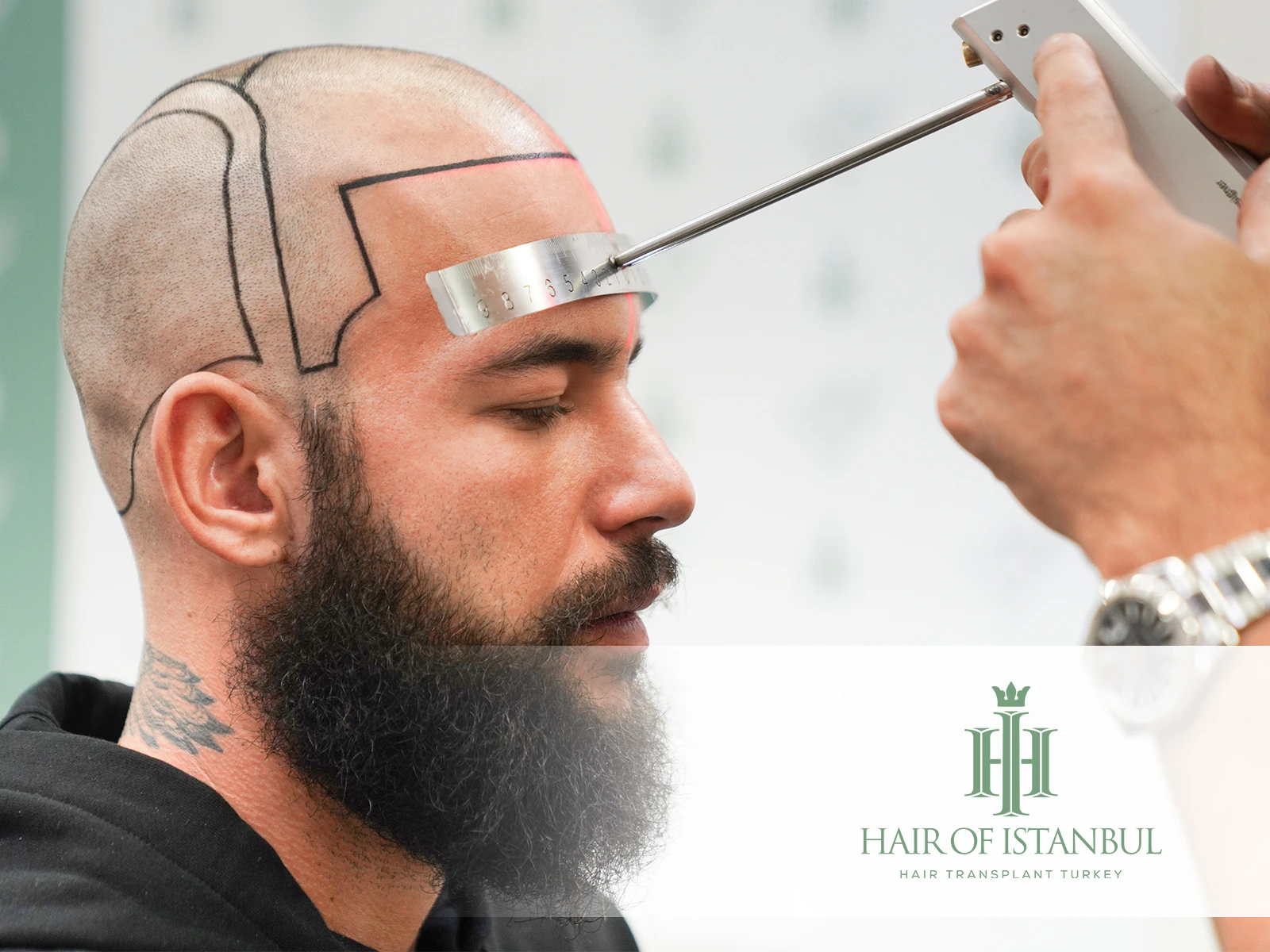
Designing the Perfect Hairline The Artistic Approach of Hair of Istanbul
8 min

Hairline Design: The Rules a Natural Result Follows

Hairline design is the decision that determines whether a hair transplant looks like hair or looks like a transplant. Everything else — graft count, technique, density — can be excellent and still produce a result that reads as surgical, because the eye judges a hairline before it judges anything else.

It is also the one part of the operation that cannot be undone. Grafts placed too low, too straight or at the wrong angle stay where they were put. This page sets out the constraints a good design works within, so you can assess a plan before it becomes permanent.

Why the Hairline Carries the Whole Result

A transplanted hairline is looked at close up, in daylight, from the front, by people who are not thinking about hair transplants at all. Nothing else in the procedure is scrutinised that way. The interior of the scalp is forgiving — density there is judged as a general impression. The front two centimetres are judged hair by hair.

That is why the front row is built almost entirely from single-hair follicular units, and why a hairline made of two- and three-hair grafts announces itself. The classic failure of older transplants, described in the literature as cornrow or doll-hair appearance, came precisely from placing larger units at the hairline. Our page on hair transplants gone wrong covers what that looks like.

The Measurements That Constrain It

Hairline design is often described as art. There is real judgement in it, but it also has hard boundaries, and the most important one is a number.

Constraint What it means
Never below about 6 cm from the glabella Published guidance is explicit that a hairline placed closer than roughly 6 cm from the glabella — the point between the brows — creates an artificial appearance. This single rule prevents most bad outcomes
Proportion to the face The forehead is one of three facial thirds; a hairline is placed relative to the other two, not to a fixed measurement. Our page on average forehead size covers the measurement itself
Donor supply A hairline you cannot support with density behind it looks worse than a higher one you can. Test the arithmetic with our graft calculator
Future loss The hairline has to still make sense in twenty years, not only next year

The 6 cm rule is worth insisting on, because the commonest request in this field is for a lower hairline than the patient should have. A surgeon who agrees to it without argument is not doing you a favour.

A Hairline Is Not a Line

Natural hairlines are irregular. They have a soft transition zone rather than an edge, and that irregularity is what the eye reads as real.

  • Single hairs at the front. One-hair follicular units for the leading edge, with two- and three-hair units placed progressively further back.
  • An irregular border, not a straight one. Small clusters and gaps, deliberately uneven. A ruler-straight hairline is the most common giveaway.
  • A gradient, not a wall. Density increases gradually behind the leading edge rather than starting at full strength.
  • Asymmetry. Real faces are not symmetrical, and a perfectly symmetrical hairline looks drawn on.

Our note on natural versus artificial hairlines goes into the visual differences in more detail.

Angle and Direction

Placement angle matters more at the hairline than anywhere else on the head. Hair at the front emerges at a sharp forward angle, almost lying against the skin, and it changes direction across the hairline — forward at the centre, fanning outward at the temples.

Grafts placed too upright produce hair that stands away from the scalp and cannot be styled flat, which reads as artificial regardless of how good the density is. The technical detail is in our entry on graft implantation angle.

This is also why the recipient incisions matter as much as the extraction. Slits are made at a specific angle, depth and direction for each zone, and the graft simply follows the channel it is placed in.

Designing for the Face You Will Have

The hardest part of hairline design is not aesthetic, it is predictive. Pattern hair loss continues after surgery, and a hairline drawn for a 28-year-old has to still look sensible when he is 45 and has lost more behind it.

Two principles follow. A mature hairline sits higher than a juvenile one — the recession most men see in their twenties is normal maturation rather than balding, which is the distinction our page on mature versus receding hairlines exists to make. And donor reserve must be held back, because a hairline restored today may need support behind it later; see the Norwood scale for how far the pattern can progress.

Whether surgery is the right step at all, and at what age, is the question in should I get a hair transplant.

Women’s Hairlines Follow Different Rules

Applying a male template to a female hairline is a recognisable error. Two published observations govern the difference.

  • The widow’s peak persists in 81% of women. A central point at the front is normal and should usually be preserved or recreated, not flattened out.
  • Deep bitemporal recession of the male type is uncommon in women. The rounded temporal corners that look right on a man look wrong on a woman.

Female hairlines are also generally lower and rounder, and the goal is often to lower or reshape rather than to rebuild from bare skin. Our pages on hair transplants for women and M-shaped hairlines in women cover the specifics.

How the Design Is Done at Hair of Istanbul

The hairline is drawn on the morning of the procedure, before anything else happens. You are collected from your hotel, and at the clinic the hairline is designed and the plan settled by our hairline designers together with the hair transplant specialists. Only once the hairline has been agreed do the blood tests get verified and the procedure begin.

The sequence matters: the design is a conversation held while you are awake and able to disagree with it, not something decided after you are anaesthetised. If you are not happy with the line on your forehead, that is the moment to say so.

Simulation tools can help you picture the outcome beforehand — see our note on 3D hairline simulation — though a simulation is a visual aid, not a promise about density.

What a Badly Designed Hairline Looks Like

  • A straight, even border with no irregularity.
  • Multi-hair grafts at the leading edge, giving a tufted or pluggy look.
  • Hair standing upright instead of lying forward.
  • A hairline placed too low for the face, particularly under 6 cm from the glabella.
  • Sharp temporal corners on a woman, or a juvenile hairline on a man in his thirties.
  • Perfect symmetry.
  • A dense front row with nothing behind it, which becomes obvious as native hair recedes.

What to Ask Before the Marker Comes Out

  • How far is this line from my glabella, in centimetres?
  • What will this hairline look like if I lose another two Norwood stages?
  • How many grafts go into the front two centimetres, and how many hairs per graft?
  • How much donor reserve are you keeping back?
  • Who draws the line, and who cuts the recipient sites?

The second question is the one that separates a plan from a sale.

Frequently Asked Questions

How low should a hairline be?

Published guidance is not closer than about 6 cm from the glabella, the point between the eyebrows. Closer than that produces an artificial appearance, and it is the most common request patients make against their own interest.

What makes a hairline look natural?

Irregularity, single-hair grafts at the leading edge, a gradual density gradient behind it, a sharp forward angle, and a degree of asymmetry. Straightness and symmetry are what make a hairline look designed.

Can a hairline be lowered permanently?

Yes, within the limits above and within your donor supply. It cannot be raised again afterwards, which is why the design conversation happens before surgery and not after.

Is hairline design different for women?

Yes. The widow’s peak persists in 81% of women and is usually preserved, and the deep temporal recession typical of male hairlines is uncommon in women and looks wrong when copied across.

When is the hairline drawn?

On the morning of the procedure, before anything else, by our hairline designers with the transplant specialists — and while you are awake to discuss it.

How many grafts does a hairline need?

It depends on the area and the density chosen rather than on the hairline itself. The arithmetic is area multiplied by density, which you can work through with our graft calculator.

Can a badly designed hairline be corrected?

Partly. Grafts placed too low or at the wrong angle can be removed and redistributed, and the zone rebuilt — that is revision work, and it is harder than getting it right the first time.

References

In Short

Hairline design decides whether a transplant reads as hair or as surgery, and it is the one part that cannot be revised away afterwards. It works within real constraints: not closer than about 6 cm from the glabella, single-hair grafts at the leading edge, an irregular border rather than a line, a sharp forward angle, and a plan that still makes sense after two more Norwood stages of loss. Women’s hairlines follow different rules — the widow’s peak persists in 81% of women and male-pattern temporal recession does not belong on a female face. At Hair of Istanbul the line is drawn on the morning of the procedure by our hairline designers with the transplant specialists, while you are awake and able to disagree with it. If you take one question into a consultation, make it this: what will this hairline look like when I have lost more behind it? Everything else about the procedure is on our hair transplant in Turkey page.

Dr. Mahmut Satekin 2

Dr. Mahmut SATEKİN

Medical Aesthetics Physician · Medical review

Medical aesthetics and hair restoration at Hair of Istanbul, Bakırköy, Istanbul. Qualified in medicine at Istanbul University–Cerrahpaşa in 2021; certified in Aesthetic and Cosmetic Applications by the Turkish Ministry of Health.

#Hairline design

Ataköy 2-5-6. Kısım Mah. Rauf Orbay Cad. Yalı Ataköy Sitesi No:4 C1 Blok Kat:3 İç Kapı No: 36

Bakırköy / İstanbul

Citywalk Boulevard - Unit 20-01, Al Safa St.

Dubai

Page last updated: 09.09.2026
Editor Contact: fatih@hairofistanbul.com

Send Us an Email

Your message will reach us

    Contact Us

    24/7 Live Support