
 en
en TR
TR  SK
SK  ITA
ITA  FR
FR  DE
DE  ES
ES  BG
BG  RO
RO 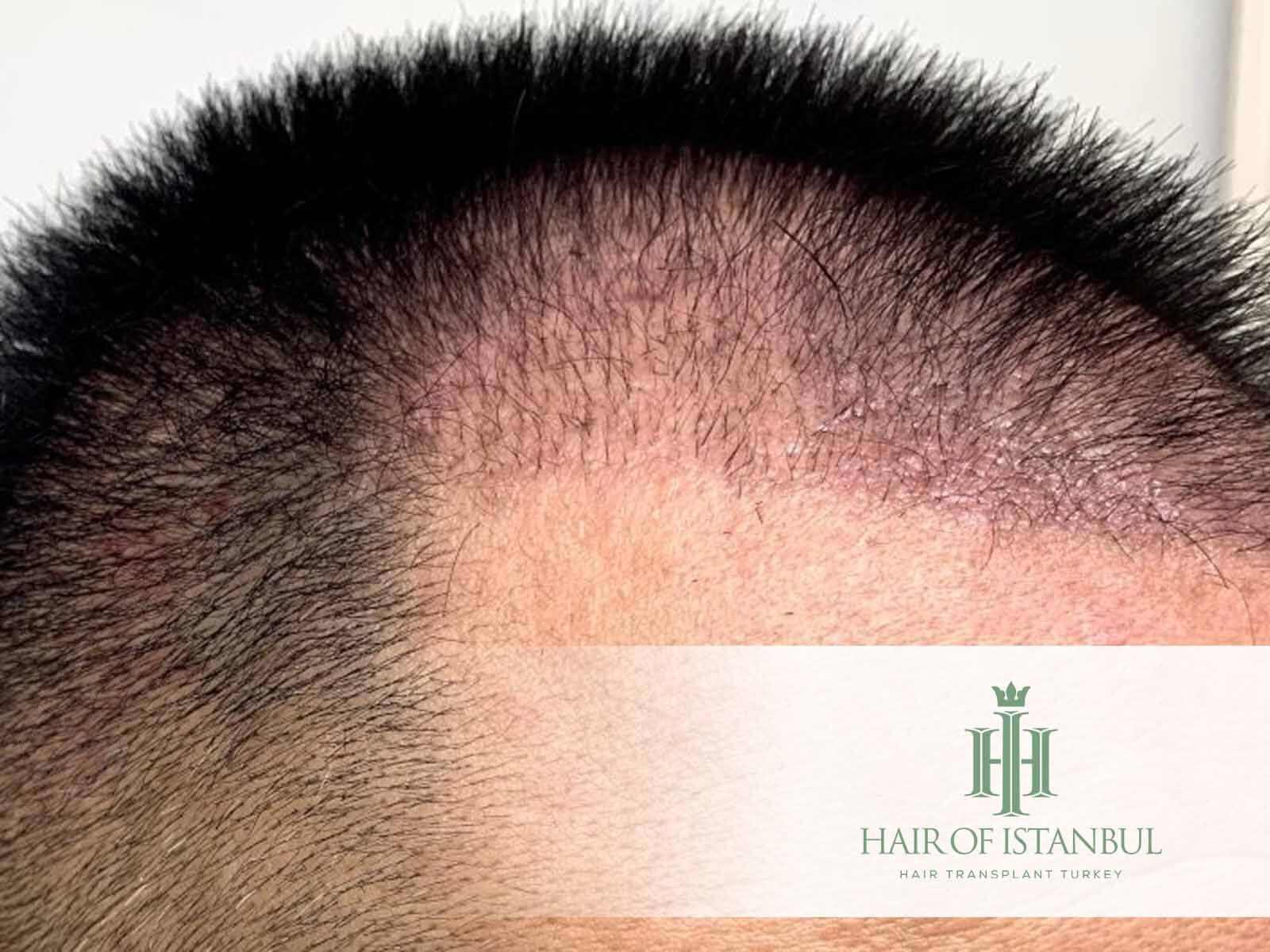
Ugly Duckling Phase Hair Transplant: When It Starts and Ends
The ugly duckling phase hair transplant patients talk about is the stretch when the scalp looks worse than it did before surgery. It is real, it is expected, and it is the single most common reason people conclude their transplant has failed. It is also widely mis-described — including, until now, on this page. The shedding does not start at month two; it starts in the second week. Months two and three are not the shed, they are the silence that follows it.
This page sits between two others. What happens to the skin in the first month is on our hair transplant recovery timeline. What happens to the hair from month one to month eighteen is on our hair transplant growth stages page. This one covers the part in the middle that nobody warns you about properly.
What the Ugly Duckling Phase Actually Is
The name comes from the fable: something that looks wrong on the way to looking right. In hair restoration it describes a window in which three things happen at once, and their effects stack.
- The transplanted shafts break off and fall. The follicle underneath survives; the visible hair does not. This starts around week two.
- Some of your own hair sheds too. Major surgery is a recognised trigger for telogen effluvium, and that shedding usually shows up one to six months later, most often around month three.
- Nothing is growing yet. The transplanted follicles enter a resting phase, and a resting follicle produces no shaft at all.
Subtract the transplanted hair, subtract some of the native hair, and add a recipient area that is still slightly pink and covered in short stubble, and the arithmetic is unavoidable: for a period of weeks you have visibly less hair than you started with. That is not a complication. It is what the procedure looks like halfway through.
When the Ugly Duckling Phase Starts and Ends
The right-hand column below is not an estimate. It comes from a 2019 study in the Journal of Cutaneous and Aesthetic Surgery in which single-hair grafts were implanted into marked one-square-centimetre blocks and physically counted at fixed intervals, so the same hairs were followed from day two to one year.
| When | What is happening | How it looks | Transplanted hairs still present (counted) |
|---|---|---|---|
| Week 1 | Grafts anchoring; crusts still present | Busy and obvious, but hair is still there | No graft loss recorded at day 7 |
| Week 2–4 | Transplanted shafts start breaking off | Hair falling out in the shower — the phase begins | No graft loss at day 14; shafts shedding |
| Week 4–8 | Shedding continues; follicles go dormant | Recipient area thinning out visibly | Down to about 60% by month 2 |
| Month 2–3 | Follicles resting; native shock loss may peak | The worst point. Emptier than before surgery | 62% at month 3 — barely moved |
| Month 3–4 | First follicles restart | Fine, wispy, colourless hairs appear | Rising |
| Month 4–5 | New shafts reach 1–2 cm | Coverage returns — the phase ends here for most | Rising |
| Month 6 | Real density | Better than before surgery | 80% at month 6 |
So the honest answer is: it begins in week two and ends somewhere around month four or five, with the low point at months two to three. Anyone who tells you it lasts a month is describing only the shedding, not the silence afterwards — and it is the silence that people find unbearable.
Why You Look Worse Than Before Surgery
Patients accept losing the transplanted hair. What they do not expect is being below baseline. The reason is that two separate sheds are running on two separate clocks.
| The transplant shed | Shock loss | |
|---|---|---|
| Which hair | The hairs that were transplanted | Your own existing hair, around and between the grafts |
| Mechanism | The shaft breaks; the follicle stays | Follicles pushed early into a resting phase |
| When | Week 2 to month 2 | 1 to 6 months after surgery, most often around month 3 |
| How long | Weeks | Self-limited, typically under 6 months |
| Comes back? | Yes — counted survival reached 88.7% at one year | Yes — standard guidance describes it as transient, with new hairs after 3 to 6 months |
Because shock loss peaks roughly when the transplanted follicles are at their most dormant, the two troughs land on top of each other. That overlap, not any single event, is what makes month three the hardest month.
One more thing makes it look worse than it is: contrast. Short, dark stubble on a slightly pink scalp reads as thinner than the same hair at 5 cm. Nothing about your density changed between the photograph you hate and the one you liked — the light and the length did.
How Long the Ugly Duckling Phase Lasts
For most patients the visible low point runs from about week six to about month four, with recovery becoming obvious between months four and six. A few factors genuinely move that:
- How much native hair you had. A patient with substantial existing hair between the grafts barely notices the phase. A patient transplanted into a bald zone experiences all of it, because nothing is covering the gap.
- Hair colour against skin colour. High contrast — dark hair, light skin — makes every millimetre of visible scalp count.
- Whether shock loss occurred. Not everyone gets it. When it does happen it adds roughly a month to the perceived phase.
- Where the grafts went. A hairline announces itself at 2 cm; a crown, where hair grows in a whorl and covers less scalp per hair, can still look sparse at month six without anything being wrong.
What does not shorten it: shampoos, vitamins, supplements, laser combs or massage. Transplanted hair grows at ordinary scalp speed, about 0.35 mm a day, and no product changes that rate.
Covering It Up — What Is Safe, and When
This is the practical question most people actually have, and the answer has to respect graft safety rather than convenience. Our clinic-wide aftercare limits apply here without exception:
| Option | When it is allowed |
|---|---|
| Hats, beanies, helmets | One month. Short periods from two weeks only if work requires it, loose fitting |
| Shaving or clipping the donor area | One month |
| Shaving the recipient area | Three months. Scissors only before that — never a razor or clipper on the grafts |
| Hair dye or colour | Eight months |
| Styling wax or product | Not on the recipient area during the phase |
The detail behind the hat rule — and why the answer is one month rather than the two weeks you will read elsewhere — is on our page about wearing a hat after a hair transplant. For cutting, see haircuts after a hair transplant. Trimming the non-transplanted hair shorter is often the single most effective thing you can do during this window: it lowers the contrast between hair and scalp and makes the difference far less obvious.
The Part Clinics Skip: How It Feels
Distress during this phase is common and it is not vanity. People have usually spent money, taken time off, and told colleagues, and the visible result at month three is worse than the starting point. Regret at that moment is a normal reaction to what is in the mirror, not a sign of a bad decision.
Two things help more than reassurance does. Take a photograph in the same place, same light, on the same day each month, and compare month to month rather than day to day — daily comparison in a bathroom mirror shows nothing but noise. And keep your clinic in the loop; a review at month three exists precisely so someone who has seen a thousand of these can tell you whether yours is on track. We cover this more fully in our notes on the psychological effects of a hair transplant. If low mood goes beyond disappointment and starts affecting sleep, work or relationships, that is worth raising with a doctor rather than waiting it out.
When It Is Not the Ugly Duckling Phase
Nearly everything in this window is normal. These are the exceptions, and each one deserves a call rather than patience:
- Pus, spreading redness, increasing pain, or fever. Redness alone fades gradually and is covered in our page on redness after a hair transplant; pain and discharge are different.
- A graft physically pulled out in the first nine days. Grafts anchor progressively and can no longer be dislodged by day nine, but before that they can.
- A pale, hard or blackening patch in the recipient area. That is not shedding — see scalp necrosis after a hair transplant.
- One zone completely bare at month eight while the rest has grown in. Uneven timing is normal; a single dead zone is not.
- Shedding of native hair that starts after month six and keeps going. That is usually untreated pattern hair loss continuing, which is a treatable problem and a separate one.
Frequently Asked Questions
When does the ugly duckling phase start?
Around week two, when the transplanted shafts begin to break off. It does not start at month two — by month two you are already at the bottom of it.
How long does the ugly duckling phase last?
From about week two to month four or five, with the worst point at months two to three. Counted graft survival sat at 60% at month two and 62% at month three, then climbed to 80% by month six.
Why do I have less hair than before the transplant?
Because two sheds overlap: the transplanted shafts fall between weeks two and eight, and some of your own hair can shed as a delayed response to surgery, typically around month three. Both are reversible.
Is the ugly duckling phase a sign the transplant failed?
No. In the study that counted individual grafts, the same blocks that were down to 60% at month two were at 88.7% one year later, with nothing added.
Can I do anything to shorten it?
Not the biology — hair grows at about 0.35 mm a day regardless. You can reduce how visible it is by keeping the surrounding non-transplanted hair short, which lowers the contrast with the scalp.
Can I wear a hat to hide it?
Loose hats for short periods from two weeks if work requires it; normal wear from one month. Earlier than that, friction and heat on healing grafts are a real risk.
Does everyone go through it?
Every transplant sheds. How visible that shed is depends almost entirely on how much native hair sits between the grafts — patients with good surrounding coverage often barely register the phase.
References
- Gupta J, Chouhan K, Kumar A, Chandrasegaran A. A Comparative Study on the Rate of Anagen Effluvium and Survival Rates of Scalp, Beard, and Chest Hair in Hair Restoration Procedure of Scalp. J Cutan Aesthet Surg. 2019;12(2):118–123. pmc.ncbi.nlm.nih.gov/articles/PMC6676805
- Zito PM, Raggio BS. Hair Transplantation. StatPearls, NCBI Bookshelf. ncbi.nlm.nih.gov/books/NBK547740
- Hughes EC, Saleh D. Telogen Effluvium. StatPearls, NCBI Bookshelf. ncbi.nlm.nih.gov/books/NBK430848
- Martel JL, Miao JH, Badri T, Fakoya AO. Anatomy, Hair Follicle. StatPearls, NCBI Bookshelf. ncbi.nlm.nih.gov/books/NBK513312
- Bernstein RM, Rassman WR. Graft anchoring in hair transplantation. Dermatol Surg. 2006. pubmed.ncbi.nlm.nih.gov/16442039
In Short
The ugly duckling phase of a hair transplant begins in week two, bottoms out at months two to three, and is over for most patients by month four or five. You look worse than before surgery because the transplanted shafts shed while some native hair is simultaneously pushed into a resting phase, and because nothing is growing in between. Where hairs have been counted rather than photographed, transplanted grafts sat at 60% at month two and 88.7% at one year. Keep the surrounding hair short, photograph monthly rather than daily, follow the aftercare limits, and read the growth stages page for what comes next. The biology, if you want it separately, is in our hair growth cycle entry.